- The Heart's Unrivaled Architecture: Built for Endurance
- The Electrical Mastermind: Why the Beat Never Fades
- Why Constant Energy is Key: A Powerhouse of Mitochondria
- Cellular Resilience and Micro-Repair Mechanisms
- The Unconscious Conductor: Autonomic Regulation
- The Fundamental Blueprint: Why We're Built This Way
- The Incredible Vital Secret Unveiled
Why does your heart beat without fail, every second of every day, from before you’re even born until your very last breath? It’s a question that taps into one of the most profound mysteries of human biology – the incredible vitality and ceaseless activity of our most crucial organ. Unlike any other muscle in your body, your heart requires no conscious command to perform its relentless duty. It’s a marvel of evolution and biological engineering, operating with an intrinsic rhythm and an astonishing array of backup systems that ensure its continuous function. Understanding this tireless organ reveals not just one secret, but a symphony of interconnected mechanisms that allow it to defy the odds and keep us alive.
The Heart’s Unrivaled Architecture: Built for Endurance
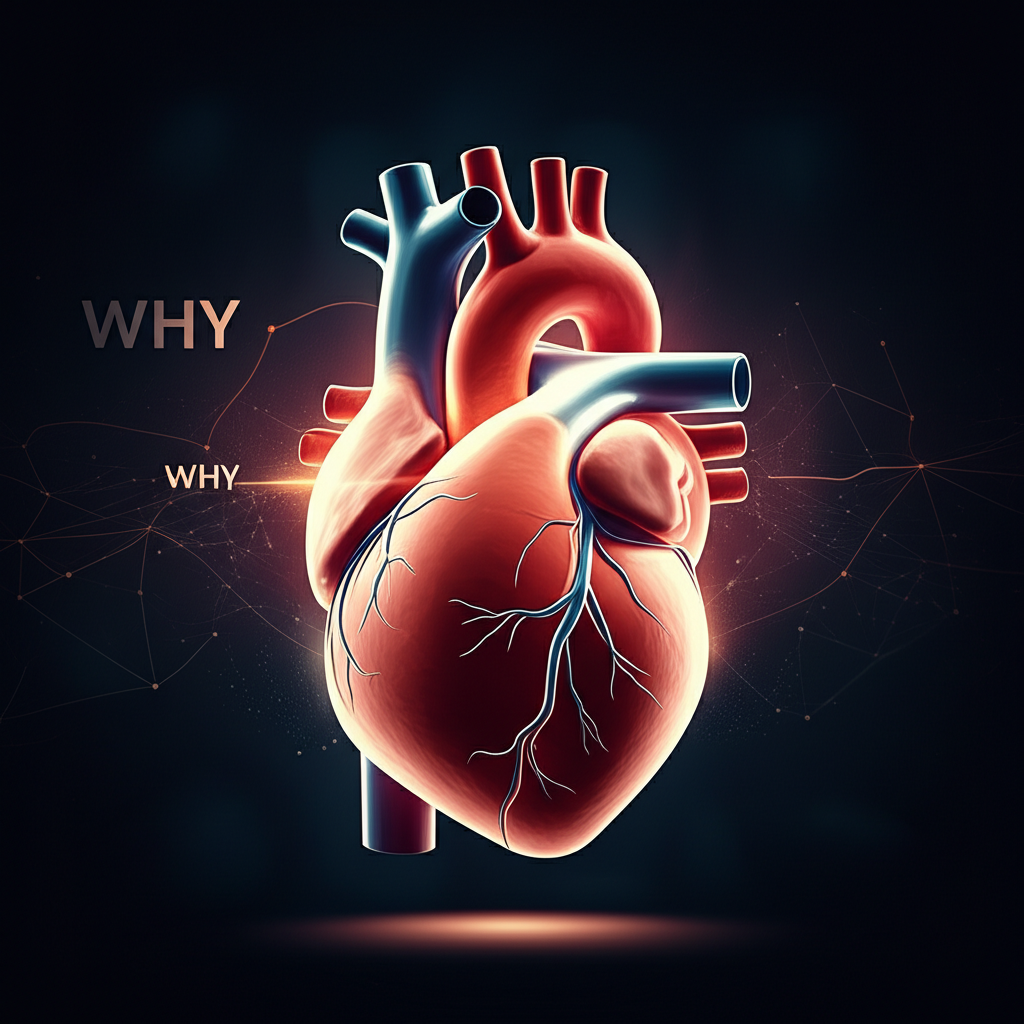
At its core, the heart is a muscular pump, but it’s no ordinary muscle. Composed of specialized cardiac muscle tissue (myocardium), it stands apart from both the voluntary skeletal muscles that move your limbs and the smooth involuntary muscles that line your digestive tract. Cardiac muscle cells possess unique properties tailored for continuous, rhythmic contraction.
These cells are interconnected by specialized junctions called intercalated discs, which contain gap junctions and desmosomes. Desmosomes act like powerful rivets, holding the cells together under immense contractile force, while gap junctions allow electrical signals to pass rapidly from one cell to the next. This creates a functional syncytium, meaning the muscle cells behave as a single, coordinated unit. When one cardiac muscle cell contracts, it quickly triggers its neighbors, ensuring a wave of contraction sweeps through the entire chamber, propelling blood efficiently. This highly organized structure is the foundational secret to its enduring power.
The Electrical Mastermind: Why the Beat Never Fades
The true orchestrator of the heart’s tireless work is its intrinsic electrical system. This system is what sets the heart apart, allowing it to generate its own impulses without reliance on external nerve stimulation to initiate each beat.
The primary pacemaker of the heart is the sinoatrial (SA) node, a small cluster of specialized cells located in the right atrium. These SA nodal cells possess a unique ability called automaticity – they spontaneously generate electrical impulses at a regular rate, typically between 60 to 100 times per minute. This inherent rhythm is the heartbeat’s baseline.
Once generated, the electrical impulse travels rapidly across the atria, causing them to contract and pump blood into the ventricles. The signal then pauses briefly at the atrioventricular (AV) node, located between the atria and ventricles, allowing the ventricles to fill completely. From the AV node, the impulse speeds down the Bundle of His and through the Purkinje fibers, which distribute the signal throughout the ventricular muscle, triggering a powerful contraction that ejects blood into the arteries. This perfectly timed sequence ensures maximal pumping efficiency, and it operates autonomously, demonstrating why the body doesn’t need to consciously think about each beat.
Why Constant Energy is Key: A Powerhouse of Mitochondria
The human heart is one of the most metabolically active organs in the body. To sustain its continuous operation, cardiac muscle cells are packed with an exceptionally high density of mitochondria – the “powerhouses” of the cell. Mitochondria are responsible for generating adenosine triphosphate (ATP), the primary energy currency of the cell, through aerobic respiration.
Remarkably, cardiac cells derive approximately 60-70% of their ATP from the breakdown of fatty acids, with glucose, lactate, and even ketone bodies contributing the remainder. This metabolic flexibility is another vital secret to the heart’s endurance. It dramatically increases the heart’s resilience, allowing it to adapt to varying fuel availability and ensuring a constant supply of energy even under diverse physiological conditions, such as during prolonged exercise or periods of fasting. A healthy heart simply never runs out of fuel to power its relentless contractions.
Cellular Resilience and Micro-Repair Mechanisms
While our understanding of cardiac regeneration is still evolving, the heart does possess some remarkable mechanisms to maintain its integrity and cope with the immense mechanical stress it endures. It’s not just about strong contractions; it’s also about weathering millions upon millions of cyclical stresses and strains.
Cardiomyocytes, the contractile cells of the heart, have a sophisticated cellular machinery for constant molecular repair and protein turnover. Although adult heart cells have limited regenerative capacity compared to other tissues, there is increasing evidence of a slow but continuous turnover of cardiomyocytes, allowing for some degree of self-renewal. Furthermore, the heart is rich in antioxidants and stress-response proteins that protect cells from damage caused by free radicals and mechanical strain, ensuring cellular health over decades.
The Unconscious Conductor: Autonomic Regulation
While the heart has its own intrinsic rhythm, its rate and force of contraction are constantly modulated by the autonomic nervous system – the body’s unconscious control panel. This ensures that the heart can adapt its output to meet the body’s changing demands without any conscious thought.
The sympathetic nervous system (our “fight or flight” response) releases hormones like adrenaline, which increase heart rate and contractility when we’re stressed, exercising, or in danger. Conversely, the parasympathetic nervous system (our “rest and digest” system) releases acetylcholine, which slows the heart rate, allowing it to recover and conserve energy. This delicate balance, managed entirely without our conscious effort, ensures the heart always performs optimally, whether we’re sleeping soundly or running a marathon.
The Fundamental Blueprint: Why We’re Built This Way
Ultimately, the most profound reason your heart never stops traces back to the fundamental imperative of life itself. From an evolutionary perspective, a continuously beating heart is non-negotiable for the survival of complex, oxygen-dependent organisms like humans. The genetic blueprint for this tireless organ is intricately woven into our DNA, dictating its development, structure, and physiological capabilities. This foundational programming ensures that the heart is perfectly adapted to its role as the ultimate life-sustaining pump, a biological imperative passed down through generations.
The Incredible Vital Secret Unveiled
The “incredible vital secret” of the heart is not a single, isolated factor, but rather a spectacular orchestration of all these elements working in perfect harmony: its unique, enduring muscle tissue, its intrinsic electrical pacemaker, an inexhaustible and flexible energy supply, robust cellular repair mechanisms, and meticulous autonomic regulation, all rooted in an evolutionary imperative. It is a testament to the sheer brilliance of biological design, a silent, powerful engine that asks for nothing but gives everything, tirelessly, for a lifetime. Appreciating this biological marvel not only deepens our understanding of ourselves but also inspires a profound respect for the intricate wonders of the human body.
0 Comments