Why Dinosaurs Disappeared: The Shocking Truth
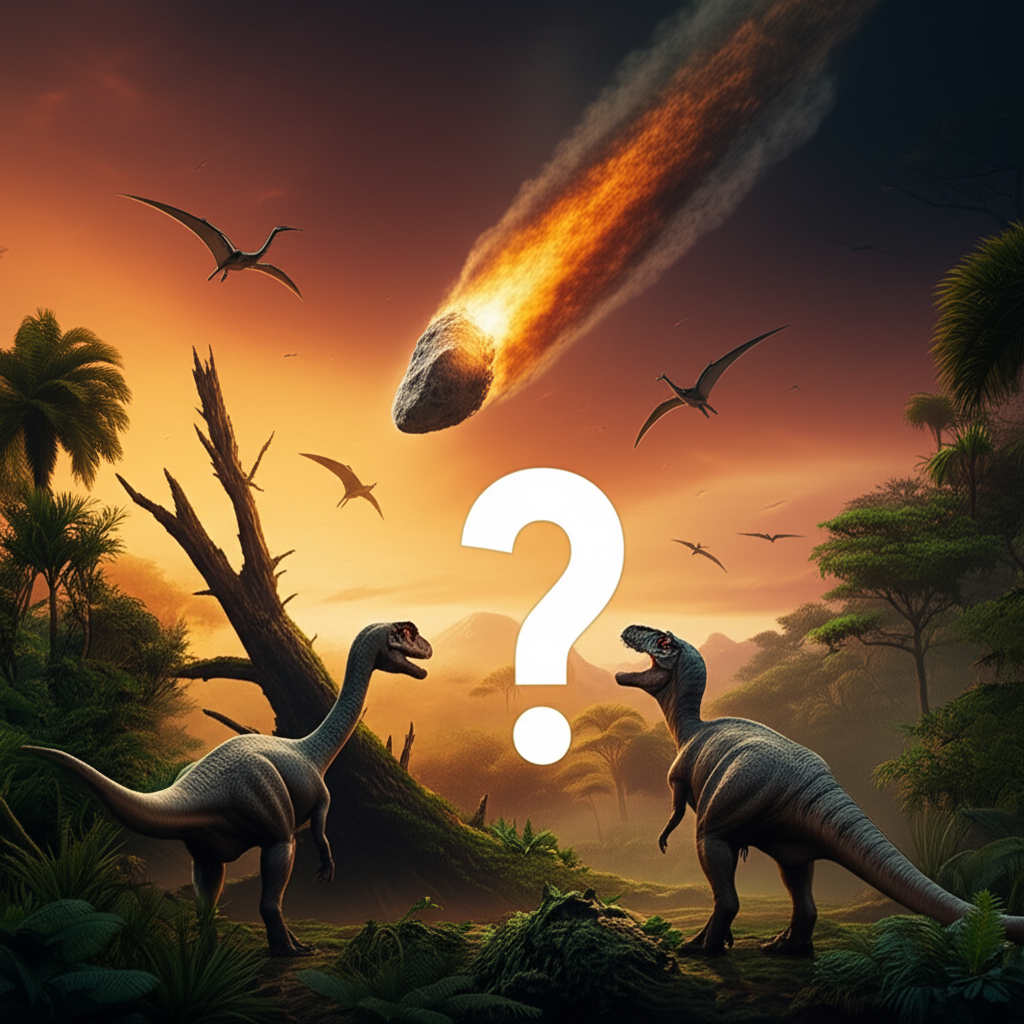
Why did the mighty dinosaurs, rulers of Earth for over 160 million years, suddenly vanish? This question has captivated scientists, paleontologists, and the public for centuries. For generations, the mystery of their disappearance fueled countless theories, from slow climate change and widespread disease to shifts in vegetation and even alien interference. However, in recent decades, a meticulously gathered body of evidence has converged on a single, astonishing explanation: a catastrophic cosmic collision that obliterated not just the dinosaurs, but nearly three-quarters of all life on Earth. This isn’t just a theory; it’s the shocking truth behind one of the planet’s most dramatic extinction events.
Early Theories and Lingering Mysteries
For a long time, the scale of the event now known as the Cretaceous-Paleogene (K-Pg) extinction presented an enormous puzzle. Early explanations often focused on gradual processes that might have led to their decline. Some proposed that changes in sea level destroyed their habitats, while others suggested that the rise of flowering plants, which dinosaurs were poorly adapted to eat, led to widespread starvation. Disease epidemics, an increase in volcanic activity, or even the evolution of egg-eating mammals were also put forth. While some of these factors might have contributed to a background level of stress on ecosystems, none could adequately explain the sudden, rapid, and widespread wipeout of such a dominant group, alongside countless other species, at a specific geological moment approximately 66 million years ago. The sheer breadth of the extinction, affecting marine life as much as terrestrial, required an explanation of truly global proportions.
The Asteroid Impact Theory: A Paradigm Shift
The scientific breakthrough arrived in 1980, spearheaded by father-and-son team Luis and Walter Alvarez, along with nuclear chemists Frank Asaro and Helen Michel. While studying geological samples from Gubbio, Italy, they discovered an abnormally high concentration of iridium – a rare metal on Earth’s surface but abundant in asteroids – precisely at the K-Pg boundary layer. This iridium spike was subsequently found in K-Pg boundary layers worldwide, indicating a global event.
The Alvarez team proposed a bold hypothesis: an asteroid, roughly 10-15 kilometers (6-9 miles) in diameter, had collided with Earth. Such an impact would have unleashed unimaginable energy, dwarfing any volcanic eruption or nuclear explosion, creating a global catastrophe that perfectly fit the suddenness and magnitude of the K-Pg extinction.
Why the Iridium Layer is Crucial Evidence
The discovery of the global iridium layer was the first smoking gun, but the theory demanded a corresponding impact crater. Decades of research, including seismic imaging and drilling, eventually pinpointed the culprit: the Chicxulub crater, buried beneath the Yucatán Peninsula in Mexico. This massive structure, over 180 kilometers (110 miles) in diameter, perfectly matched the predicted size and age of the impact that created the iridium layer.
Further geological evidence solidified the asteroid theory. Layers of shocked quartz, formed under immense pressure and heat typical of impact events, were found globally at the K-Pg boundary. Tektites, small glass fragments formed from melted rock flung into the atmosphere during an asteroidal impact, were also discovered. Perhaps most compelling were the widespread deposits of soot at the K-Pg boundary, indicating global wildfires ignited by the initial blast and subsequent fallout. All these pieces of evidence coherently point to an extraterrestrial impact as the primary driver.
The Immediate Aftermath: A Global Cataclysm
The sequence of events following the Chicxulub impact was nothing short of apocalyptic. The initial collision generated an unimaginable shockwave, triggering massive earthquakes and colossal tsunamis that scoured coastlines thousands of miles away. Superheated debris ejected into the atmosphere rained back down across the globe, incinerating forests and igniting widespread wildfires. The sheer volume of material thrown into the sky – pulverized rock, dust, and soot – created a perpetual night, blocking out the sun for months, if not years.
This “impact winter” plunged the Earth into darkness and freezing temperatures. Photosynthesis, the foundation of almost all terrestrial and marine food chains, ground to a halt. Plants died, herbivorous dinosaurs starved, and carnivorous dinosaurs soon followed. Marine ecosystems also collapsed as ocean primary producers vanished. Acid rain, caused by atmospheric chemical reactions following the impact, further devastated forests and acidified surface waters, killing off vast numbers of marine organisms, particularly those with shells. The planet became a cold, dark, and toxic wasteland where only the most resilient could hope to survive.
Beyond the Impact: Volcanic Activity and Other Factors
While the asteroid impact is now overwhelmingly accepted as the primary cause of the K-Pg extinction, some scientists continue to explore the role of massive volcanic eruptions from the Deccan Traps in what is now India. These eruptions, which commenced before the impact and continued for hundreds of thousands of years, released enormous quantities of greenhouse gases and aerosols into the atmosphere, causing significant climate change and ocean acidification.
The debate centers on whether the Deccan Traps volcanism was merely a contributing stressor, pushing ecosystems to the brink, or if the impact itself somehow intensified this volcanic activity. The prevailing view is that while the Deccan Traps eruptions certainly destabilized global climate and ecosystems, the asteroid impact delivered the decisive, rapid, and fatal blow, pushing life past a critical threshold from which most could not recover.
Survival and Succession: Why Some Made It
Despite the global devastation, not all life perished. Approximately 25% of species survived the K-Pg event. The survivors tended to be small, adaptable, and often capable of either burrowing underground, living in water, or having slow metabolisms that allowed them to endure long periods without food.
Significantly, all non-avian dinosaurs died out, but their evolutionary descendants, the birds (avian dinosaurs), survived. Their smaller size, ability to fly, and varied diets likely played a crucial role. Small mammals, too, managed to persist, often living in burrows and feeding on detritus or insects. Crocodilians, turtles, snakes, and some amphibians also made it through, likely due to their cold-blooded nature, ability to go long periods without food, and aquatic habitats that buffered them from the worst of the atmospheric changes.
The extinction of the dominant dinosaurs left vast ecological niches open, paving the way for the “Age of Mammals” that followed. This shocking truth about a single, cataclysmic event not only ended the reign of the dinosaurs but fundamentally reshaped the trajectory of life on Earth, allowing new forms to emerge and diversify into the planet we know today.
0 Comments