
- The Climate Crisis: Ocean Warming and Acidification
- A Tide of Pollution
- Overfishing and Destructive Fishing Practices
- Coastal Development and Direct Damage
- The Scourge of Disease
Why are the world’s most vibrant and critical underwater ecosystems vanishing at an alarming rate? Coral reefs, often called the “rainforests of the sea,” are biodiversity hotspots, protecting coastlines, supporting fishing industries, and providing potential cures for diseases. Yet, these magnificent structures, built over millennia by tiny polyps, are facing an unprecedented crisis. Their decline is not merely a tragedy for marine life; it represents a profound threat to the planet’s ecological balance and humanity itself. Understanding the complex web of factors leading to their demise reveals a shocking truth about our impact on the natural world.
Coral reefs are intricate underwater structures composed of colonies of small marine invertebrates called polyps. These polyps excrete calcium carbonate to form a hard skeleton, which accumulates over time to create the large, diverse reefs we know. Their vibrancy comes from a symbiotic relationship with microscopic algae called zooxanthellae, which live within the coral tissues, providing them with food through photosynthesis. In return, the coral offers the algae a protected home. This delicate partnership is the foundation of the entire reef ecosystem.
Unveiling the “Why”: Primary Drivers of Coral Reef Decline
The intricate nature of coral reefs makes them highly sensitive to changes in their environment. A confluence of global and local stressors is pushing them past their breaking point.
The Climate Crisis: Ocean Warming and Acidification
Perhaps the most significant overarching threat is climate change, manifesting in two critical ways:
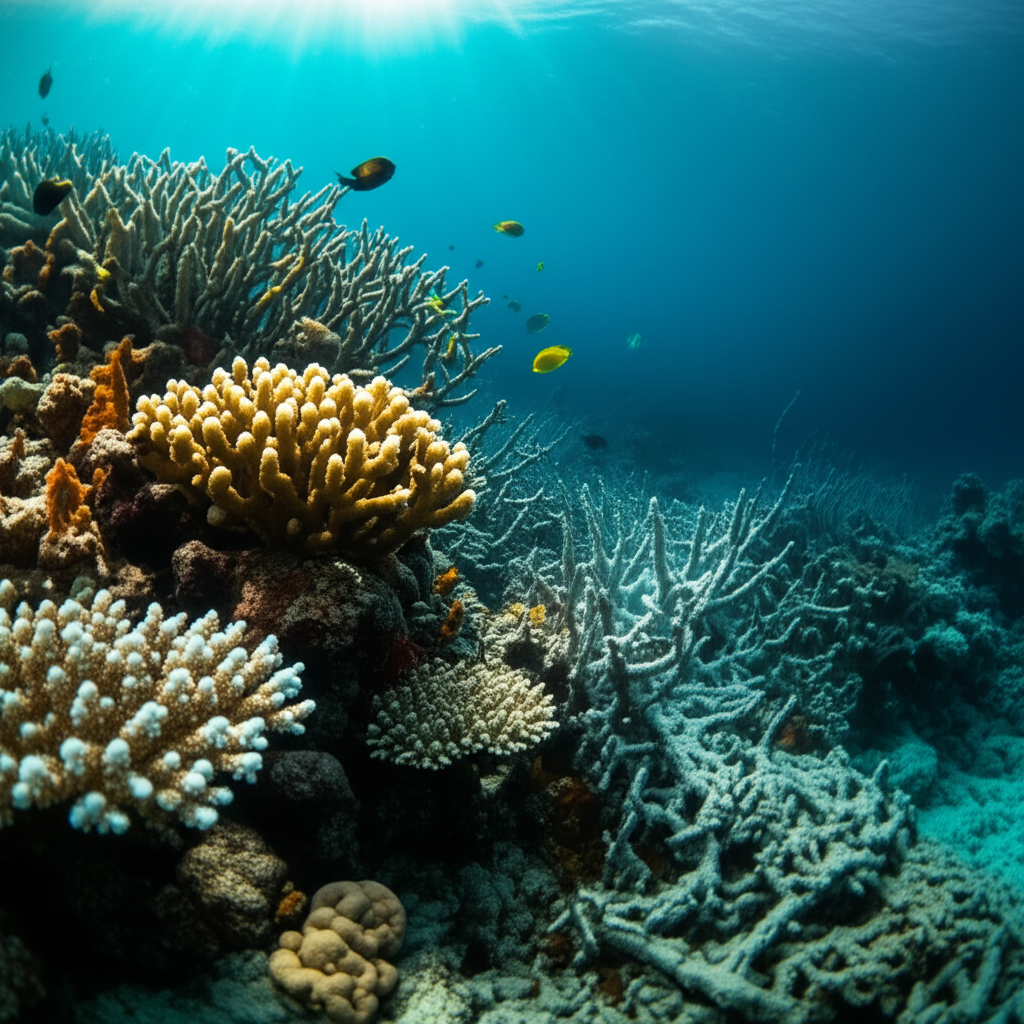
Ocean Warming and Coral Bleaching: As global temperatures rise due to greenhouse gas emissions, the oceans absorb a vast amount of this excess heat. When water temperatures exceed a coral’s tolerance for even a short period, the symbiotic zooxanthellae algae are expelled from the coral tissue. This process, known as coral bleaching, causes the corals to turn white. While bleached corals aren’t immediately dead, they are stressed and vulnerable. Prolonged bleaching events or repeated exposure often leads to starvation and widespread coral mortality, turning vibrant reefs into ghostly graveyards. We are witnessing more frequent and severe bleaching events globally, leaving reefs little time to recover.
Ocean Acidification: The oceans also absorb a significant portion of the carbon dioxide released into the atmosphere. When CO2 dissolves in seawater, it forms carbonic acid, increasing the ocean’s acidity (lowering its pH). This phenomenon, called ocean acidification, reduces the availability of carbonate ions, which corals (and many other shell-forming organisms like mollusks and plankton) need to build their calcium carbonate skeletons. Essentially, the water becomes corrosive to their very structure, making it harder for new corals to grow and existing reefs to maintain their integrity.
A Tide of Pollution
Local pollution plays a devastating role, often exacerbating the effects of climate change:
Agricultural Runoff: Fertilizers and pesticides used in agriculture frequently wash into coastal waters. Fertilizers, rich in nitrogen and phosphorus, act as nutrients for algae, causing massive algal blooms that smother corals, block sunlight, and reduce oxygen levels. Pesticides can directly poison corals and other marine life.
Industrial and Urban Waste: Untreated sewage, industrial chemicals, heavy metals, and oil spills directly contaminate reef waters, introducing toxins that stress and kill corals.
Plastic Pollution: Microplastics ingested by corals can disrupt their metabolic functions, while larger pieces can physically damage reefs through abrasion or smothering.
Overfishing and Destructive Fishing Practices
The way we harvest marine resources significantly impacts coral health:
Overfishing: Removing too many herbivorous fish (like parrotfish and surgeonfish) from a reef can lead to an explosion of algae, which then outcompetes and smothers corals. Overfishing also disrupts the delicate food web, weakening the entire ecosystem.
Destructive Fishing Methods: Practices such as dynamite fishing and cyanide fishing literally destroy reef structures and poison corals and other marine life, leaving behind barren rubble. Bottom trawling can also damage corals in deeper waters.
Coastal Development and Direct Damage
Human activities along coastlines also contribute directly to reef degradation:
Sedimentation: Construction, dredging, and deforestation in coastal areas can increase sediment runoff into the ocean. Sediment clouds the water, reducing light penetration for corals and their zooxanthellae, and can physically smother corals.
Physical Damage: Anchors from boats, irresponsible tourism (e.g., touching or breaking corals, walking on reefs), and accidental collisions can cause direct and irreparable damage to fragile coral structures.
The Scourge of Disease
Like any living organism, corals are susceptible to diseases. However, stressed and weakened corals, already compromised by warming waters, pollution, and acidification, are far more vulnerable to pathogens. Outbreaks of coral diseases like White Band Disease or Stony Coral Tissue Loss Disease can decimate vast areas of reef in a short period.
The Ripple Effect: What Happens When Reefs Die?
The loss of coral reefs has far-reaching consequences:
Biodiversity Collapse: Reefs support an estimated 25% of all marine species, despite covering less than 0.1% of the ocean floor. Their disappearance means the extinction of countless fish, invertebrate, and plant species.
Loss of Coastal Protection: Reefs act as natural barriers, dissipating wave energy and protecting coastlines from storms, erosion, and sea-level rise. Their degradation leaves coastal communities exposed and vulnerable.
Impact on Human Livelihoods: Millions of people worldwide depend on reefs for food security (fisheries), tourism revenue, and cultural heritage. Their destruction spells economic disaster for many coastal populations.
* Potential Loss of Medical Discoveries: Reef organisms are a treasure trove for potential new medicines, including anti-cancer drugs, pain relievers, and antibiotics. The decline of reefs could mean losing these invaluable resources before we even discover them.
Turning the Tide: Action and Hope
The “why” behind dying coral reefs points to a stark reality: human activity is the primary driver. However, understanding these causes also illuminates the path forward. Reducing greenhouse gas emissions through global policy changes and individual actions is paramount to mitigating ocean warming and acidification. Locally, effective waste management, sustainable fishing practices, responsible tourism, and the protection of coastal habitats are crucial. Innovative conservation efforts, such as coral gardening and restoration projects, offer glimmers of hope, but they cannot succeed without addressing the root causes of reef decline.
The shocking truth is that the fate of coral reefs rests firmly in our hands. They are not dying naturally; they are dying because of us. The time for concerted, global action to protect these indispensable underwater wonders is now, before it’s too late.
0 Comments