- The Earth's Fiery Engine: Magma Generation
- What Drives Volcanic Activity? The Role of Plate Tectonics
- Subduction Zones: The "Ring of Fire"
- Rift Zones: Spreading and Creation
- Hotspots: Volcanic Anomalies
- The Immediate Trigger: Magma Buildup and Gas Pressure
- Beyond the Big Picture: Minor Influences
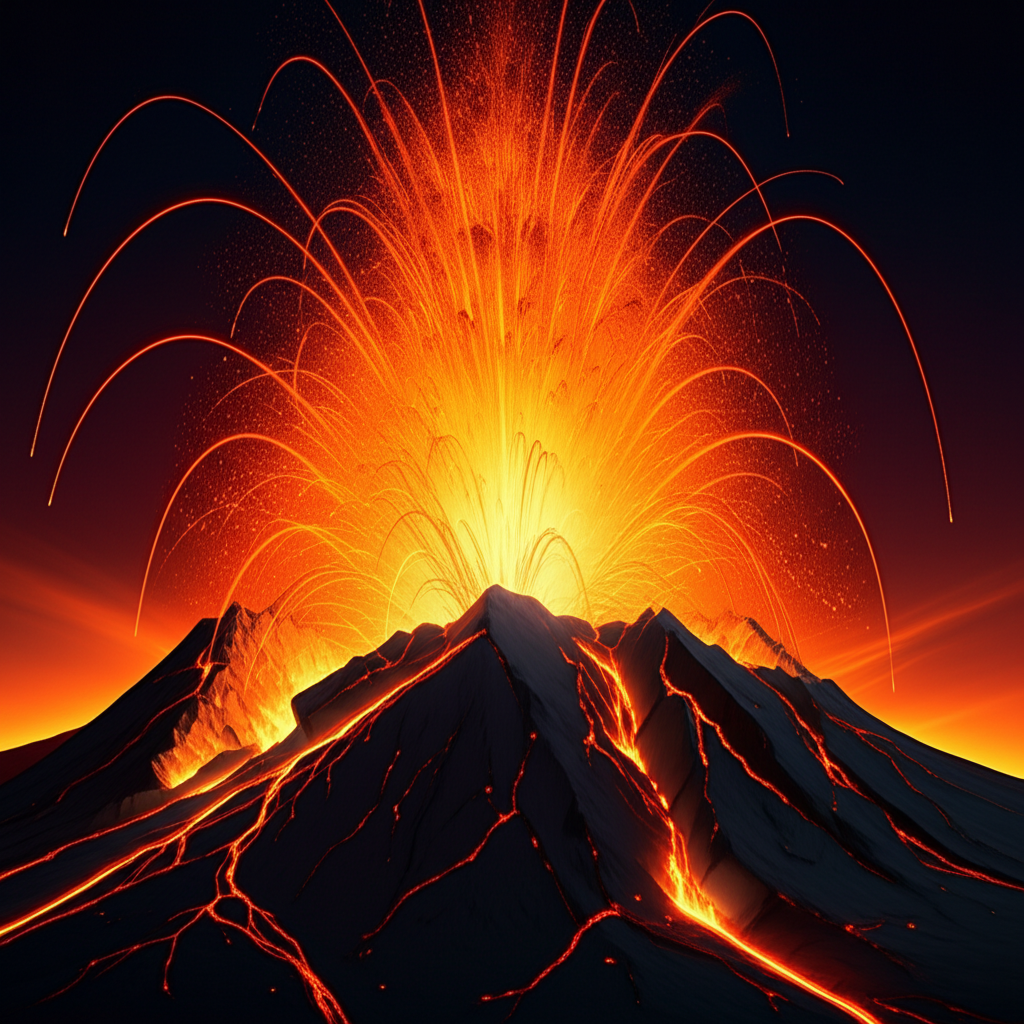
What immense geological forces lie beneath our feet, capable of unleashing some of nature’s most spectacular and destructive displays? The answer, in large part, is a dynamic interplay of processes that drive volcanic activity. Volcanoes are not random vents in the Earth’s crust; they are direct manifestations of our planet’s internal heat and moving tectonic plates, acting as profound windows into Earth’s fiery heart. Understanding the complex mechanisms that trigger their formation and eruptions helps us appreciate the constant, unseen geological ballet shaping our world.
The Earth’s Fiery Engine: Magma Generation
At its core, all volcanic activity stems from the generation and movement of magma—molten rock found beneath the Earth’s surface. This magma originates primarily in the upper mantle, a layer of the Earth between the crust and the outer core, where intense heat and pressure dominate. However, simply being hot isn’t enough to melt rock; specific conditions are needed to overcome the immense pressure that keeps mantle rock solid.
There are three primary mechanisms by which solid rock in the mantle can melt to form magma:
1. Decompression Melting: When hot mantle rock rises to shallower depths, the overlying pressure decreases. Even if the temperature remains the same, the reduction in pressure can lower the melting point of the rock, causing it to melt without any additional heat. This is a crucial process at divergent plate boundaries and mantle plumes.
2. Flux Melting (Addition of Volatiles): The introduction of volatile substances like water and carbon dioxide into hot rock can significantly lower its melting temperature. Water, in particular, acts as a flux, weakening the chemical bonds in the rock and allowing it to melt more easily. This mechanism is dominant at subduction zones.
3. Heat Transfer Melting: As hot magma rises and intrudes into cooler crustal rock, it can transfer its heat, causing the surrounding crust to melt. This often contributes to the volume and composition of magma that eventually erupts.
Once formed, magma is less dense than the solid rock around it, causing it to slowly buoy upwards through the crust, accumulating in magma chambers until the conditions are right for an eruption.
What Drives Volcanic Activity? The Role of Plate Tectonics
The overarching factor influencing where and why volcanoes occur is plate tectonics. The Earth’s outermost layer, the lithosphere, is broken into several large and small plates that are constantly moving relative to one another. The interactions at these plate boundaries are responsible for the vast majority of volcanic activity.
Subduction Zones: The “Ring of Fire”
One of the most prolific settings for volcanoes are subduction zones, where an oceanic plate collides with and sinks beneath another, less dense plate (either another oceanic plate or a continental plate). This process is responsible for the infamous “Ring of Fire” that encircles the Pacific Ocean.
What Happens at Subduction Zones? As the oceanic plate descends into the mantle, it carries with it water-rich sediments and hydrated minerals. The increasing pressure and temperature cause these volatile compounds to be released from the subducting slab. This water then migrates into the overlying mantle wedge, where it significantly lowers the melting point of the rock through flux melting. The resulting magma, typically silica-rich and viscous, rises to the surface, creating explosive stratovolcanoes like Mount St. Helens or Mount Fuji, forming island arcs (e.g., Japan, Indonesia) or volcanic mountain ranges along continental margins (e.g., the Andes).
Rift Zones: Spreading and Creation
At divergent plate boundaries, tectonic plates pull apart from each other. This creates a void that allows hot mantle material to rise directly to the surface.
What Causes Rifting and Spreading? As the mantle material ascends, the pressure on it decreases, leading to widespread decompression melting. This produces mafic, basaltic magma that is typically fluid and flows easily. The eruption style at rift zones is often effusive, characterized by gentle outpourings of lava rather than explosive blasts. Examples include the Mid-Atlantic Ridge, where new oceanic crust is constantly being formed, and continental rift zones like the East African Rift Valley, which could eventually become a new ocean basin.
Hotspots: Volcanic Anomalies
Not all volcanoes are found at plate boundaries. Some occur far from plate edges, in the middle of tectonic plates. These are known as “hotspot” volcanoes.
What Are Hotspots and Plumes? Hotspots are believed to be fed by stationary plumes of superheated mantle material (mantle plumes) that rise from deep within the Earth’s mantle. As a tectonic plate slowly moves over one of these fixed plumes, the rising magma repeatedly punctures the crust, creating a chain of volcanoes. The Hawaiian Islands are a classic example, with the youngest, active volcanoes positioned over the hotspot and older, increasingly eroded volcanoes forming a chain to the northwest, indicating the direction of the Pacific Plate’s movement. The Yellowstone supervolcano is another example of a continental hotspot.
The Immediate Trigger: Magma Buildup and Gas Pressure
While plate tectonics and mantle plumes provide the larger-scale context for where volcanoes occur, the immediate trigger for an eruption often comes down to the dynamics within the magma chamber itself.
What Role Do Gases Play? Magma contains dissolved gases, primarily water vapor, carbon dioxide, and sulfur dioxide, which are held in solution under immense pressure deep beneath the surface. As magma rises into a shallower magma chamber, the pressure decreases, analogous to opening a soda bottle. These dissolved gases begin to exsolve, forming bubbles within the magma. This bubbling dramatically increases the internal pressure within the magma chamber. If the pressure exceeds the strength of the overlying rock, or if new fractures or conduits open up, the magma and gas can violently erupt to the surface. The viscosity (stickiness) of the magma also plays a critical role: highly viscous, silica-rich magma traps gases more effectively, leading to more explosive eruptions, while fluid, basaltic magma allows gases to escape more readily, resulting in effusive lava flows.
Beyond the Big Picture: Minor Influences
Other factors can also contribute to triggering eruptions, though usually on a more localized or immediate scale:
Earthquakes: Large earthquakes can shake a magma chamber, potentially breaking surrounding rock, opening new pathways, or even directly pressurizing the magma, leading to an eruption.
Landslides: The removal of a significant amount of rock from the flank of a volcano due to a landslide can reduce the confining pressure on a shallow magma chamber, potentially triggering an eruption.
* Changes in Surface Loading: While a slower process, factors like the melting of large glaciers can reduce the weight on the Earth’s crust, potentially allowing magma to rise more easily in some volcanically active regions.
In conclusion, the question of what triggers volcanoes reveals a complex and fascinating interplay of Earth’s internal heat engine, the movement of its tectonic plates, and the physical chemistry of magma. From the deep-seated processes of mantle melting at subduction zones and rift valleys to the persistent upwelling of mantle plumes, and finally, the critical role of gas pressure in the magma chamber, each element works in concert to shape the fiery landscapes that both awe and remind us of our planet’s immense power.
0 Comments