- The Anatomy of a Cosmic Enigma
- What Lies Beyond the Veil: The Event Horizon
- The Information Paradox: A Cosmic Conundrum
- Cosmic Architects: Black Holes and Galaxy Evolution
- What Could Black Holes Be? More Than Cosmic Gullets?
- Probing the Darkness: The Future of Black Hole Research
What stunning secrets hide in a black hole? This question has captivated astronomers, physicists, and curious minds for decades, pushing the boundaries of our understanding of space, time, and the very fabric of existence. Far from being mere cosmic vacuum cleaners, black holes are enigmatic phenomena that challenge our intuitions and offer glimpses into the most extreme environments in the universe. Peering into their shadowy depths reveals not just immense gravitational pull, but paradoxes, mind-bending physics, and perhaps even clues to the universe’s most profound mysteries.
The Anatomy of a Cosmic Enigma
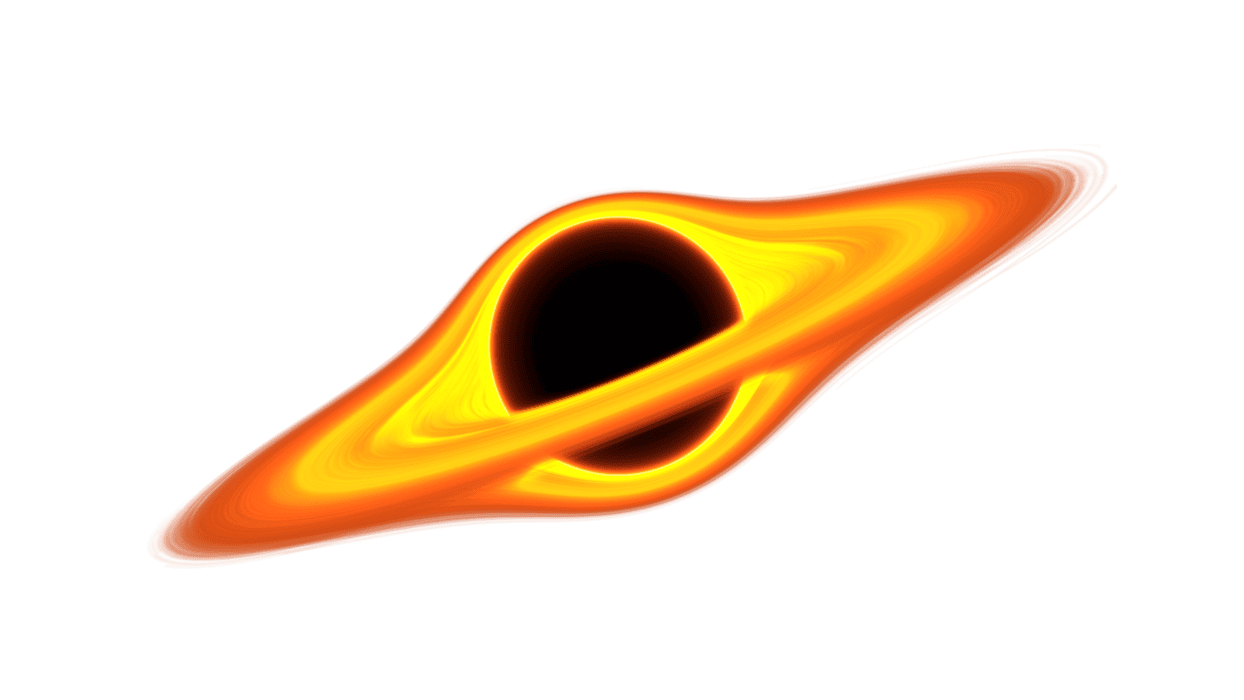
At their core, black holes are regions of spacetime where gravity is so strong that nothing, not even light, can escape. This intense gravitational field arises from a tremendous amount of matter compressed into an incredibly small space. A stellar-mass black hole, born from the collapse of a massive star, begins its life as a supernova remnant. Its lifecycle culminates in a singularity – a point of infinite density at its center, where the known laws of physics effectively break down. Encircling this singularity is the event horizon, often referred to as the “point of no return.” Once an object crosses this boundary, it is irrevocably committed to falling into the black hole.
What Lies Beyond the Veil: The Event Horizon
The event horizon isn’t a physical surface, but rather a boundary in spacetime. Imagine it as a cosmic waterfall where the flow of spacetime itself becomes faster than the speed of light, dragging everything with it towards the singularity. For an outside observer, an object approaching the event horizon appears to slow down, redden, and eventually freeze in time, its light waves immensely stretched until they fade from view. This visual distortion is a direct consequence of extreme gravitational time dilation, a core prediction of Einstein’s theory of general relativity. For the infalling object, however, the journey continues uninterrupted, though it will experience an increasingly bizarre series of events.
One of the most dramatic experiences awaiting an unfortunate astronaut or star near a black hole isn’t the final plunge into the singularity, but “spaghettification.” As an object approaches a black hole, the gravitational force exerted on its closest parts is significantly stronger than on its farthest parts. This differential force, known as a tidal force, stretches the object vertically while compressing it horizontally, much like spaghetti stretching and thinning as it’s pulled. For a human, this would be an excruciating and fatal stretching, tearing the body atom by atom long before reaching the singularity itself, especially for smaller, stellar black holes. Supermassive black holes, by contrast, have a much wider event horizon, meaning the tidal forces are less extreme at the point of crossing, allowing for a somewhat “smoother” — though still ultimately doomed — passage.
The Information Paradox: A Cosmic Conundrum
Perhaps one of the most puzzling secrets hidden within black holes is the information paradox. Quantum mechanics states that information – the fundamental properties of particles – can never be truly destroyed. Yet, if matter falls into a black hole, and black holes are thought to eventually evaporate through a process called Hawking radiation (where they slowly leak thermal energy due to quantum effects near the event horizon), where does the information go? Does it simply vanish, violating a fundamental law of physics? Or is it somehow encoded on the event horizon, perhaps escaping in a scrambled form with the Hawking radiation? This paradox has fueled debates among the brightest minds in physics for decades, suggesting our current understanding of gravity and quantum mechanics might be incomplete. New theories, such as holographic principles and “fuzzballs,” attempt to reconcile this conflict, proposing that black holes are not smooth, empty voids beyond the event horizon but rather complex, quantum objects that store information in ways we are only beginning to comprehend.
Cosmic Architects: Black Holes and Galaxy Evolution
Beyond their destructive reputation, black holes play a surprisingly constructive role in the universe. Supermassive black holes, millions to billions of times the mass of our Sun, reside at the centers of nearly all large galaxies, including our own Milky Way. Far from being passive inhabitants, these colossal entities are intimately linked to the growth and evolution of their host galaxies. The powerful jets of high-energy particles emanating from active supermassive black holes (when they are accreting vast amounts of matter) can both ignite star formation in gas clouds and, conversely, heat surrounding gas to prevent it from cooling and forming new stars. This intricate feedback mechanism suggests that galaxies and their central black holes co-evolved, influencing each other’s development over billions of years. Understanding this cosmic dance is key to deciphering the large-scale structure of the universe.
What Could Black Holes Be? More Than Cosmic Gullets?
The extraordinary physics inside black holes has also led to fascinating, albeit speculative, theories. Some hypotheses suggest that black holes could be “wormholes” – theoretical tunnels through spacetime that might connect distant regions of the universe or even different universes altogether. While pure general relativity allows for the mathematical possibility of wormholes, their stability and traversability remain highly debated, requiring exotic matter with negative energy density. Others ponder if black holes could be “baby universes” forming within our own, or gateways to alternate realities. These concepts, though currently in the realm of science fiction, highlight the profound questions that black holes inspire about the nature of reality and the cosmos.
Probing the Darkness: The Future of Black Hole Research
Our quest to unlock these secrets continues. Breakthroughs like the Event Horizon Telescope, which delivered the first-ever image of a black hole (M87) and our galaxy’s Sagittarius A black hole, are providing unprecedented observational data. Gravitational wave observatories like LIGO and Virgo are detecting ripples in spacetime caused by the merging of black holes, offering new ways to study their properties and distribution. Future missions and technologies promise even deeper insights, potentially allowing us to test gravity in extreme conditions, confirm quantum gravitational effects, and perhaps even glimpse the quantum structure of spacetime itself.
In conclusion, black holes are far more than just cosmic devourers. They are laboratories of extreme physics, challenging our most fundamental theories and revealing the intricate connections between gravity, quantum mechanics, and the evolution of the universe. The stunning secrets they hide continue to beckon us, inspiring a relentless pursuit of knowledge that pushes the boundaries of human ingenuity and our understanding of the cosmos.
0 Comments