What makes volcanoes erupt? It’s a question that has fascinated humanity for millennia, inspiring both awe and terror. The ground rumbles, smoke plumes into the sky, and then, with unimaginable power, molten rock, ash, and gases explode from the Earth’s crust. While often portrayed as sudden, chaotic events, volcanic eruptions are the result of complex, interconnected geological processes that operate deep beneath our feet, culminating in a dramatic release of energy. Understanding these mechanisms unveils not just shocking truths about our planet’s inner workings, but also crucial insights for predicting and mitigating their impact.
At its core, a volcanic eruption is driven by magma – molten rock generated deep within the Earth’s mantle and lower crust. This magma, being less dense than the surrounding solid rock, begins a slow, inexorable journey upwards, collecting in large reservoirs known as magma chambers. These chambers can be vast, located anywhere from a few to many kilometers below the surface. The conditions within these chambers – pressure, temperature, and crucially, the composition of the magma – are the primary determinants of what kind of eruption will eventually occur.
What Lies Beneath: The Magma Chamber and Its Contents
The journey of magma is not always smooth. As it rises, it interacts with overlying rock, sometimes melting it, sometimes cracking it, creating conduits and pathways. The magma chamber serves as a temporary holding tank, a pressure cooker where volcanic ingredients are mixed and heated. But it’s not just molten rock; dissolved gases, primarily water vapor, carbon dioxide, and sulfur dioxide, are integral components of the magma. These gases are initially dissolved under immense pressure deep underground, much like carbonation in a sealed soda bottle.
The type of magma is perhaps the most critical factor in determining an eruption’s character. Magma can be generally categorized by its silica content:
Basaltic magma (low silica, low viscosity): Flows relatively easily, allowing gases to escape gradually. This often leads to effusive eruptions where lava flows smoothly from the volcano.
Andesitic and Rhyolitic magma (high silica, high viscosity): Thicker, stickier, and flows with much greater difficulty. This high viscosity traps gases more effectively, leading to a dangerous buildup of pressure.
Understanding What Fuels the Fire: Gas Exsolution and Pressure Dynamics
The “shocking truth” about explosive eruptions often boils down to the behavior of these dissolved gases. As magma rises closer to the surface, the confining pressure from the overlying rock decreases. This pressure drop is analogous to opening that soda bottle: the dissolved gases suddenly exsolve, or come out of solution, forming bubbles within the magma.
In low-viscosity basaltic magma, these gas bubbles can rise and escape relatively easily, leading to relatively calm lava flows. However, in high-viscosity andesitic or rhyolitic magma, the sticky molten rock traps these gas bubbles. As more magma rises and more gas exsolves, the number and size of these bubbles dramatically increase. This accumulation of gas bubbles, rapidly expanding within the confined space of the volcano’s conduit, creates enormous internal pressure – pressure that can eventually exceed the strength of the surrounding rock.
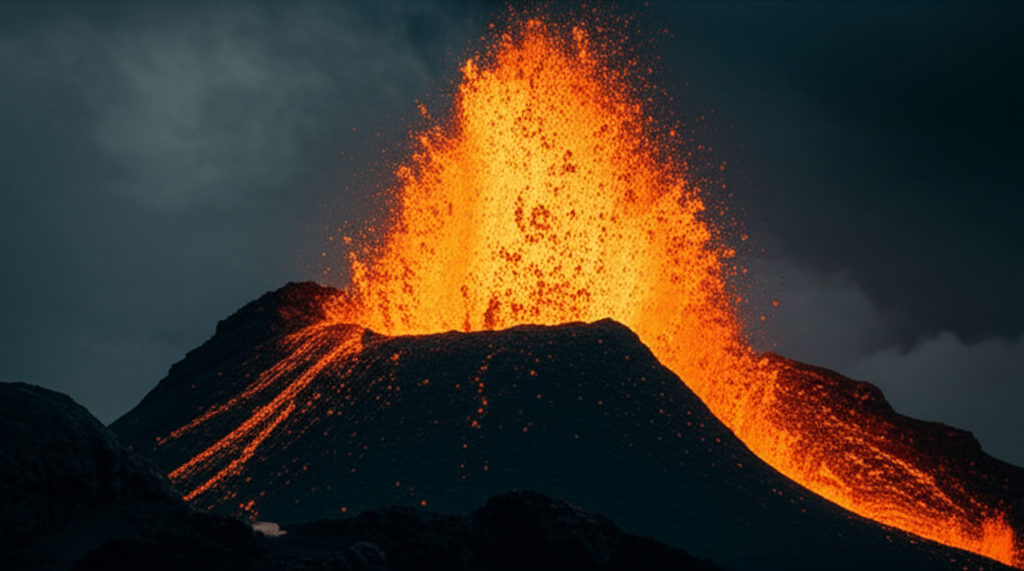
When this critical pressure threshold is breached, the result is often a violent, explosive eruption. The superheated, gas-rich magma is fragmented into ash, pumice, and volcanic bombs, which are then ejected with incredible force, creating towering eruption columns that can reach tens of kilometers into the stratosphere.
What Triggers the Ascent? External Factors and Tectonic Settings
While internal pressure is the immediate cause of an eruption, various external geological forces play a continuous role in fueling volcanic activity and triggering the ascent of magma:
1. Tectonic Plate Movement: The vast majority of volcanoes are located along the boundaries of Earth’s tectonic plates.
Subduction Zones (Convergent Boundaries): Here, one plate slides beneath another. The descending plate carries water into the mantle, which lowers the melting point of the overlying mantle rock, creating magma. High-silica, viscous magmas are common in these zones, leading to highly explosive stratovolcanoes like those in the Pacific Ring of Fire.
Rift Zones (Divergent Boundaries): Where plates pull apart, like at mid-ocean ridges or the East African Rift, pressure is reduced on the underlying mantle, causing it to melt. Low-silica basaltic magma rises relatively easily, resulting in effusive eruptions and shield volcanoes.
Hot Spots: These are areas far from plate boundaries where plumes of superheated mantle rock rise towards the surface, creating volcanoes like those in Hawaii. These typically produce basaltic, effusive eruptions.
2. Magma Recharge: New batches of magma arriving into the existing magma chamber can increase pressure and trigger an eruption.
3. Groundwater Interaction: In some cases, groundwater seeping into hot rock or coming into contact with magma can flash to steam, causing phreatic or phreatomagmatic explosions.
4. Flank Collapse: The sudden collapse of a volcano’s flank can depressurize the magma chamber, leading to an eruption.
What Scientists Look For: Forecasting Eruptions
The “shocking truth” for many is that while we understand the mechanisms, predicting the exact timing and magnitude of an eruption remains one of volcanology’s greatest challenges. However, scientists are increasingly adept at forecasting eruptions by monitoring changes within and around volcanoes. They look for specific indicators, or “precursors”:
Seismic Activity: Increased frequency and intensity of earthquakes often signal magma movement or fracturing of rock.
Ground Deformation: Magma moving upwards can cause the ground surface to swell or tilt, detectable by tiltmeters, GPS, and satellite radar.
Gas Emissions: Changes in the volume and composition of gases escaping from fumaroles (vent openings) can indicate new magma rising or changes in magma depth.
* Thermal Anomalies: Increased heat flow or changes in surface temperature can point to magma nearing the surface.
By continuously monitoring these multiple parameters, volcanologists can issue warnings, allowing authorities to evacuate communities and save lives.
In conclusion, the powerful spectacle of a volcanic eruption is not a random act but the logical consequence of Earth’s dynamic interior. From the slow ascent of buoyant magma and the critical role of dissolved gases to the intricate dance of tectonic plates, each element contributes to the explosive potential. The shocking truths lie in the immense forces at play beneath our feet, forever shaping our planet and reminding us of the raw power and persistent geological activity that defines Earth.
0 Comments