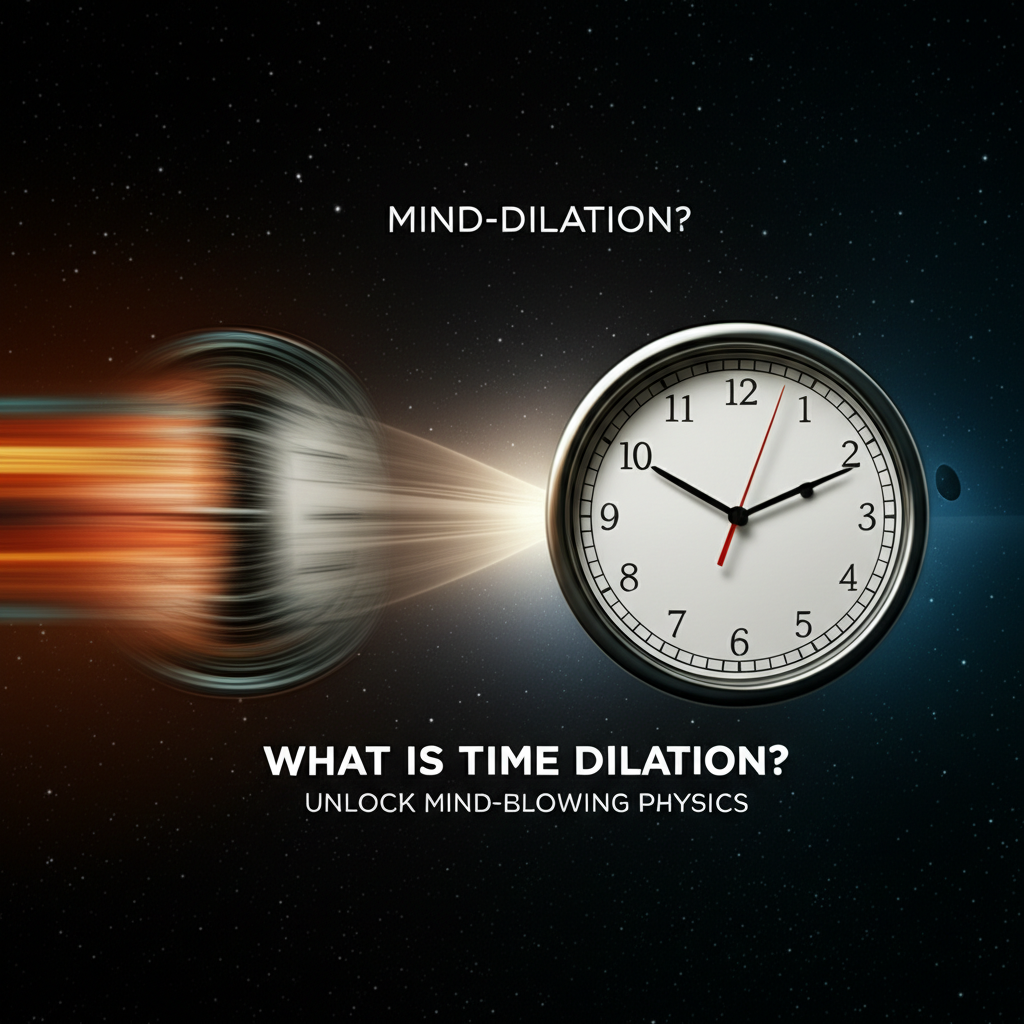
What is time dilation? It’s one of the most astonishing and counter-intuitive concepts in modern physics, a cornerstone of Albert Einstein’s theories of relativity that fundamentally redefines our understanding of time itself. Far from being a universal, unchangeable constant, time, it turns out, is relative. It can speed up or slow down depending on an observer’s speed and proximity to massive objects. This isn’t science fiction; it’s a verifiable, measured phenomenon that impacts everything from the precise functioning of GPS satellites to the very fate of astronauts venturing into space. Prepare to unlock a mind-bending truth about the universe we inhabit.
The Two Pillars of Time Dilation: Speed and Gravity
Time dilation manifests in two primary forms, each explained by a different facet of Einstein’s revolutionary work:
1. Special Relativistic Time Dilation: This occurs due to differences in relative velocity between observers. The faster you move through space, the slower time passes for you relative to someone stationary or moving at a different, slower speed. This concept stems from Einstein’s 1905 theory of Special Relativity.
2. General Relativistic Time Dilation: This occurs due to differences in gravitational potential. The stronger the gravitational field, the slower time passes. This phenomenon is a consequence of Einstein’s 1915 theory of General Relativity, which describes gravity not as a force, but as a curvature of spacetime itself caused by mass and energy.
Together, these two forms reveal a universe where spacetime is a dynamic, interconnected fabric, not merely a static backdrop for events.
What Happens When You Move Fast? (Special Relativistic Time Dilation)
Imagine two identical clocks. One remains stationary on Earth, while the other is aboard a spaceship hurtling through space at speeds approaching the speed of light. According to special relativity, the clock on the spaceship will tick slower than the clock on Earth. If an astronaut were on that spaceship for what felt like a few years, upon returning to Earth, they would find that many more years had passed there. This isn’t merely an illusion; the astronaut would have physically aged less than their twin who stayed on Earth.
This phenomenon arises from two fundamental principles of special relativity:
The laws of physics are the same for all observers in uniform motion.
The speed of light in a vacuum is the same for all inertial observers, regardless of the motion of the light source.
To reconcile these principles, time itself must be flexible. One way to visualize this is with the “light clock” thought experiment: imagine a clock where a light beam bounces between two mirrors. If this clock moves rapidly, the light beam has to travel a longer, diagonal path to hit the mirrors, yet it must always travel at the same constant speed c. The only way for the light to cover a greater distance at the same speed c is if the time it takes to complete one “tick” (one bounce) is longer. Hence, the moving clock ticks slower.
What Does Gravity Have to Do With Time? (General Relativistic Time Dilation)
General relativistic time dilation dictates that gravity also warps not just space, but time. The stronger the gravitational field, the slower time progresses. This means that a clock positioned closer to a massive object (like Earth) will run slightly slower than a clock further away from it.
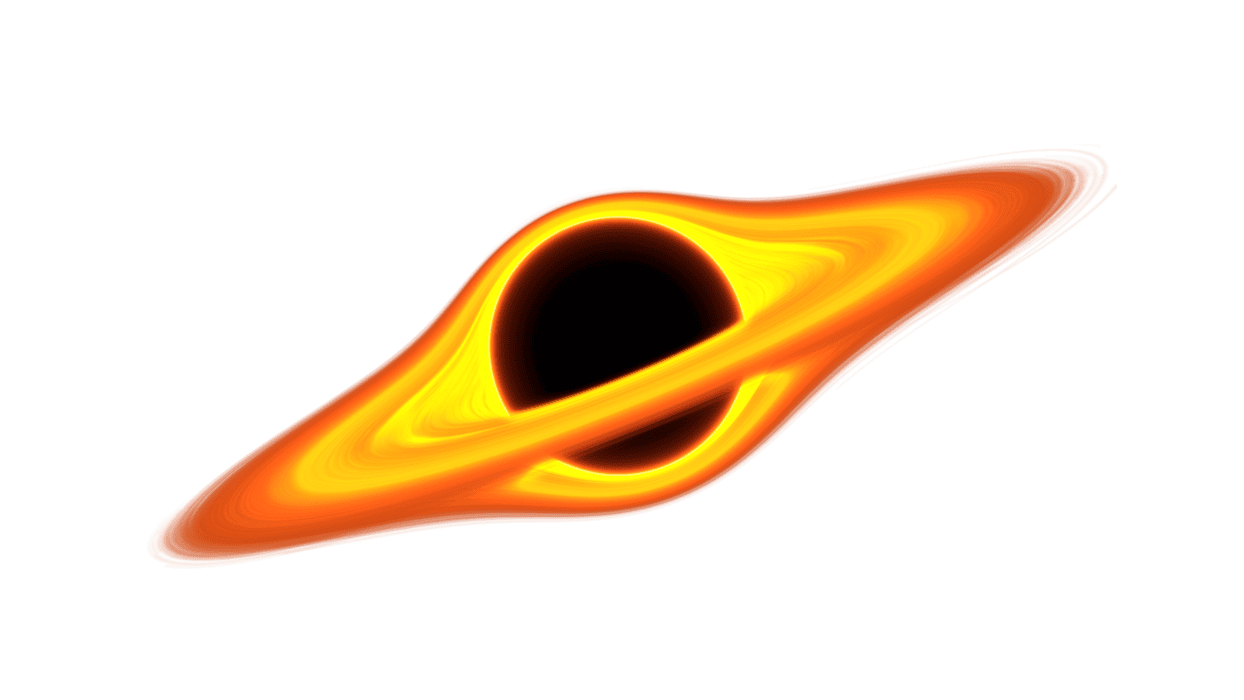
Consider the difference in time between someone at the top of a skyscraper and someone at its base. Because the person at the top is minutely further away from Earth’s gravitational pull, time passes ever so slightly faster for them. While imperceptible in daily life, this effect has been measured with incredibly precise atomic clocks, even over small altitude differences of just a few inches. For objects near extreme gravitational sources, like neutron stars or black holes, this effect becomes drastically pronounced. Time near the event horizon of a black hole would effectively grind to a halt from the perspective of a distant observer.
What Are the Practical Applications and Evidences of Time Dilation?
While these ideas might seem like abstract concepts confined to the realm of theoretical physics, time dilation is a very real, experimentally verified phenomenon with tangible impacts:
1. GPS Satellites: Perhaps the most ubiquitous example in our daily lives. GPS satellites orbit Earth at an altitude where they experience both types of time dilation. Due to their speed (around 14,000 km/h), their clocks run slower by about 7 microseconds per day (special relativity). However, because they are further from Earth’s gravity, their clocks run faster by about 45 microseconds per day (general relativity). The net effect is that clocks on GPS satellites run approximately 38 microseconds faster per day than clocks on Earth. Without constant, precise relativistic corrections, GPS systems would accumulate errors of several kilometers per day, rendering them useless.
2. Muon Decay: Muons are subatomic particles created in Earth’s upper atmosphere by cosmic rays. They are very unstable and have a known, extremely short lifespan (about 2.2 microseconds). If time were absolute, very few muons would be able to reach Earth’s surface before decaying. Yet, a significant number are detected. This is because, from our perspective, the muons are traveling at relativistic speeds, so their “internal clocks” tick slower, extending their apparent lifespan and allowing them to travel much further than classical physics would predict.
3. Astronauts on the ISS: Astronauts aboard the International Space Station (ISS) experience both forms of time dilation. They move at high speeds (around 7.6 km/s), which slows their clocks, and they are further from Earth’s gravity, which speeds up their clocks. The speed effect slightly outweighs the gravitational effect, meaning astronauts on the ISS age fractionally slower than people on Earth, though the difference is minuscule (about 0.01 seconds over six months).
The Mind-Blowing Implications of Time Not Being Absolute
The reality of time dilation challenges our intuitive understanding of time as a universal, unchanging constant that flows uniformly for everyone. It reveals a universe where each observer has their own “personal” flow of time, influenced by their motion and their gravitational environment.
This interconnectedness of space and time, called spacetime, means that the past, present, and future are not as distinctly defined and universally shared as we perceive them in our everyday lives. For observers moving at different speeds or in different gravitational fields, the ordering of events can even appear different. While we can’t travel fast enough in our daily lives to notice these effects directly, they are fundamental to how the universe operates at its most profound levels, urging us to reconsider the very fabric of reality.
Conclusion
Time dilation is far more than an abstract theoretical concept; it’s a profound aspect of our universe, confirmed by scientific experiments and critical to common technologies like GPS. It demonstrates that time is not an absolute, immutable entity, but rather a flexible dimension intricately linked to space, motion, and gravity. Unlocking this mind-blowing piece of physics forces us to acknowledge that our perception of a steady, unchanging march of time is merely a localized experience, and that the cosmos holds deeper, more dynamic truths about the nature of existence itself.
0 Comments