- The Core Concept: Time is Not Absolute
- What Causes Time Dilation? Two Primary Forms
- 1. Relative Velocity (Special Relativistic Time Dilation)
- 2. Gravity (General Relativistic Time Dilation)
- Real-World Evidence and Applications
- Understanding What Makes Time Dilation "Mind-bending"
- The Cosmic Implications of Time Dilation
What is Mind-bending Time Dilation? It’s a concept rooted in Albert Einstein’s theories of relativity, challenging our everyday intuition that time is a universal, constant flow. Instead, time dilation reveals that time is elastic, capable of speeding up or slowing down depending on an observer’s relative motion or proximity to a massive object. It’s not an illusion but a fundamental property of the universe, with profound implications that have been scientifically verified, proving that time, much like space, is a dimension that can be warped.
The Core Concept: Time is Not Absolute
For centuries, even millennia, humanity operated under the assumption of absolute time – a universal clock ticking away identically for everyone, everywhere. Isaac Newton’s classical mechanics firmly entrenched this idea. However, in the early 20th century, Albert Einstein revolutionized our understanding with his theories of relativity. His work demonstrated that observers in different frames of reference can experience time differently.
The cornerstone of this revolutionary idea lies in one of Einstein’s postulates: the speed of light in a vacuum is constant for all inertial observers, regardless of their own motion. This seemingly simple statement has extraordinary consequences. If the speed of light is always measured the same, then for observers moving relative to one another, space and time itself must adjust to make this true. Time dilation is one such adjustment.
Imagine a simple “light clock” where a light beam bounces between two mirrors. For an observer where the clock is stationary, the light travels a direct vertical path. But for an observer moving past this clock, the light must travel a longer, diagonal path to hit the mirrors at the same point relative to the moving observer’s frame. Since the speed of light must be the same for both observers, and the light in the moving clock has to cover more distance, the only logical conclusion is that time itself must be passing slower for the moving clock. The ticks happen less frequently from the perspective of the stationary observer. This isn’t just an abstract thought experiment; it’s a profound truth about the fabric of spacetime.
What Causes Time Dilation? Two Primary Forms
Time dilation manifests in two primary ways, each stemming from a different aspect of Einstein’s theories of relativity:
1. Relative Velocity (Special Relativistic Time Dilation)
This form, described by Einstein’s theory of Special Relativity (1905), states that time passes slower for an object that is moving relative to an observer. The faster an object moves, the slower its time progresses from the perspective of a stationary observer. This effect becomes significant only at speeds approaching the speed of light.
For example, if you were to travel in a spaceship at a very high fraction of the speed of light, an outside observer on Earth would see your clock ticking slower than theirs. Conversely, from your perspective inside the spaceship, everything on Earth would appear to be happening in fast-forward. If you spent a few subjective years traveling near light speed, upon your return, decades or even centuries might have passed on Earth, making you relatively younger than your contemporaries. This is the essence of the famous “Twin Paradox,” where a twin who travels through space at high speed returns to find their stay-at-home twin significantly older.
2. Gravity (General Relativistic Time Dilation)
The second form of time dilation is a consequence of Einstein’s General Theory of Relativity (1915), which describes gravity not as a force, but as the curvature of spacetime caused by mass and energy. This theory posits that time passes slower in stronger gravitational fields.
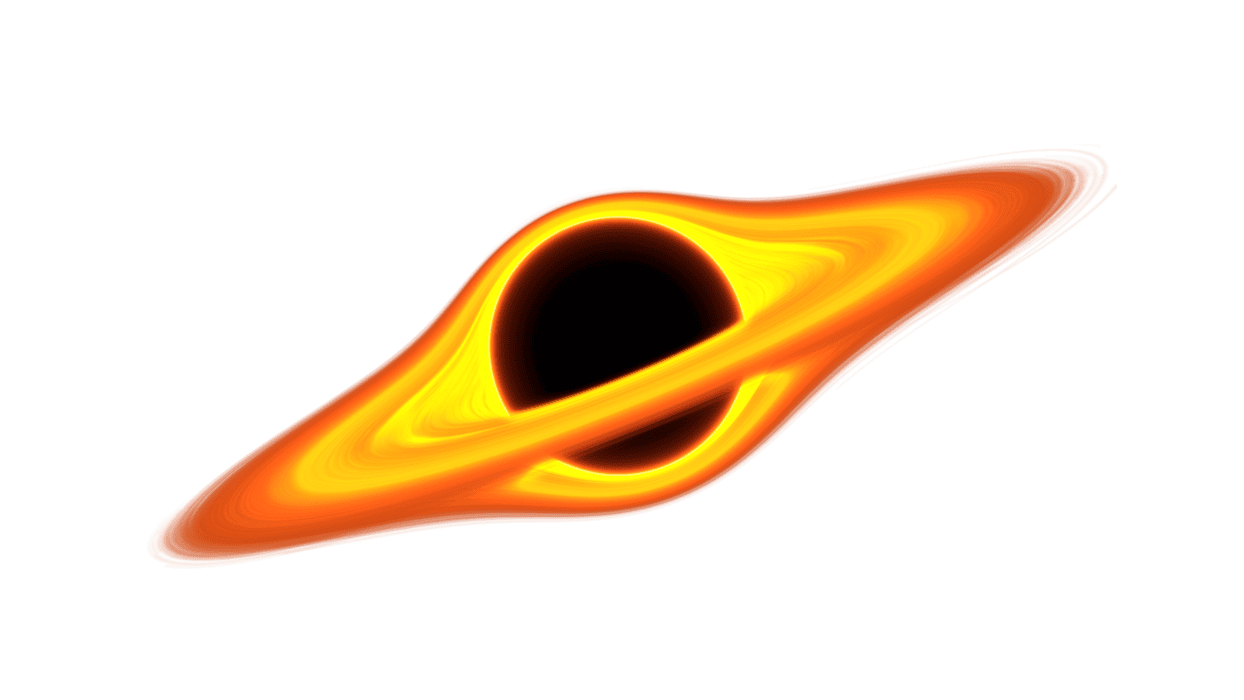
This means that a clock placed closer to a massive object (like Earth or a black hole) will tick slower than a clock farther away in a weaker gravitational field. For instance, time passes infinitesimally slower for your feet than for your head because your feet are marginally closer to Earth’s gravitational center. While imperceptible in daily life, this effect becomes dramatically apparent near incredibly massive objects such as neutron stars or black holes. At the event horizon of a black hole, gravity is so extreme that, from an outside observer’s perspective, time for anything falling in would appear to slow down almost to a complete halt, “freezing” at the horizon.
Real-World Evidence and Applications
Time dilation isn’t just theoretical speculation; it has been rigorously tested and confirmed through numerous experiments and has crucial practical applications:
GPS Satellites: Perhaps the most common and critical application of time dilation corrections occurs in the Global Positioning System (GPS). GPS satellites orbit Earth at speeds of about 14,000 km/h (Special Relativity dictates they run slower), and they are also in a weaker gravitational field than clocks on Earth (General Relativity dictates they run faster). Both effects must be accounted for. Without these precise relativistic corrections, GPS systems would accumulate errors of approximately 10 kilometers per day, rendering them useless for navigation.
Muons: These subatomic particles are created high in Earth’s atmosphere during cosmic ray collisions. They have a very short natural lifespan (about 2.2 microseconds). According to classical physics, they shouldn’t live long enough to reach Earth’s surface. However, due to their extremely high speeds (close to the speed of light), special relativistic time dilation extends their observed lifespan by a factor of 10 or more, allowing a significant number of them to reach ground-level detectors.
* Atomic Clocks: Scientists have flown incredibly precise atomic clocks on planes and rockets and compared them to identical clocks on the ground. The results consistently show that the moving clocks and those in weaker gravitational fields indeed tick slightly faster, confirming both forms of time dilation to an astonishing degree of accuracy.
Understanding What Makes Time Dilation “Mind-bending”
The “mind-bending” aspect of time dilation comes from its challenge to our intuitive understanding of reality. We are accustomed to a linear, absolute progression of time, where a second is always a second for everyone. Time dilation shatters this notion, revealing that there is no single, universal “now” throughout the cosmos.
What this implies is that simultaneity is relative. Two events that appear to happen at the same time for one observer might occur at different times for another observer in a different frame of reference. This means our concept of “present” is unique to our own reference frame.
It’s crucial to understand that time dilation is not merely an optical illusion or a trick of perception. It’s a genuine difference in the passage of time experienced by observers. The clocks aren’t “wrong”; they are accurately representing the proper time experienced by an object in its own reference frame. This transformation of time is a fundamental ingredient in the fabric of spacetime, making it a unified entity where space and time are inextricably linked.
The Cosmic Implications of Time Dilation
The implications of time dilation extend far beyond our planetary neighborhood. When we gaze at distant galaxies, we are looking back in time, and the light we receive has experienced gravitational and cosmic redshifting and time dilation over billions of years. Astronauts embarking on future interstellar journeys might exploit time dilation, allowing them to travel vast cosmic distances within their lifetime, while eons pass on their home planet.
Near the event horizon of black holes, time dilation reaches its most extreme, becoming almost infinite from an external perspective. An object falling into a black hole would appear to “freeze” at the event horizon to a distant observer, its light redshifted into oblivion. Yet, for the object itself, time would continue normally until it reached the singularity.
Ultimately, time dilation is a testament to the strange and beautiful nature of our universe. It forces us to reconsider our most basic assumptions about existence, compelling us to embrace a reality where time is not a rigid backdrop but a dynamic, flexible player in the grand cosmic drama. As we delve deeper into the mysteries of spacetime, understanding time dilation will remain a cornerstone of our quest to comprehend the universe.
0 Comments