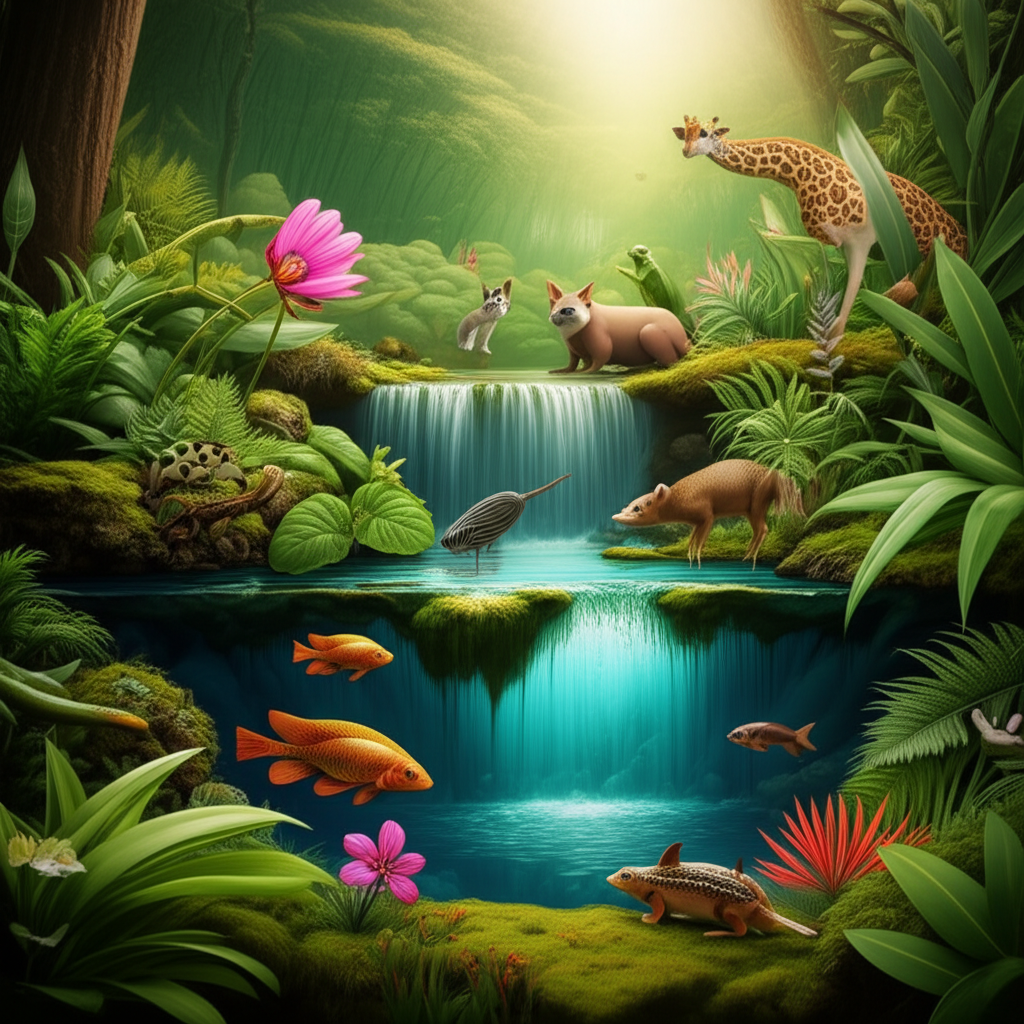
What is an ecosystem? At its core, an ecosystem is a geographical area where plants, animals, and other organisms, along with weather and landscape, work together to form a bubble of life. It’s a complex, dynamic system comprising both living (biotic) and non-living (abiotic) components that interact in an intricate web of interdependence. From the vastness of an ocean to the microscopic world found in a single drop of water, every ecosystem tells a unique story of survival, adaptation, and balance. Understanding ecosystems is fundamental to appreciating the natural world and our place within it.
What Exactly Defines an Ecosystem?
An ecosystem is not merely a collection of organisms; it’s the sum of their interactions with each other and their physical environment. This interaction is the key defining characteristic. Living things depend on non-living things like sunlight, water, and soil, and in turn, they influence these non-living elements. For instance, plants absorb carbon dioxide and release oxygen, altering the atmospheric composition. Decomposers break down dead organic matter, enriching the soil. This constant exchange and transformation of energy and nutrients are what sustain life within an ecosystem, creating a self-regulating system that can thrive or decline based on its internal and external conditions.
The Core Components: Biotic and Abiotic Factors
Every ecosystem, regardless of its size or location, is built upon two fundamental categories of components:
What are Biotic Factors?
Biotic factors refer to all the living or once-living parts of an ecosystem. These include:
Producers (Autotrophs): Organisms that produce their own food, primarily through photosynthesis using sunlight. Examples include plants, algae, and some bacteria. They form the base of the food web.
Consumers (Heterotrophs): Organisms that obtain energy by feeding on other organisms. They are categorized based on their diet:
Primary Consumers (Herbivores): Eat producers (e.g., deer, rabbits).
Secondary Consumers (Carnivores/Omnivores): Eat primary consumers (e.g., foxes, birds).
Tertiary Consumers (Carnivores/Omnivores): Eat secondary consumers (e.g., eagles, sharks).
Decomposers (Detritivores): Organisms that break down dead organic matter, recycling nutrients back into the soil or water. Examples include bacteria, fungi, and worms. They are crucial for nutrient cycling.
What are Abiotic Factors?
Abiotic factors are the non-living chemical and physical parts of an ecosystem. These elements dictate where and how organisms can live:
Sunlight: The primary energy source for most ecosystems.
Water: Essential for all life processes. Its availability (or lack thereof) profoundly impacts an ecosystem.
Soil: Provides nutrients, anchor for plants, and habitat for many organisms. Its composition and pH are critical.
Temperature: Influences metabolic rates and the distribution of species.
Air: Provides gases like oxygen and carbon dioxide, vital for respiration and photosynthesis.
Minerals: Essential nutrients found in soil and water.
Topography: The physical features of the land (e.g., altitude, slope) which affect climate and water flow.
The interplay between these biotic and abiotic components dictates the unique characteristics and biodiversity of any given ecosystem.
What Kinds of Ecosystems Exist?
Ecosystems are incredibly diverse and can be broadly classified into two main types:
Terrestrial Ecosystems
These are land-based ecosystems, each with distinct climate zones, vegetation types, and animal life:
Forests: Characterized by dense tree cover, high rainfall, and rich biodiversity (e.g., rainforests, temperate forests, boreal forests).
Grasslands: Dominated by grasses rather than large trees, often found in temperate or tropical regions (e.g., savannas, prairies).
Deserts: Arid regions with very low rainfall and sparse vegetation, home to specially adapted plants and animals.
Tundra: Cold, treeless regions with permafrost (permanently frozen soil), found in arctic and alpine areas.
Aquatic Ecosystems
These are water-based ecosystems, which can be further divided:
Freshwater Ecosystems:
Lotic (Flowing): Rivers and streams, characterized by moving water.
Lentic (Still): Lakes, ponds, and wetlands, with standing water.
Saltwater (Marine) Ecosystems:
Oceans: Vast bodies of saltwater, encompassing diverse zones like coastal areas, open ocean, and deep sea.
Coral Reefs: Highly biodiverse underwater structures built by coral polyps in warm, shallow waters.
Estuaries: Areas where freshwater rivers meet the ocean, creating unique brackish water environments.
The Dynamic Dance: How Ecosystems Function
Ecosystems are not static; they are highly dynamic systems characterized by continuous processes of energy flow and nutrient cycling.
Energy Flow: The sun is the ultimate source of energy for most ecosystems. Producers capture this solar energy and convert it into chemical energy. This energy then flows through the food chain as consumers eat other organisms. At each transfer, a significant amount of energy is lost as heat, which is why food chains typically have only a few levels.
Nutrient Cycling: Unlike energy, which flows in one direction, nutrients (like carbon, nitrogen, phosphorus, and water) are continuously recycled within an ecosystem. Decomposers play a vital role in breaking down dead organic matter, returning essential nutrients to the soil or water where they can be reabsorbed by producers, thus completing the cycle. The consistent movement of these elements is crucial for sustaining life.
Why Do Ecosystems Matter?
The health of ecosystems directly impacts the health of the planet and all its inhabitants, including humans.
Supporting Biodiversity: Ecosystems are homes to countless species of plants, animals, and microorganisms, representing the planet’s rich biodiversity. Healthy ecosystems provide habitats, food sources, and support the complex interdependencies that allow diverse life forms to thrive.
Providing Ecosystem Services: These are the numerous benefits that humans freely gain from the natural environment:
Provisioning Services: Food, fresh water, timber, fibers, medicinal plants.
Regulating Services: Climate regulation, flood control, disease regulation, water purification, air quality maintenance, pollination of crops.
Cultural Services: Recreational opportunities, aesthetic beauty, spiritual enrichment.
Supporting Services: Nutrient cycling, soil formation, primary production.
Economic Value: Beyond direct services, ecosystems underpin many industries, including agriculture, fisheries, forestry, and tourism, contributing significantly to global economies.
What Threats Do Ecosystems Face?
Unfortunately, many ecosystems worldwide are under severe threat due to human activities:
Habitat Destruction and Fragmentation: Driven by deforestation, urbanization, agriculture, and infrastructure development, this is the leading cause of biodiversity loss.
Pollution: Air, water, and soil pollution from industrial activities, agriculture, and waste disposal degrade habitats and harm organisms.
Climate Change: Rising global temperatures, altered precipitation patterns, and extreme weather events disrupt ecological balances and push species to their limits.
Invasive Species: Non-native species introduced to new ecosystems can outcompete native species, disrupt food webs, and spread diseases.
Overexploitation: Overfishing, overhunting, and unsustainable logging deplete natural resources faster than they can regenerate.
What Can We Do to Protect Them?
Protecting ecosystems is a shared responsibility that requires global cooperation, policy changes, and individual action.
Conservation and Restoration: Establishing protected areas, restoring degraded habitats, and reintroducing native species.
Sustainable Practices: Adopting sustainable agriculture, forestry, and fishing methods.
Reducing Pollution: Minimizing waste, supporting clean energy, and improving waste management systems.
Combating Climate Change: Transitioning to renewable energy, improving energy efficiency, and reducing carbon emissions.
* Education and Awareness: Increasing public understanding of ecological principles and the importance of conservation.
In conclusion, understanding what an ecosystem is—a delicate balance of living organisms and their environment—is the first step towards appreciating its immense value. These natural systems are not just beautiful landscapes; they are the fundamental life support systems of our planet, providing everything from the air we breathe to the food we eat. Safeguarding their health is not merely an environmental concern; it’s a critical challenge for the future of humanity and all life on Earth.
0 Comments