
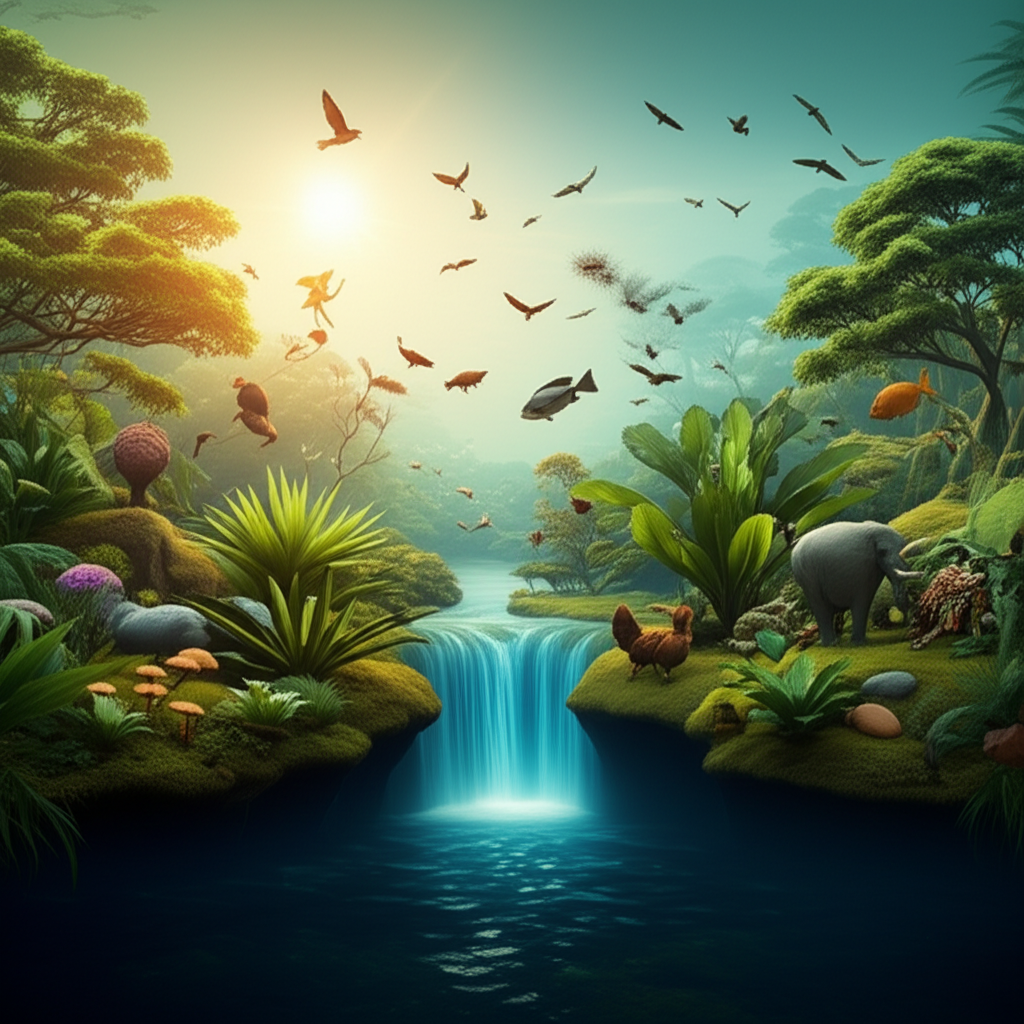
What exactly is an ecosystem? At its core, an ecosystem is a geographical area where plants, animals, and other organisms, as well as weather and landscape, work together to form a bubble of life. Think of it as a community of living organisms (biotic components) interacting with their non-living surroundings (abiotic components) in a complex, interconnected web. From a tiny pond teeming with microscopic life to a vast forest vibrant with diverse flora and fauna, ecosystems are fundamental units of nature, constantly exchanging energy and matter. Understanding them is crucial, as they are the very foundation of life on Earth, providing essential services that sustain us all.
The Essential Building Blocks of Every Ecosystem
Every ecosystem, regardless of its size or location, is composed of two primary elements:
1. Biotic Components (Living Things): These are all the living organisms within the ecosystem. They are categorized by their role in the flow of energy:
Producers (Autotrophs): These organisms, primarily plants and algae, create their own food through photosynthesis, converting sunlight into energy. They form the base of the food chain.
Consumers (Heterotrophs): Organisms that obtain energy by consuming other organisms. Consumers are further divided into:
Primary Consumers (Herbivores): Eat producers (e.g., deer, rabbits).
Secondary Consumers (Carnivores/Omnivores): Eat primary consumers (e.g., wolves, birds).
Tertiary Consumers (Carnivores/Omnivores): Eat secondary consumers (e.g., eagles, sharks).
Decomposers (Detritivores): Organisms like bacteria and fungi that break down dead organic matter, returning nutrients to the soil for producers to use. They are nature’s recyclers.
2. Abiotic Components (Non-Living Things): These are the physical and chemical factors that influence the biotic components and create the environment. Key abiotic factors include:
Sunlight: The primary energy source for most ecosystems.
Water: Essential for all life processes.
Soil: Provides nutrients, anchorage, and a habitat for many organisms.
Temperature: Influences metabolic rates and species distribution.
Air/Atmosphere: Composed of gases like oxygen, carbon dioxide, and nitrogen, all vital for life.
Minerals and Nutrients: Essential elements found in soil and water.
pH: The acidity or alkalinity of soil and water.
The intricate interplay between these biotic and abiotic elements defines the unique characteristics and functioning of each ecosystem.
How Ecosystems Function: Energy Flow and Nutrient Cycling
Ecosystems are dynamic systems characterized by continuous processes of energy flow and nutrient cycling:
Energy Flow: Energy largely originates from the sun and enters the ecosystem through producers. It then flows unidirectionally through the different trophic levels (feeding levels) as organisms consume one another. At each transfer, a significant amount of energy is lost as heat, which is why food chains typically don’t have many links. This forms a food chain, and multiple interconnected food chains form a complex food web, illustrating the myriad feeding relationships.
Nutrient Cycling: Unlike energy, nutrients (like carbon, nitrogen, phosphorus, and water) are continuously recycled within an ecosystem. Decomposers play a critical role here, breaking down dead organic material and returning vital micronutrients to the soil or water, making them available again for producers to absorb. These biogeochemical cycles ensure that essential elements are never truly lost but continuously reused.
Beyond energy and nutrients, living organisms within an ecosystem also engage in various interactions that shape their community structure:
Competition: Organisms vie for limited resources like food, water, or space.
Predation: One organism (predator) hunts and kills another (prey) for food.
Symbiosis: Close, long-term interactions between different species:
Mutualism: Both species benefit (e.g., bees pollinating flowers).
Commensalism: One species benefits, the other is neither harmed nor helped (e.g., barnacles on whales).
Parasitism: One species (parasite) benefits at the expense of the other (host).
Types of Ecosystems
Ecosystems are incredibly diverse and can be broadly categorized based on their environment:
Terrestrial Ecosystems: Found on land, these include:
Forests: Characterized by dense tree cover (tropical rainforests, temperate deciduous forests, boreal forests).
Grasslands: Dominated by grasses, with few trees (savannas, prairies).
Deserts: Arid regions with sparse vegetation adapted to extreme conditions.
Tundra: Cold, treeless regions with permafrost, found in arctic and high mountain areas.
Aquatic Ecosystems: Found in water, these include:
Freshwater Ecosystems: Lakes, ponds, rivers, streams, wetlands.
Marine Ecosystems: Oceans, coral reefs, estuaries, salt marshes, deep-sea vents.
Each type supports a unique set of organisms specially adapted to its particular abiotic conditions.
What Factors Influence Ecosystem Health and Resilience?
A healthy ecosystem is one that can maintain its structure and function over time, even in the face of disturbances. Several factors are crucial for ecosystem health and resilience:
Biodiversity: The variety of life within an ecosystem is a strong indicator of its health. A diverse ecosystem is more robust and adaptable, as a wider range of species means more varied roles and backup systems. If one species struggles, others might be able to fill its niche.
Connectivity: The ability for species to move between different parts of their habitat is vital for genetic diversity and population stability.
Absence of Pollution: Contamination of air, water, or soil can degrade an ecosystem’s capacity to support life.
Stable Resource Availability: Consistent access to essential nutrients and water prevents bottlenecks that could harm populations.
Disturbance Regimes:** Natural disturbances like fires or floods, in appropriate frequencies and intensities, can sometimes be beneficial, creating new habitats and promoting regeneration, demonstrating an ecosystem’s inherent adaptive capacity. However, excessive or unnatural disturbances can be detrimental.
The Human Impact and Why It Matters
Human activities significantly impact ecosystems worldwide. Deforestation, pollution, overfishing, habitat destruction, and climate change are putting immense pressure on these natural systems. When an ecosystem is severely degraded, it loses its ability to provide essential “ecosystem services” – the benefits humans receive from nature. These services include clean air and water, pollination of crops, climate regulation, fertile soil, and raw materials.
Understanding the intricate workings of ecosystems is not merely an academic exercise; it’s fundamental to our own survival. By recognizing our role within these interconnected systems and striving for sustainable practices, we can protect the delicate balance of nature and ensure a healthy planet for future generations. Our well-being is inextricably linked to the health and vitality of the ecosystems around us.
0 Comments