
- The Fundamental Engines: Wind and Density
- What New Discoveries Are Unveiling
- An Interconnected Global System
What fuels ocean currents is a profound question that continues to unravel fascinating secrets about our planet’s intricate systems. Far from being static bodies of water, the world’s oceans are in constant motion, driven by a complex interplay of forces that range from the obvious to the incredibly subtle. These vast, swirling rivers profoundly influence global weather patterns, distribute heat around the globe, transport nutrients vital for marine life, and even regulate the Earth’s climate. Understanding their intricate dance requires looking beyond superficial observations and delving into remarkable scientific discoveries.
The Fundamental Engines: Wind and Density
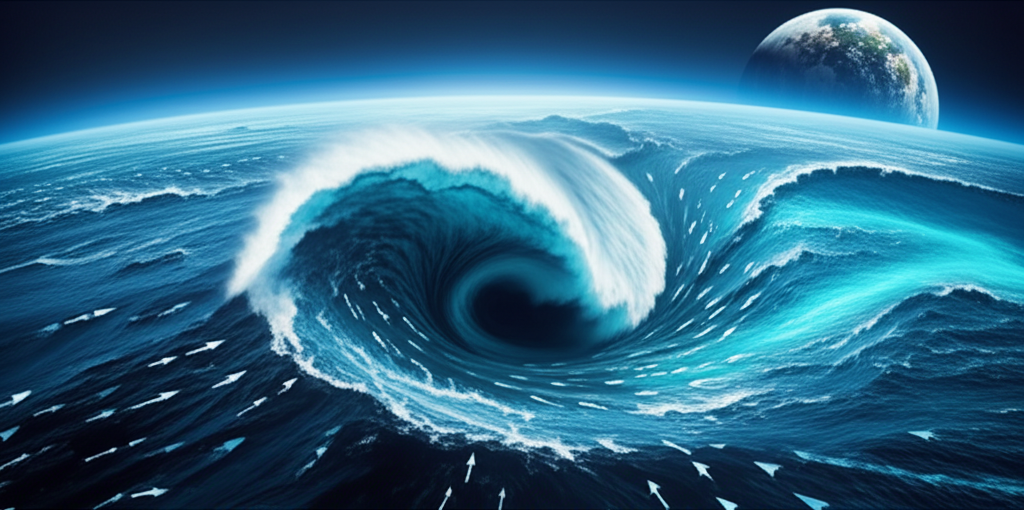
For centuries, humanity has observed the movements of the ocean, attributing surface currents largely to the prevailing winds. Indeed, wind is a primary driver of the upper ocean’s circulation. As wind blows across the water’s surface, it imparts energy through friction, pushing the water in its direction. This sustained push creates vast, swirling patterns known as gyres, such as the North Atlantic Gyre or the Pacific Gyre, which can span thousands of kilometers. The Earth’s rotation adds another layer of complexity, deflecting moving water (and air) to the right in the Northern Hemisphere and to the left in the Southern Hemisphere – a phenomenon known as the Coriolis effect – which helps shape these massive current systems.
However, surface currents are only one part of the story. The deep ocean operates on an entirely different engine, one driven by differences in water density, a process known as thermohaline circulation. This “thermohaline” mechanism refers to temperature (“thermo”) and salinity (“haline”). Cold water is denser than warm water, and salty water is denser than fresh water. In the North Atlantic, for instance, surface waters grow colder and saltier as they move toward the poles, losing heat to the atmosphere and becoming more concentrated in salt as some fresh water freezes into ice. When this dense, cold, salty water eventually reaches a critical density, it sinks to the ocean floor. This sinking drives a vast, slow-moving current that circulates through all the world’s major oceans, often referred to as the “Great Ocean Conveyor Belt.” It can take hundreds to thousands of years for water to complete just one full circuit, carrying heat, oxygen, and nutrients across the globe.
What New Discoveries Are Unveiling
While wind and thermohaline circulation form the bedrock of our understanding, recent advancements in oceanography, coupled with cutting-edge technology, have revealed an astounding array of additional factors and subtleties that significantly fuel and modify ocean currents. These discoveries challenge previous assumptions and paint an even more dynamic picture of ocean mechanics.
Internal Waves and Turbulence: One of the most significant recent discoveries is the profound role of internal waves and the subsequent turbulence they generate. While surface waves break at the shore, internal waves occur within the ocean, typically at boundaries between layers of different densities. These waves can be incredibly large, with heights of hundreds of meters, and are often generated by tidal forces flowing over underwater topography like seamounts and ridges. As these internal waves propagate and eventually break, they create intense turbulence. This turbulence is now understood to be critical for mixing the deep ocean, effectively stirring cold, dense waters with warmer, lighter waters. This mixing is crucial for the upkeep of the thermohaline circulation, as it brings less dense water to the surface to eventually cool and sink elsewhere, completing the cycle. Without this constant mixing, the deep ocean would stagnate, and the global conveyor belt would grind to a halt.
Abyssal Storms and Deep Eddies: For a long time, the deep ocean was thought to be a relatively calm and slow-moving environment. However, advanced models and deep-sea observations have uncovered “abyssal storms” – powerful, turbulent eddies hundreds of kilometers wide that swirl thousands of meters below the surface. These deep eddies are far more energetic than previously imagined, capable of transporting massive amounts of heat, salt, and even sediments across vast distances. They play a significant role in redistributing energy and shaping the flow of deep ocean currents, essentially acting as dynamic stirring mechanisms in regions once thought to be quiescent.
Topography and Seamounts: We now appreciate just how much underwater geography influences ocean currents. Submerged mountain ranges, vast abyssal plains, and isolated seamounts don’t merely sit passively; they actively steer, block, and accelerate currents, creating complex flow patterns, vortices, and areas of intense upwelling or downwelling. The interaction of currents with these topographical features is a major source of the internal waves and turbulence described earlier, highlighting the interconnectedness of these newly discovered drivers.
The Influence of Melting Ice: Climate change is rapidly altering polar regions, leading to increased melting of glaciers and ice sheets. This influx of freshwater into the ocean has a direct impact on salinity and density, particularly in critical deep-water formation zones like the North Atlantic and Southern Ocean. Scientific models and observations suggest that sustained freshwater input can reduce the density of surface waters, making them less prone to sinking. This has the potential to slow down or even alter the paths of the thermohaline circulation, with profound implications for global climate regulation and marine ecosystems.
An Interconnected Global System
What truly fuels ocean currents isn’t a single switch or simple mechanism, but rather a profoundly interconnected global system where wind, temperature, salinity, Earth’s rotation, underwater topography, tidal forces, and even the subtle breaking of internal waves all play a crucial, interdependent role. Each discovery adds another layer of complexity and wonder to our understanding.
These amazing discoveries are not just academic curiosities; they are vital for predicting future climate scenarios, understanding marine biodiversity, and managing resources. As our planet undergoes rapid environmental changes, a comprehensive understanding of the forces driving ocean currents becomes increasingly critical, ensuring that we can better anticipate and adapt to the evolving dance of our oceans.
0 Comments