- The Heart of the Beast: Magma and Its Journey
- The Critical Role of Gas Pressure
- Plate Tectonics: Earth's Grand Orchestrator
- What Precedes an Eruption? Key Warning Signs
- The Continuing Dance
Beneath the Surface: Unveiling the True Triggers of Volcanic Eruptions
What causes volcanoes to erupt is a question that has fascinated humanity for millennia, inspiring both fear and awe. These majestic geological formations are portals to the Earth’s fiery interior, but their sudden, powerful outbursts are not random acts of nature. Instead, they are the culmination of complex geological processes driven by immense heat, pressure, and the dynamic movement of our planet’s crust. Understanding these mechanisms reveals not “shocking secrets,” but rather the incredible science behind some of Earth’s most breathtaking and destructive phenomena.
The Heart of the Beast: Magma and Its Journey
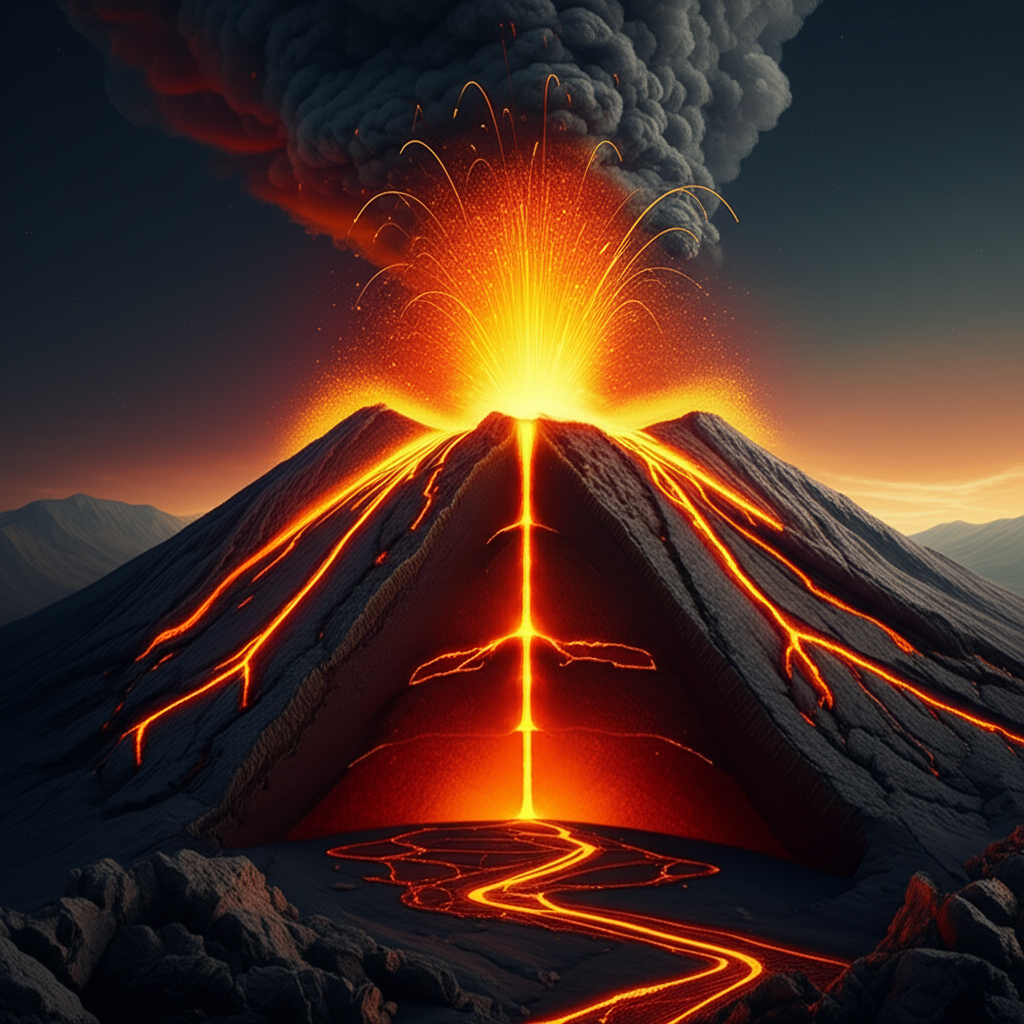
At the core of every volcanic eruption lies magma – molten rock generated deep within the Earth. Unlike liquid water, magma is not a uniform substance; it’s a superheated, slushy mix of molten rock, suspended crystals, and dissolved gases. This subterranean stew forms in specific geological settings where conditions allow existing rock to melt. These include areas where tectonic plates pull apart, where one plate slides beneath another, or above localized “hot spots” in the Earth’s mantle.
Once formed, magma is buoyant – less dense than the solid rock surrounding it – and thus begins an arduous ascent towards the surface. It often collects in vast underground reservoirs known as magma chambers, located several kilometers beneath a volcano. Here, the magma can churn, evolve, and accumulate, sometimes for thousands of years, building the potential for a future eruption. The composition of this magma, particularly its silica content, plays a crucial role in determining the nature of an eventual eruption. High-silica magma is thick and viscous, while low-silica magma is more fluid.
The Critical Role of Gas Pressure
While the upward movement of buoyant magma is essential, the primary driving force behind an explosive volcanic eruption is the exsolution and expansion of dissolved gases within the magma. Imagine opening a can of soda: under pressure, carbon dioxide remains dissolved in the liquid. Release the pressure, and the gas rapidly forms bubbles, pushing the liquid out. A similar, but far more powerful, process occurs within a magma chamber.
Magma contains significant amounts of dissolved volatile gases, primarily water vapor, carbon dioxide, sulfur dioxide, and hydrogen sulfide. As the magma rises towards the surface, the immense pressure of the overlying rock decreases. This reduction in pressure allows the dissolved gases to escape from the molten rock, forming bubbles. If the magma is highly viscous (thick), these bubbles become trapped and unable to escape easily. As more magma rises and more gas exsolves, the pressure within the magma chamber and conduit builds dramatically. When this internal gas pressure exceeds the strength of the surrounding rock, or the resistance of the overlying lava plug, an eruption becomes inevitable, often explosive.
Plate Tectonics: Earth’s Grand Orchestrator
The vast majority of volcanic activity on Earth is directly linked to the theory of plate tectonics – the majestic, slow-motion dance of gigantic crustal plates that make up our planet’s surface. These interactions provide the geological settings required for magma generation:
1. Divergent Plate Boundaries: Here, tectonic plates pull apart, such as at mid-ocean ridges or continental rift zones (like the East African Rift). As the plates separate, the pressure on the underlying mantle decreases, allowing hot rock to partially melt and form basaltic (low-silica, fluid) magma. This leads to relatively gentle, effusive eruptions, where lava flows steadily from fissures, as seen in Iceland or Hawaii (though Hawaii is a hotspot, its eruptions share characteristics with divergent boundary volcanism in terms of magma type).
2. Convergent Plate Boundaries (Subduction Zones): These are the most volcanically active and dangerous zones, responsible for the “Ring of Fire” that encircles the Pacific Ocean. Here, one oceanic plate is forced to slide beneath another plate (oceanic or continental) into the Earth’s mantle. As the subducting plate descends, it carries water-rich sediments and minerals. This water lowers the melting point of the overlying mantle rock, causing it to melt and form magma. This magma, often rich in silica and dissolved gases, rises to form arc volcanoes (e.g., Mount Fuji, Mount St. Helens). The highly viscous, gas-rich nature of this magma typically leads to explosive eruptions.
3. Hotspots: Less common but equally impressive are volcanoes formed over “hotspots.” These are areas where plumes of unusually hot rock rise from deep within the mantle, creating localized melting zones independent of plate boundaries. As a tectonic plate moves over a stationary hotspot, a chain of volcanoes can form, like the Hawaiian Islands. The eruption style can vary, but hotspot volcanoes often produce fluid, basaltic lava flows.
What Precedes an Eruption? Key Warning Signs
While predicting the exact timing, size, or style of a volcanic eruption remains a significant challenge, scientists utilize a range of monitoring techniques to detect precursor signals. These “warning signs” are clues that the magma chamber beneath a volcano is becoming increasingly active:
Seismic Activity: As magma moves through cracks in the Earth’s crust, it generates small earthquakes. An increase in the frequency, intensity, or location of these seismic tremors is a primary indicator of impending activity.
Ground Deformation: The accumulation of magma or pressurized gases can cause the ground surface to bulge, tilt, or inflate. Sophisticated GPS, tiltmeters, and satellite-based radar (InSAR) can precisely measure these subtle changes in the volcano’s shape.
Gas Emissions: Changes in the volume, composition, or temperature of gases released from fumaroles (vents) can signal magma rising closer to the surface. An increase in sulfur dioxide or carbon dioxide, for example, is a common precursor.
Thermal Changes: Rising magma heats the surrounding rock, which can sometimes be detected as an increase in heat flow or changes in surface temperature, observable with thermal cameras or satellite imagery.
The Continuing Dance
Ultimately, volcanic eruptions are the spectacular manifestation of our planet’s relentless internal heat engine and the dynamic processes of plate tectonics. The “secrets” are not hidden, but rather revealed through scientific inquiry: magma buoyancy, the explosive power of trapped gases, and the tectonic settings that create the molten rock in the first place. Through continuous monitoring and research, volcanologists strive to better understand these complex systems, not only to satisfy our curiosity about Earth’s workings but also to mitigate the risks posed by these magnificent, powerful natural wonders. The Earth’s fiery breath continues, a potent reminder of the ever-changing nature of our home planet.
0 Comments