- Earth's Restless Skin: The Tectonic Dance
- What Triggers Volcanic Activity at Plate Boundaries?
- Hotspots: The Anomalies of Volcanism
- Magma: The Molten Core of an Eruption
- The "Shocking Truth" Uncovered: A Planet in Constant Flux
What causes volcanoes, these majestic yet terrifying fissures in the Earth’s crust that spew molten rock, ash, and gases? For centuries, humanity has stared at their fiery might with a mix of fear and fascination, attributing their origins to angry gods or mysterious forces. While the “shocking truth” isn’t a single, sudden revelation, it lies in the slow, relentless, and unimaginably powerful processes deep within our planet – a truth far more profound and complex than ancient myths could ever conceive. Understanding volcanoes isn’t just about pinpointing a “cause”; it’s about grasping the very essence of a dynamic, living Earth.
Earth’s Restless Skin: The Tectonic Dance
At the heart of almost all volcanic activity lies the majestic theory of plate tectonics. Our planet’s outermost layer, the lithosphere, isn’t a single, rigid shell. Instead, it’s fragmented into several colossal pieces called tectonic plates, which are in constant, albeit slow, motion. These plates, comprising both continental and oceanic crust, float atop the semi-fluid asthenosphere, a layer of the upper mantle. The relentless convection currents within this intensely hot mantle – similar to how water boils in a pot – drag and push these plates around, leading to geological phenomena on an epic scale, including earthquakes, mountain building, and, most notably, volcanic eruptions.
What Triggers Volcanic Activity at Plate Boundaries?
The majority of volcanoes are found at the boundaries where these immense tectonic plates interact. There are three primary types of plate boundaries, and each contributes uniquely to the planet’s volcanic landscape.
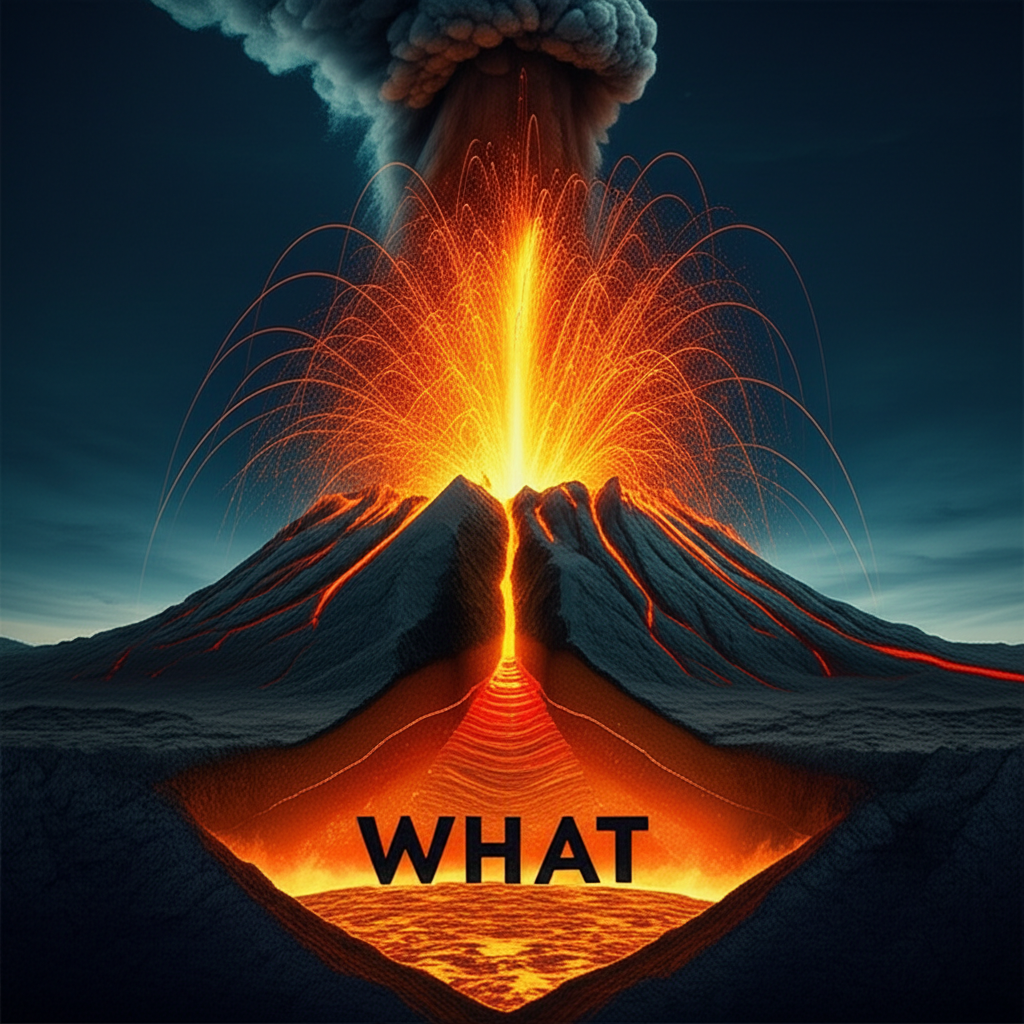
1. Convergent Plate Boundaries (Subduction Zones): These are perhaps the most dramatic and common sites for volcanic activity, forming some of the most explosive volcanoes on Earth. Here, two plates collide. When an oceanic plate, which is denser, meets a continental plate or another oceanic plate, it is forced downwards in a process called subduction. As the oceanic plate descends deeper into the mantle, the increasing heat and pressure, along with the introduction of water from the subducting plate, cause the rock to melt, forming magma. This magma, being less dense than the surrounding solid rock, begins to rise, eventually accumulating in magma chambers beneath the surface. When the pressure becomes too great, it erupts, forming stratovolcanoes like those found along the Pacific “Ring of Fire,” which accounts for approximately 75% of the world’s active and dormant volcanoes. The Andes Mountains in South America and the volcanic arcs of Japan are prime examples of this destructive boundary volcanism.
2. Divergent Plate Boundaries (Rift Zones): In contrast to colliding boundaries, divergent boundaries occur where two plates pull apart from each other. As the plates separate, the underlying mantle rock experiences a reduction in pressure, a phenomenon known as decompression melting. This allows the relatively solid mantle material to melt and form basaltic magma. This less viscous magma then rises to fill the gap, creating new crustal material.
The most extensive divergent boundaries are the mid-ocean ridges, immense underwater mountain ranges where new oceanic crust is continuously formed. Iceland is a remarkable example of a divergent boundary exposed above sea level, boasting highly active volcanic systems. On land, divergent boundaries can also create rift valleys, such as the East African Rift Valley, which is dotted with numerous volcanoes.
Hotspots: The Anomalies of Volcanism
While most volcanoes are linked to plate boundaries, there’s a fascinating exception: hotspots. These are areas of persistent volcanic activity that occur far from plate edges. The prevailing theory suggests that hotspots are fed by “mantle plumes,” which are unusually hot columns of solid rock rising slowly from deep within the Earth’s mantle – perhaps even from the core-mantle boundary.
As a tectonic plate drifts over a stationary mantle plume, the plume continuously melts the overriding plate, punching holes through it and forming a chain of volcanoes. The Hawaiian Islands are the quintessential example, representing a progressive sequence of volcanoes where only the island currently positioned over the hotspot (the Big Island of Hawaii) is volcanically active. The Yellowstone Caldera in the United States is another powerful example of hotspot volcanism, albeit one occurring beneath a continental plate. It exhibits significantly different, often more explosive, volcanic characteristics due to the thicker, silica-rich continental crust.
Magma: The Molten Core of an Eruption
Regardless of its origin – subduction, rifting, or a hotspot – the underlying common denominator for all volcanoes is magma. Magma is molten rock that contains dissolved gases, primarily water vapor and carbon dioxide. The composition of this magma plays a crucial role in determining the style of an eruption.
Viscosity: “Thick” (high-viscosity) magma, rich in silica (like that found at subduction zones), traps gases effectively, leading to immense pressure buildup and explosive eruptions. “Thin” (low-viscosity) magma (like basalt from divergent zones and hotspots), allows gases to escape more easily, resulting in effusive eruptions with flowing lava.
Gas Content: The dissolved gases are the true drivers of an eruption. As magma rises closer to the surface, the pressure decreases, allowing these dissolved gases to expand rapidly, much like opening a shaken soda bottle. This expansion provides the explosive force that shatters surrounding rock and propels molten material and ash into the atmosphere.
The “Shocking Truth” Uncovered: A Planet in Constant Flux
So, what causes volcanoes? The “shocking truth” is not a single, simple cause, but rather an intricate, continuous dance of colossal forces hidden beneath our feet. It’s the relentless movement of colossal tectonic plates driven by Earth’s internal heat engine, the localized power of deep-seated mantle plumes, and the dynamic chemistry of molten rock and trapped gases. It’s the realization that we live on a truly active and evolving planet, where mountains are born, oceans expand, and the very crust beneath us is constantly being recycled and reshaped.
These geological processes, operating over millions of years, are responsible for creating the landmasses, atmospheres, and even the ecosystems we depend on. Volcanoes, far from being merely destructive forces, are integral to Earth’s life support system, releasing vital gases into the atmosphere, creating fertile soils, and helping to regulate the planet’s temperature. Their ongoing activity serves as a powerful reminder of the planet’s fiery heart, an awesome testament to the dynamic forces that have shaped our world since its very formation. As science continues to unravel the mysteries of our planet’s interior, our understanding of these magnificent geological features only deepens, revealing an even more profound and awe-inspiring truth about the Earth we call home.
0 Comments