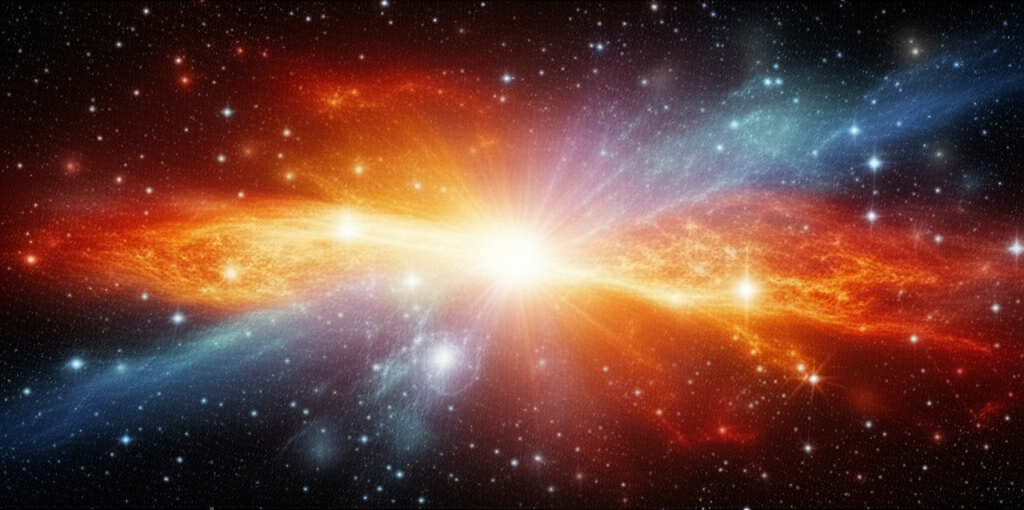
What causes supernovas? The answer is a journey into the dramatic life and death of stars, revealing not one but two distinct and equally spectacular cosmic mechanisms. These transient astronomical events, the most powerful stellar explosions in the universe, are responsible for forging the heavy elements essential for planets, life, and everything we know. They are the universe’s ultimate fireworks, marking the end of one stellar era and the beginning of another.
To truly understand supernovas, we must delve into the stellar processes that precede them, recognizing that their stunning brilliance is the culmination of immense pressures, unimaginable temperatures, and the fundamental laws of physics playing out on a grand scale.
The Two Cosmic Pathways to Supernova
Astronomers classify supernovas into several types, but broadly, they fall into two main categories based on their underlying cause:
1. Type Ia Supernovae: These originate from white dwarf stars in binary systems.
2. Core-Collapse Supernovae: These mark the violent death of massive stars.
Let’s explore each pathway to understand the incredible forces at play.
What Drives a Type Ia Supernova? The White Dwarf’s Last Stand
Type Ia supernovae are often referred to as “standard candles” by astronomers because they explode with a remarkably consistent peak luminosity, making them invaluable for measuring cosmic distances. But what triggers these precise and powerful eruptions?
The story begins with a white dwarf star. A white dwarf is the dense, compact remnant of a sun-like star that has exhausted its nuclear fuel. It’s essentially a stellar corpse, about the size of Earth but with the mass of the Sun, primarily composed of carbon and oxygen. White dwarfs are held up against gravitational collapse by “electron degeneracy pressure,” a quantum mechanical effect that prevents electrons from occupying the same space.
However, this pressure has a limit, known as the Chandrasekhar Limit, which is approximately 1.4 times the mass of our Sun. If a white dwarf gains enough mass to exceed this limit, electron degeneracy pressure fails.
This mass gain usually happens in a binary star system. The white dwarf orbits a companion star, which could be anything from a normal main-sequence star to a red giant. Over time, the white dwarf’s immense gravity can inexorably pull material (mostly hydrogen and helium) off its companion in a process called accretion. This stolen stellar matter accumulates on the white dwarf’s surface.
As more mass piles onto the white dwarf, its core becomes hotter and denser. Eventually, the temperature and pressure at the core reach a critical point where carbon fusion ignites explosively and runaway. Unlike regular stars, which expand and cool to regulate fusion, the degenerate matter of the white dwarf doesn’t behave that way. The entire star undergoes thermonuclear runaway, fusing essentially all its carbon and oxygen into heavier elements within seconds. This catastrophic ignition completely obliterates the white dwarf, leaving no remnant behind, and unleashing an incredibly bright Type Ia supernova.
What Happens When a Massive Star’s Core Collapses?
The second, and arguably more common, type of supernova is the core-collapse supernova. These are the spectacular death throes of truly massive stars – those at least 8 to 10 times more massive than our Sun.
Throughout their lives, massive stars are cosmic alchemists. They fuse lighter elements into heavier ones in their cores, producing the energy that prevents them from collapsing under their own immense gravity. This fusion occurs in a series of concentric shells, like an onion. Hydrogen fuses into helium in the outermost shell, helium into carbon in the next, and so on, moving progressively inward to oxygen, neon, magnesium, silicon, and finally, iron in the very core.
The fusion of iron, however, is a dead end. Unlike lighter elements, fusing iron consumes energy rather than releasing it. When a massive star’s core becomes predominantly iron, it reaches a critical point where it can no longer generate outward pressure to counteract gravity. The iron core itself, similar to the white dwarf in a Type Ia scenario but on a much grander and dynamic scale, rapidly accretes more iron from the surrounding shells and quickly surpasses its own Chandrasekhar-like limit.
At this point, gravity wins a crushing victory. In a heartbeat (literally, fractions of a second), the iron core collapses inwards with incredible speed – up to 70,000 kilometers per second, or about 23% the speed of light! The density becomes so extreme that atomic nuclei are crushed together, and electrons are forced into protons to form neutrons. This creates an incredibly dense object called a neutron star.
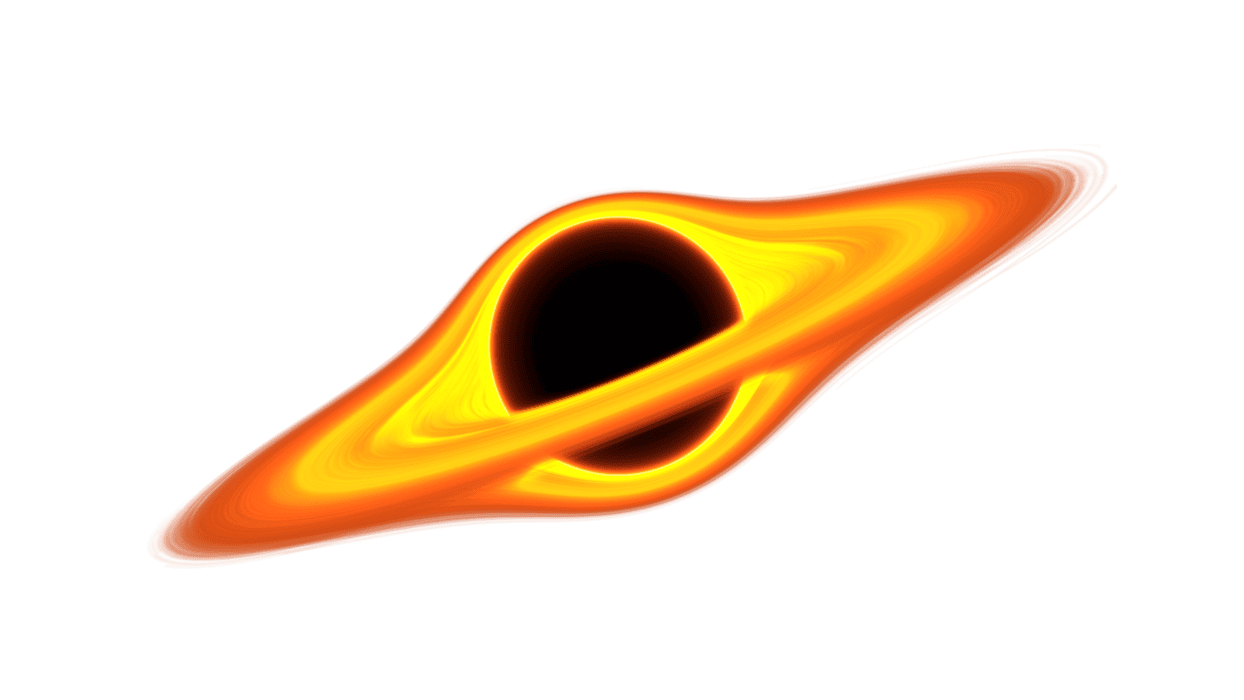
The collapse halts abruptly when the core reaches nuclear densities, similar to the density inside an atomic nucleus. This sudden stop creates an enormous shockwave that rebounds outwards. This outgoing shockwave, supercharged by an incredible burst of neutrinos (tiny, almost massless particles) generated during the collapse, rips through the star’s outer layers at immense speeds, blasting them into space. This catastrophic expulsion of stellar material is what we observe as a core-collapse supernova. What remains at the center is either a neutron star or, if the progenitor star was truly colossal (perhaps over 20-30 solar masses initially), the core collapses completely to form a black hole.
The Cosmic Legacy of Supernovas
Regardless of what initially triggers them, supernovas are far more than just brilliant cosmic explosions. They are fundamental drivers of chemical enrichment in the universe. Almost all elements heavier than iron, including gold, silver, uranium, and even small amounts of the carbon and oxygen that make up living beings like us, are forged during the intense pressures and temperatures of a supernova explosion. These newly created elements are then scattered across the galaxy, seeding the next generation of stars, planets, and potentially, life.
Supernovas are the universe’s ultimate recyclers, ensuring that the cosmic ingredients necessary for complexity are continuously replenished and spread throughout the vast expanse of space. Understanding their causes is key to unlocking the secrets of stellar evolution and the very origins of everything we see around us.
0 Comments