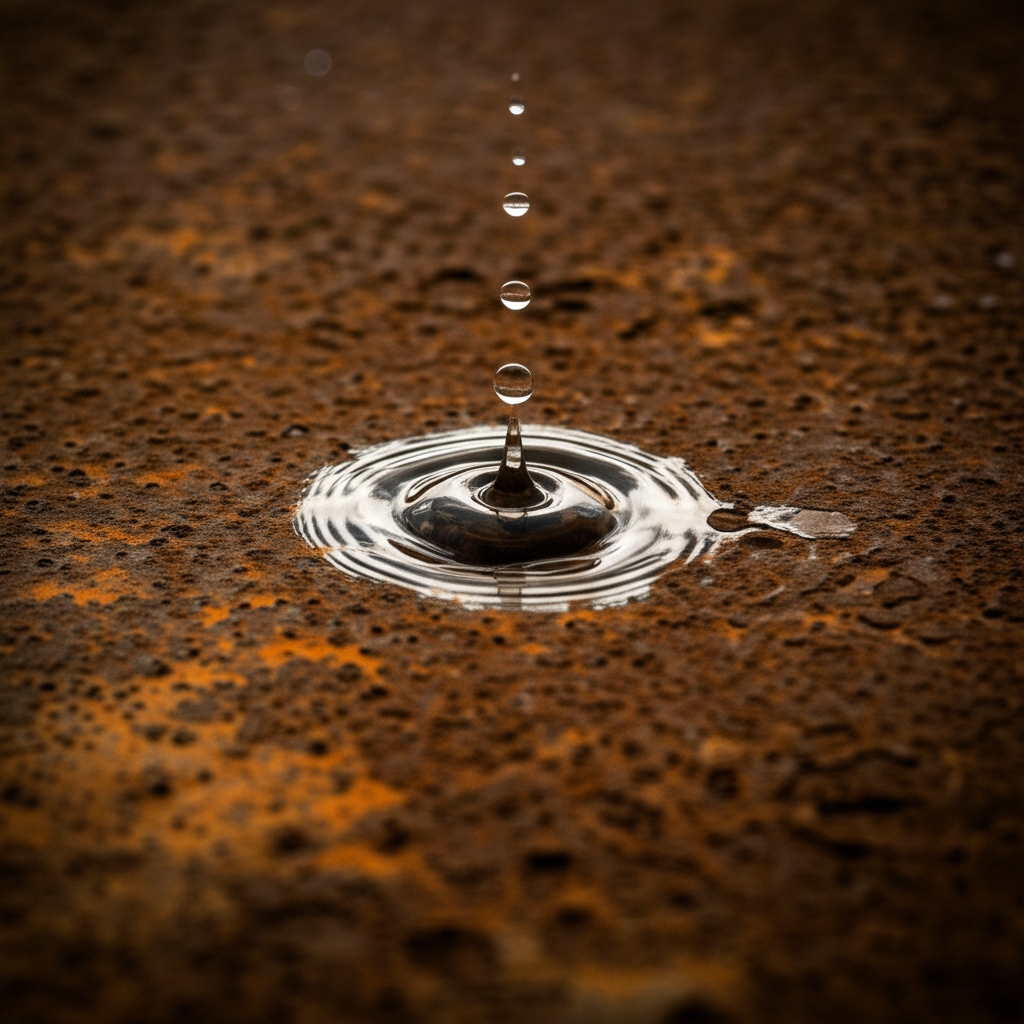
What is rust, exactly? It’s a question many of us have pondered when we spot that tell-tale reddish-brown flaky substance marring a metal surface. From old garden tools and forgotten bicycles to structural components and vehicles, rust is a pervasive and destructive force. While most people correctly associate rust with metal, oxygen, and water, the full story behind its formation is far more intricate and, dare we say, shocking than a simple chemical reaction. It’s an elaborate electrochemical process that continuously degrades one of the world’s most vital materials: iron and its alloys, such as steel.
The Core Chemistry: Rust as an Electrochemical Process
At its heart, rust is a specific form of corrosion, exclusively referring to the oxidation of iron or its alloys in the presence of oxygen and water. Scientifically, it’s hydrated iron(III) oxide. The simple equation often taught in schools (Iron + Oxygen → Iron Oxide) only scratches the surface. The “shocking truth” lies in the fact that it’s not merely a direct chemical reaction; it’s an electrochemical one, akin to a miniature battery forming on the metal’s surface.
Here’s how it unfolds:
1. Anode Formation: When an iron surface comes into contact with an electrolyte (water, especially if it contains dissolved salts or acids), tiny anodic areas form. At these spots, iron atoms lose electrons, becoming iron ions (Fe²⁺). This is called oxidation.
Fe → Fe²⁺ + 2e⁻
2. Cathode Formation: Simultaneously, at different cathodic areas on the metal surface, oxygen molecules dissolved in the water gain these electrons. In the presence of water, this forms hydroxide ions (OH⁻). This is reduction.
O₂ + 2H₂O + 4e⁻ → 4OH⁻
3. Electron Flow (The Electrolyte’s Role): The crucial part of the electrochemical process is the movement of electrons from the anodic areas to the cathodic areas through the iron itself, and the movement of ions through the water (the electrolyte). The water acts as a medium, facilitating this electron and ion exchange. Without this medium, the reaction cannot proceed efficiently.
4. Rust Formation: The iron ions and hydroxide ions then react to form iron hydroxide, which quickly oxidizes further in the presence of more oxygen to become hydrated iron(III) oxide (Fe₂O₃·nH₂O) – which is what we know as rust.
4Fe²⁺ + O₂ + 4OH⁻ + 2H₂O → 4FeO(OH) (ferrous oxyhydroxide)
Further oxidation and dehydration eventually lead to Fe₂O₃·nH₂O (hydrated iron(III) oxide)
This sequence reveals that water isn’t just a reactant; it’s an essential catalyst, forming an electrolyte that enables the electron transfer required for the process.
What Accelerates the Rusting Process?
While iron, oxygen, and water are the fundamental ingredients, several factors can significantly speed up the rate at which rust forms and spreads. Understanding these accelerators is key to effective prevention.
Electrolyte Purity (or Impurity): Pure water conducts electricity poorly, meaning rust forms slowly. However, most natural water sources contain dissolved salts, particularly sodium chloride (salt ions). These ions dramatically increase the water’s electrical conductivity, making it a much more effective electrolyte and thus accelerating the electrochemical rusting process. This is why coastal regions and roads treated with de-icing salt see far more rapid corrosion.
Acids and Bases: Water with a lower pH (more acidic) or a higher pH (more alkaline, though acids are generally more aggressive) can also accelerate rust by altering the chemical environment and promoting electron transfer. Acid rain is a well-known culprit in corroding outdoor metal structures.
Temperature: Like most chemical reactions, rusting generally proceeds faster at higher temperatures. Increased kinetic energy allows molecules to move and react more quickly.
Humidity: Even without visible liquid water, high relative humidity can provide enough atmospheric moisture to act as an electrolyte film on metal surfaces, initiating and sustaining the rusting process.
Stress and Scratches: Areas of stress or damage on a metal surface, such as sharp bends, cracks, or scratches, can create microscopic differences in electrical potential. These areas often become anodic sites, initiating localized corrosion.
Dissimilar Metals (Galvanic Corrosion): When two different metals are in electrical contact and exposed to an electrolyte, one metal will act as the anode and corrode preferentially. For example, if iron is in contact with a more noble metal like copper, the iron will rust much faster than it would alone. This is known as galvanic corrosion.
Lack of Protective Coatings: Obviously, without a barrier like paint, galvanization, or other coatings, the iron is directly exposed to oxygen and water, making it highly susceptible to rust.
The “Shocking Truth” in Practice: Why Rust Is So Persistent
The deeply electrochemical nature of rust explains why it’s so insidious and hard to stop once it begins. It’s not just a surface phenomenon. The moment a tiny patch of iron is exposed to moisture and oxygen, an electrical circuit is complete, and the destructive process begins. The rust itself (hydrated iron(III) oxide) is porous and flaky, meaning it doesn’t form a protective barrier like the oxidation products on aluminum (which form a tough, adherent layer that prevents further corrosion). Instead, rust continues to absorb moisture and oxygen, allowing the electrochemical reaction to penetrate deeper and deeper into the material, weakening its structural integrity.
This explains why preventing rust is far more effective than trying to stop it once it’s started. The initial onset can be invisible to the naked eye, a microscopic battery forming, driven by environmental factors.
Beyond Iron: Different Types of Corrosion
While “rust” specifically refers to the corrosion of iron, other metals undergo similar degradation processes, though their products differ:
Aluminum: Forms a hard, protective layer of aluminum oxide (Al₂O₃) that prevents further corrosion, a process called passivation.
Copper: Develops a green patina (verdigris) over time, which is usually copper carbonate or sulfate, also acting as a protective layer.
Silver: Tarnishes to a black silver sulfide (Ag₂S) when exposed to sulfur compounds in the air.
Each of these is a form of corrosion, but only iron’s specific electrochemical product gets the name “rust.”
Preventing the Inevitable: Strategies Against Rust
Given the complex nature of rust, a multi-pronged approach is often necessary for its prevention:
Barrier Coatings: Painting, oiling, greasing, or applying plastic coatings creates a physical barrier that prevents oxygen and water from reaching the iron surface.
Galvanization: Coating iron with a layer of zinc forms a highly effective barrier. Zinc also acts as a “sacrificial anode”; if the coating is scratched, the zinc will corrode preferentially to the iron because it is more reactive.
Alloying: Incorporating other metals, most notably chromium, into iron creates stainless steel. Chromium forms a very thin, passive, and self-repairing layer of chromium oxide that protects the underlying iron from corrosion.
Cathodic Protection: This involves making the iron part of an electrical circuit where it acts as the cathode, preventing it from losing electrons (oxidizing). This can be achieved using sacrificial anodes (more reactive metals that corrode instead of the iron) or impressed current systems.
Environmental Control: Reducing moisture through dehumidifiers or desiccants, or controlling exposure to salts and acids, can significantly slow or prevent rusting.
Understanding the “shocking truth” about rust — that it’s an intricate electrochemical ballet requiring iron, oxygen, and* an electrolyte — transforms our perspective from simple nuisance to a complex scientific challenge. By recognizing the critical role of water as an electron-transfer medium and the accelerating factors, we can better appreciate and implement the various strategies designed to protect our precious iron and steel assets from this pervasive degradation.
0 Comments