
- The Electrochemical Dance: Deconstructing Rust Formation
- Beyond the Basics: Factors that Accelerate Rust
- What Are the Costly Mistakes and How to Avoid Them?
- Proactive Strategies for Rust Prevention
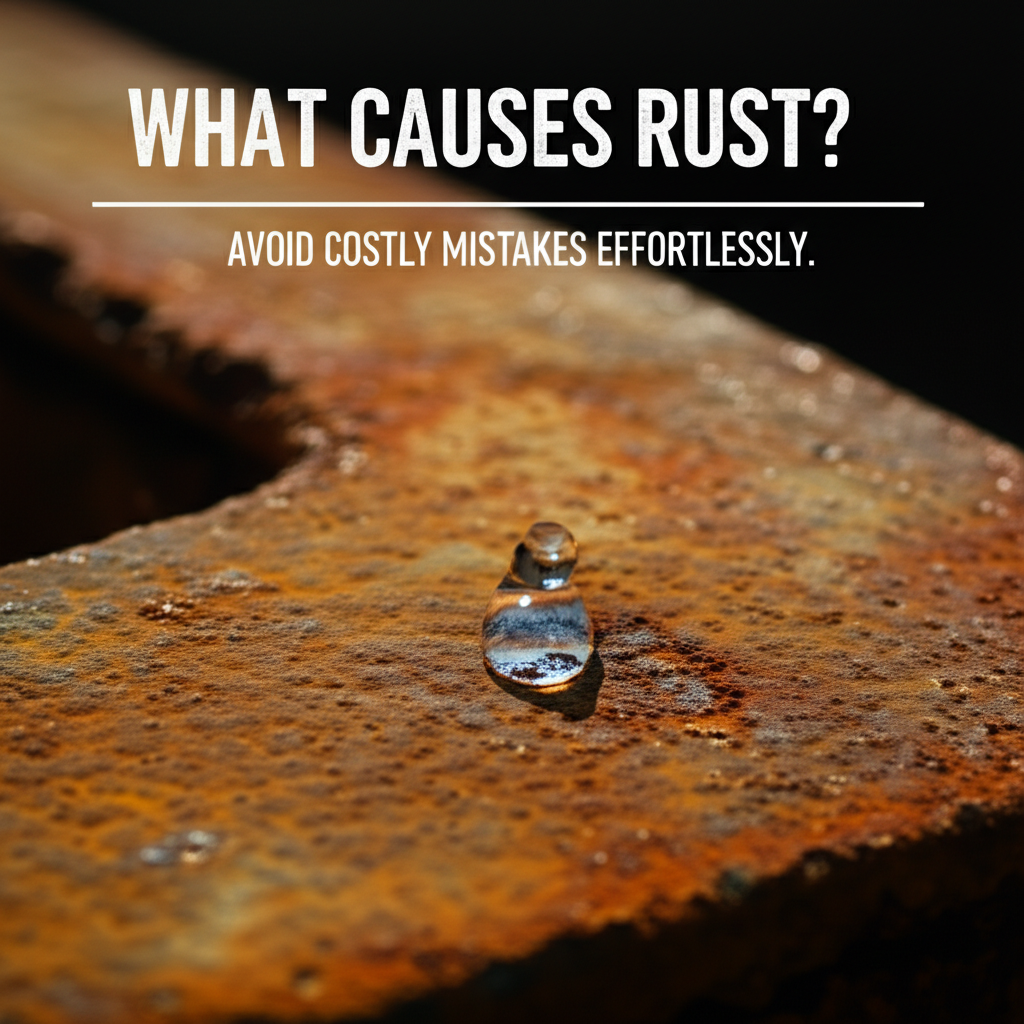
What causes rust? This fundamental question lies at the heart of understanding one of the most pervasive and destructive chemical processes affecting countless materials and structures worldwide. Rust, scientifically known as iron oxide (more specifically, hydrated iron(III) oxides), is a form of corrosion that specifically attacks iron and its alloys, such as steel. It’s a natural consequence of iron returning to its more stable, oxidized state, but its economic impact is staggering, costing industries and individuals billions annually in repairs, replacements, and preventative measures. Understanding the precise conditions that trigger this corrosive reaction is the first step in avoiding the costly mistakes associated with its neglect.
The Electrochemical Dance: Deconstructing Rust Formation
At its core, rust is an electrochemical process, meaning it involves both chemical reactions and the flow of electrons. It’s not a single, simple reaction but a complex interplay of elements in a specific environment. For rust to form, three key components must be present simultaneously:
1. Iron or Steel: This is the base metal that undergoes corrosion.
2. Oxygen: Typically from the air, but also dissolved in water.
3. Water or Moisture: This acts as an electrolyte, facilitating the movement of ions and electrons needed for the reaction. Even high humidity or condensation can provide enough moisture.
Here’s a simplified breakdown of the process:
Anode Reaction (Oxidation): The iron metal loses electrons, forming iron ions (Fe²⁺). This is where the metal “rusts.”
Fe → Fe²⁺ + 2e⁻
Cathode Reaction (Reduction): At another point on the iron surface, oxygen and water consume the electrons produced at the anode, forming hydroxide ions (OH⁻).
O₂ + 2H₂O + 4e⁻ → 4OH⁻
Overall Reaction: The iron ions and hydroxide ions then react to form iron hydroxide, which further reacts with oxygen and water to produce the characteristic reddish-brown hydrated iron(III) oxide – rust (Fe₂O₃·_n_H₂O).
4Fe²⁺ + O₂ + (4 + 2_n_)H₂O → 2Fe₂O₃·_n_H₂O + 8H⁺
This self-sustaining cycle highlights why constant exposure to moisture and oxygen is so detrimental to unprotected iron and steel.
Beyond the Basics: Factors that Accelerate Rust
While oxygen and water are essential, several environmental and material factors can significantly speed up the rusting process, turning a slow decay into rapid degradation.
Humidity and Condensation: Environments with high ambient humidity or fluctuating temperatures that lead to condensation provide a constant supply of the necessary electrolyte, even without direct water immersion.
Salts and Acids: These substances act as excellent electrolytes. Saltwater (like ocean spray or road salt) dramatically increases the conductivity of the water film on the metal’s surface, accelerating the movement of ions and electrons, and thus, the rate of corrosion. Similarly, acidic environments can damage protective layers and promote rust.
Temperature: Generally, chemical reactions, including corrosion, proceed faster at higher temperatures.
Surface Condition: Scratches, dents, or imperfections on a metal surface expose fresh, unprotected iron to the elements. These areas often become anodic sites where rust initiates.
Dissimilar Metals (Galvanic Corrosion): When two different metals are in electrical contact in the presence of an electrolyte, one metal will corrode preferentially to protect the other. The more “active” metal in the galvanic series (e.g., zinc, aluminum) will sacrifice itself to protect the more “noble” metal (e.g., steel, copper). While useful in some protection strategies, it can also lead to unintended acceleration of corrosion if not managed correctly.
What Are the Costly Mistakes and How to Avoid Them?
Understanding the mechanisms and accelerators of rust is paramount to preventing costly errors and preserving your assets. Many common mistakes stem from either ignorance of these principles or neglecting early warning signs.
1. Ignoring Early Spots: A small patch of rust on a car panel or a garden tool might seem insignificant, but it’s a sign that the protective layer has been compromised. Ignoring it allows the rust to spread rapidly beneath the paint or into the metal, leading to structural damage.
Avoidance: Regular inspections are crucial. Address any rust spots immediately by cleaning, sanding, and applying appropriate primers and paints.
2. Insufficient Protection: Relying on a single coat of standard paint for prolonged outdoor exposure is a common oversight. Many protective coatings aren’t impervious to all conditions.
Avoidance: Invest in high-quality, multi-layer protection systems. This includes rust-inhibiting primers, durable topcoats, or specialized coatings like galvanization (zinc coating) for steel. For vehicles, consider rust-proofing treatments.
3. Improper Storage: Leaving tools, machinery, or even outdoor furniture exposed to rain, snow, or high humidity greatly increases their rust risk.
Avoidance: Store items in dry, well-ventilated areas. Use covers, tarpaulins, or even dehumidifiers in enclosed spaces. For long-term storage, apply a light coat of oil or wax for added protection.
4. Neglecting Regular Cleaning: Allowing dirt, mud, road salt, or other contaminants to remain on metal surfaces creates micro-environments where moisture can linger and electrolytes can concentrate, speeding up corrosion.
Avoidance: Regular cleaning, especially for vehicles exposed to road salt or items near coastal areas, is vital. Thoroughly wash and dry metal surfaces to remove corrosive agents.
5. Using Unsuitable Materials: Sometimes, the mistake lies in selecting the wrong material for a given environment, or combining incompatible metals.
Avoidance: When designing or repairing, consider the environment. Stainless steel or aluminum might be better choices for high-moisture or saline conditions than plain carbon steel. If dissimilar metals must be used together, ensure they are electrically isolated to prevent galvanic corrosion.
Proactive Strategies for Rust Prevention
Preventing rust is far more cost-effective than repairing its damage. A multi-pronged approach based on understanding its causes is always best.
Protective Coatings: This is the most common method. Paint, powder coating, enamel, epoxy, and galvanization (coating with zinc) create a barrier that prevents oxygen and water from reaching the iron.
Environmental Control: In industrial settings or for valuable assets, controlling the environment through dehumidifiers, climate control systems, or inert gas atmospheres can effectively prevent rust.
Corrosion Inhibitors: Chemical compounds can be added to water or coatings to slow down the electrochemical reactions that lead to rust.
Cathodic Protection: This technique involves connecting the item to be protected (the cathode) to a more easily corroded “sacrificial anode” metal (like zinc or magnesium) or using an impressed current system to force electrons onto the protected structure, preventing its oxidation.
Material Selection: Choosing rust-resistant materials like stainless steel (which contains chromium to form a passive, protective layer), aluminum, or even plastics and composites for specific applications can eliminate the rust problem entirely.
* Regular Maintenance and Inspection: Consistently cleaning, inspecting, and touching up any damaged protective layers is crucial for long-term rust prevention.
In conclusion, rust is an inevitable natural process for exposed iron, but it is by no means an unstoppable force. By understanding what causes rust – the critical interplay of iron, oxygen, and water – and recognizing the factors that accelerate it, we are empowered to implement proactive and effective prevention strategies. Avoiding common pitfalls through careful material selection, diligent maintenance, and comprehensive protective measures can effortlessly save significant time, money, and the structural integrity of countless valuable assets.
0 Comments