- What is a Supernova Anyway?
- The Two Main Paths to Stellar Demise: What Triggers a Supernova?
- Type Ia Supernovae: The White Dwarf's Last Stand
- Core-Collapse Supernovae: The Death of a Massive Star
- The Aftermath: What Happens Next?
- Conclusion
What causes a supernova is one of the most spectacular, violent, and utterly vital processes in the universe. These colossal stellar explosions represent the dramatic end-of-life stages for certain types of stars, unleashing more energy in a matter of seconds than our Sun will produce over its entire 10-billion-year lifespan. Beyond their sheer cosmic impressiveness, supernovae are fundamental architects of the cosmos, responsible for forging and distributing the heavy elements necessary for planets, life, and everything we see around us. Understanding their origins peels back layers of stellar physics, revealing the intricate dance of gravity, nuclear fusion, and quantum mechanics that dictates a star’s ultimate fate.
What is a Supernova Anyway?
Before diving into the “how,” let’s clarify what exactly a supernova is. In essence, it’s a transient astronomical event that occurs during the last evolutionary stages of a massive star or when a white dwarf star undergoes runaway nuclear fusion. The result is an explosive burst of radiation that often briefly outshines an entire galaxy, fading over several weeks or months. During this cataclysmic event, the star expels most or all of its material into interstellar space, enriching the cosmic environment with newly synthesized elements. There are primarily two distinct pathways that lead to this extraordinary phenomenon, each with its own fascinating set of preconditions and mechanisms.
The Two Main Paths to Stellar Demise: What Triggers a Supernova?
The universe provides two primary routes for a star to end its life as a supernova, each driven by entirely different stellar inhabitants and processes.
Type Ia Supernovae: The White Dwarf’s Last Stand
The first major type, known as a Type Ia supernova, involves a stellar remnant called a white dwarf. White dwarfs are the dense, compact cores left behind after average-sized stars (like our Sun) have exhausted their nuclear fuel and shed their outer layers. They are incredibly dense—a teaspoon of white dwarf material would weigh several tons—and are supported against gravitational collapse by electron degeneracy pressure, a quantum mechanical effect.
However, a white dwarf living in a binary star system can lead to a supernova. In such a system, the white dwarf acts like a cosmic vampire, slowly siphoning material (primarily hydrogen and helium) from its companion star. As this material accumulates on the white dwarf’s surface, it compresses and heats up. Eventually, if the white dwarf accretes enough mass to push its total mass beyond a critical limit known as the Chandrasekhar Limit (approximately 1.4 times the mass of our Sun), the electron degeneracy pressure can no longer support it against gravity.
At this critical point, the intense pressure and temperature ignite a runaway thermonuclear reaction within the white dwarf’s carbon-oxygen core. This isn’t a gentle ignition; it’s a catastrophic, instantaneous burning of carbon and oxygen that rips through the entire star. The thermonuclear flame front consumes the white dwarf completely, causing it to explode violently. The entire star is obliterated, leaving no remnant behind. Because they explode at a consistent mass, Type Ia supernovae are remarkably uniform in their peak brightness, making them invaluable “standard candles” for astronomers to measure vast cosmic distances and even the expansion rate of the universe.
Core-Collapse Supernovae: The Death of a Massive Star
The second and arguably more common type of supernova, known as a core-collapse supernova, originates from the death of massive stars—those roughly 8 to 10 times the mass of our Sun or more. These colossal stars live fast and die young, burning through their nuclear fuel at an prodigious rate.
Throughout their lives, massive stars undergo a series of nuclear fusion processes in their cores, building up heavier elements. They start by fusing hydrogen into helium, then helium into carbon, carbon into oxygen, and so forth, creating progressively heavier elements like neon, magnesium, silicon, and ultimately, iron. This process occurs in concentric shells, with the heaviest elements forming at the core.
The problem arises when the star’s core becomes primarily iron. Iron is the ultimate dead end for stellar fusion because fusing iron into heavier elements absorbs energy rather than releasing it. When the iron core becomes too massive (exceeding its own internal Chandrasekhar-like limit), it can no longer support itself against the crushing force of its own immense gravity.
At this critical moment, without any energy generation to hold it up, the iron core collapses catastrophically within milliseconds. It shrinks from a size comparable to Earth to a ultra-dense ball just tens of kilometers across. The speeds are incredible, approaching 70,000 kilometers per second. During this rapid collapse, protons and electrons in the core are squeezed together to form neutrons, releasing a tremendous burst of neutrinos.
When the collapsing core reaches nuclear densities (denser than an atomic nucleus), it suddenly becomes almost incompressible. The outer layers of the core, still plummeting inward, violently rebound off this incredibly rigid core, creating a powerful shockwave. This shockwave, further energized by the massive outpouring of neutrinos, blasts outwards through the star’s remaining layers. As it propagates, it heats and accelerates the stellar material, driving it into space in a brilliant, cataclysmic explosion—a core-collapse supernova.
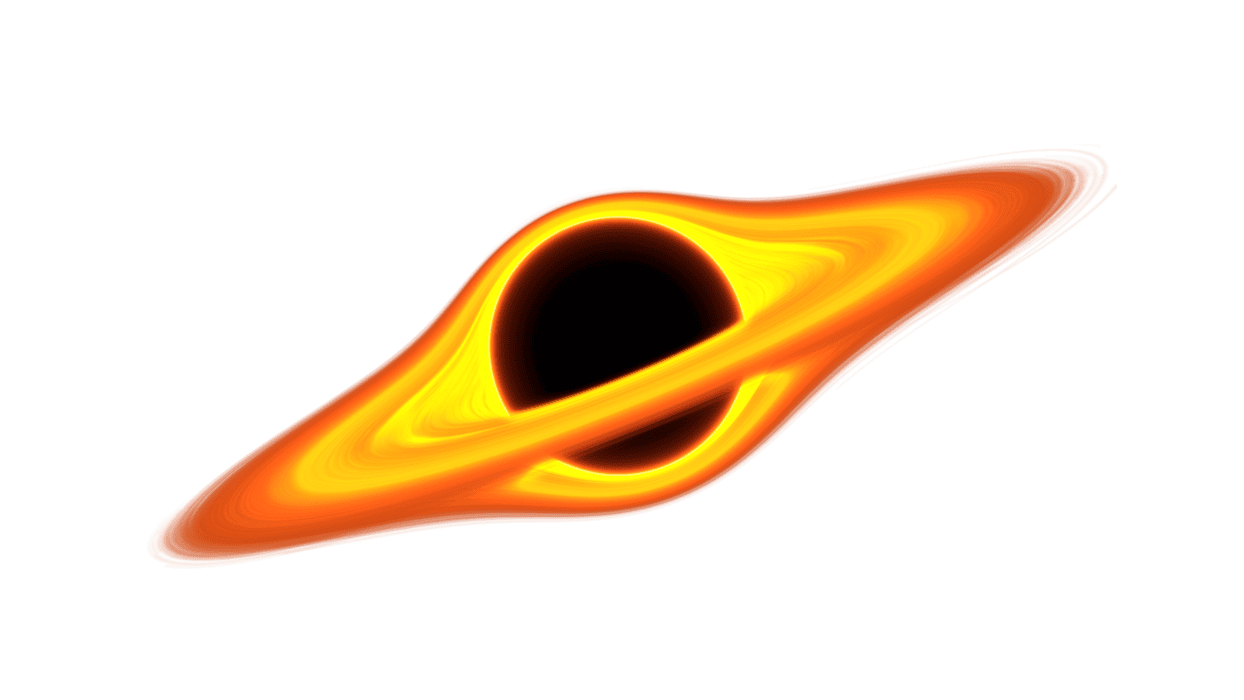
What happens to the core after this? Depending on the initial mass of the star, the remaining core can either form an incredibly dense neutron star or, if the initial star was exceptionally massive, it can collapse further to form a black hole. The expelled stellar material, rich in elements synthesized not only during the star’s life but also during the explosion itself (including elements heavier than iron), expands outwards to form a supernova remnant.
The Aftermath: What Happens Next?
Regardless of their specific triggering mechanism, supernovae are cosmic wellsprings of creation. The immense energy released during the explosion helps to forge elements heavier than iron, such as gold, silver, uranium, and lead, through processes like rapid neutron capture. These newly synthesized elements, along with those formed during the star’s lifetime, are then scattered across vast distances into interstellar space.
These enriched clouds of gas and dust become the raw material for the next generation of stars and planetary systems. Our own Sun, Earth, and indeed all life on Earth are made from elements that were once forged in the heart of massive stars and dispersed by ancient supernova explosions. The shockwaves from supernovae can also compress existing gas clouds, potentially triggering the formation of new stars.
What else occurs in the aftermath? The remnants of supernovae, be they neutron stars or black holes, are fascinating objects in their own right, continuing to shape their cosmic neighborhoods. Supernova remnants, the expanding shells of gas and dust, glow brightly across various wavelengths, providing crucial insights into stellar evolution, particle acceleration, and the dynamics of the interstellar medium.
Conclusion
The stunning truth about what causes a supernova is that these magnificent cosmic events are not merely destructive but are fundamental to the universe’s ongoing cycle of creation and renewal. Whether it’s a stellar Lazarus effect from a white dwarf reaching its breaking point or the catastrophic collapse of a massive star’s iron core, supernovae mark a profound transformation. They are the ultimate cosmic recycling plants, dispersing the heavy elements that make up planets, nebulae, and eventually, us. Without these spectacular explosions, the universe would be an incredibly duller place, devoid of the chemical complexity required for life itself to emerge.
0 Comments