- What Exactly Are Fractals?
- A Brief History of Fractal Discovery
- The Beauty of Self-Similarity in Action
- Beyond the Aesthetic: Practical Applications of Fractals
- The Enduring Mystery and Future of Fractals
What lies hidden in the intricate curl of a fern, the branching of a tree, or the jagged edge of a coastline? The answer often points to fractals – stunning mathematical sets that reveal an astonishing world of infinite complexity and self-similarity, blurring the lines between art, nature, and pure mathematics. Far from being mere abstract concepts, fractals permeate our universe, offering profound insights into the patterns that govern chaos and order.
What Exactly Are Fractals?
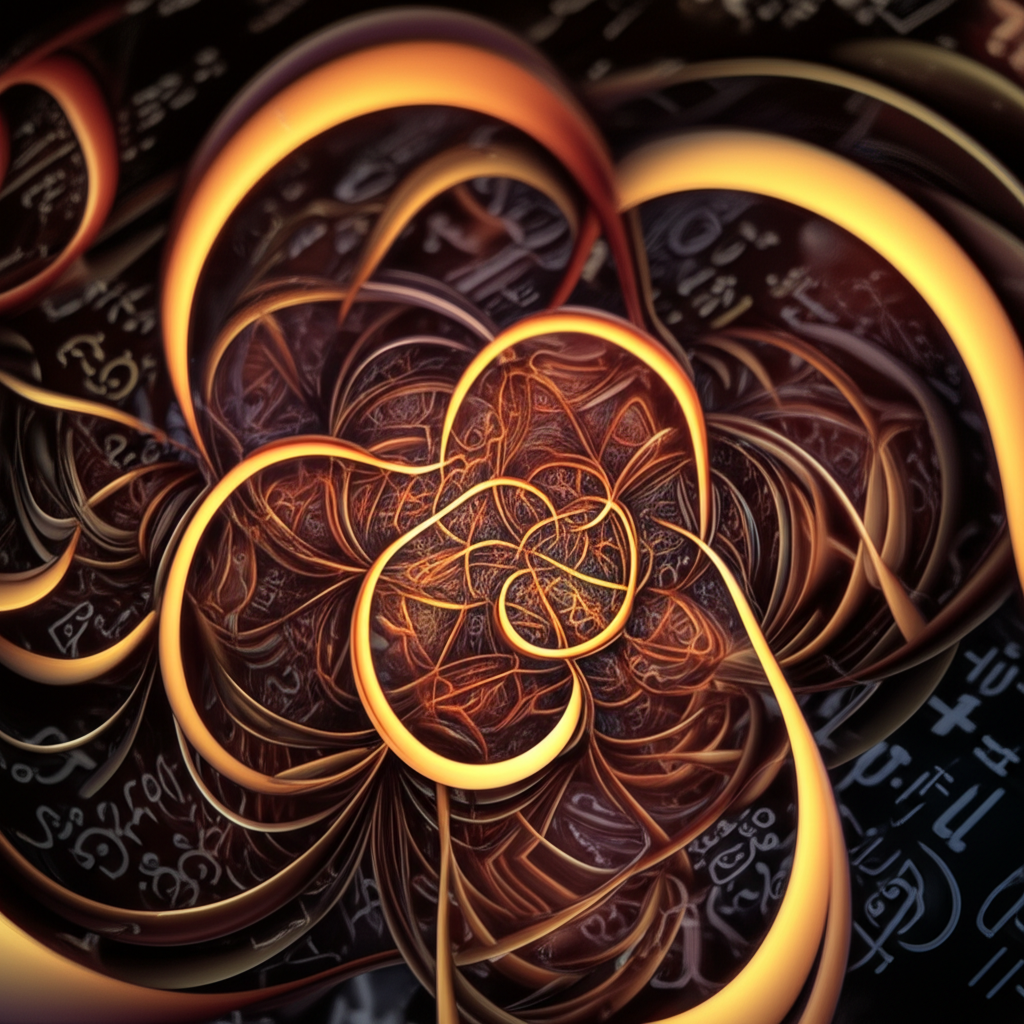
At its core, a fractal is a never-ending pattern that is self-similar across different scales. This means that if you zoom into a tiny part of a fractal, you’ll see a smaller version of the original structure. This property, known as self-similarity, is what gives fractals their distinctive, intricate appearance. Unlike conventional geometric shapes like circles or squares, fractals are rarely smooth. Instead, they possess intricate detail at every level of magnification, meaning they look the same almost endlessly, no matter how much you zoom in or out.
This characteristic challenges our traditional understanding of dimension. A line is 1D, a square is 2D, and a cube is 3D. But fractals often have a “fractional” dimension, or a fractal dimension, which is not an integer. For instance, a coastline might have a fractal dimension between 1 (a smooth line) and 2 (a filled plane), reflecting its rugged, irregular nature. This “roughness” is precisely what makes them so powerful in describing natural phenomena that defy simple Euclidean geometry.
A Brief History of Fractal Discovery
While the concept of infinite detail and complex curves intrigued mathematicians for centuries, the term “fractal” itself was coined relatively recently, in 1975, by the Polish-French-American mathematician Benoit Mandelbrot. Mandelbrot revolutionized the field with his groundbreaking work, particularly his comprehensive study of the Mandelbrot Set, which became an iconic symbol of fractal geometry. However, the foundational ideas were laid much earlier by other brilliant minds such as Gaston Julia and Pierre Fatou (Julia sets), Helge von Koch (the Koch snowflake), and Georg Cantor (Cantor set), whose discoveries anticipated many of Mandelbrot’s insights. It was Mandelbrot who brought these disparate mathematical curiosities together under a unifying theory, recognizing their omnipresence in both pure mathematics and the natural world.
The Beauty of Self-Similarity in Action
The visual appeal of fractals is undeniable, making them a popular subject for both mathematicians and artists. The Mandelbrot Set, perhaps the most famous fractal, is generated by a simple iterative equation, yet it yields an infinitely intricate and stunning visual landscape. Zooming into its boundaries reveals miniature copies of the main set, spiraling patterns, and an endless array of bizarre and beautiful forms, each distinct yet echoing the whole.
Other classic examples include:
The Koch Snowflake: Starting with an equilateral triangle, each side is replaced by a smaller equilateral triangle pointing outwards, a process repeated infinitely. The resulting shape has infinite perimeter but finite area.
The Sierpinski Triangle: Created by repeatedly removing the central triangle from a larger equilateral triangle, it demonstrates self-similarity and a fractal dimension between 1 and 2.
Julia Sets: Related to the Mandelbrot Set, these fractals are captivating for their often organic, almost biological appearance, resembling microscopic organisms or fantastical landscapes.
Beyond these abstract mathematical constructions, fractals are ubiquitous in nature. Trees and ferns utilize fractal branching patterns to maximize sunlight exposure. Mountains, clouds, and coastlines derive their irregular shapes from fractal geometry. The circulatory and respiratory systems within our own bodies exhibit fractal structures, efficiently distributing oxygen and nutrients. Even lightning bolts and snowflakes follow fractal rules as they form. This pervasive presence suggests that fractals are not just mathematical curiosities, but fundamental building blocks of the physical world.
Beyond the Aesthetic: Practical Applications of Fractals
The utility of fractals extends far beyond their aesthetic charm. Their ability to model complex, irregular shapes makes them invaluable across various scientific and technological fields:
Computer Graphics and Animation: Fractals are widely used to generate realistic landscapes, textures, and natural phenomena (like smoke, fire, or water) in films, video games, and simulations, vastly simplifying the creation of intricate detail.
Antenna Design: Fractal antennas are revolutionizing wireless communication. Their complex, self-similar geometry allows them to be much smaller and more efficient than traditional antennas, capable of operating across a wide range of frequencies, making them ideal for mobile devices and military applications.
Medical Imaging and Diagnostics: Researchers use fractal analysis to understand and diagnose various medical conditions. For instance, the fractal dimension of neural networks or blood vessel patterns can indicate disease progression or tissue health. Analyzing changes in heart rhythms (electrophysiology) or tumor growth can also benefit from fractal modeling.
Financial Markets: The seemingly chaotic fluctuations of stock prices and market trends often exhibit fractal properties, allowing financial analysts to develop models that predict patterns and risks with greater accuracy.
Data Compression: Fractal compression algorithms exploit self-similarity to compress images and videos more effectively by storing only the rules needed to generate the fractal patterns, rather than every pixel.
* Geology and Seismology: Fractals can describe the distribution of earthquakes, rock fractures, and the ruggedness of terrain, aiding in understanding geological processes.
The Enduring Mystery and Future of Fractals
Despite decades of research, fractals continue to pose intriguing questions and inspire new discoveries. Their deep connection to chaos theory—the study of systems that are highly sensitive to initial conditions—suggests a profound level of mathematical organization underlying apparent randomness. As computational power grows, so too does our ability to explore the infinite nooks and crannies of fractal landscapes, uncovering new patterns and connections.
From the microscopic world of biology to the vast expanse of the cosmos, fractals provide a universal language for describing complexity. They stand as a testament to the elegant simplicity that can give rise to boundless intricacy, continually reminding us that the most stunning mathematical secrets are often hidden in plain sight, waiting for us to zoom in and unveil them.
0 Comments