
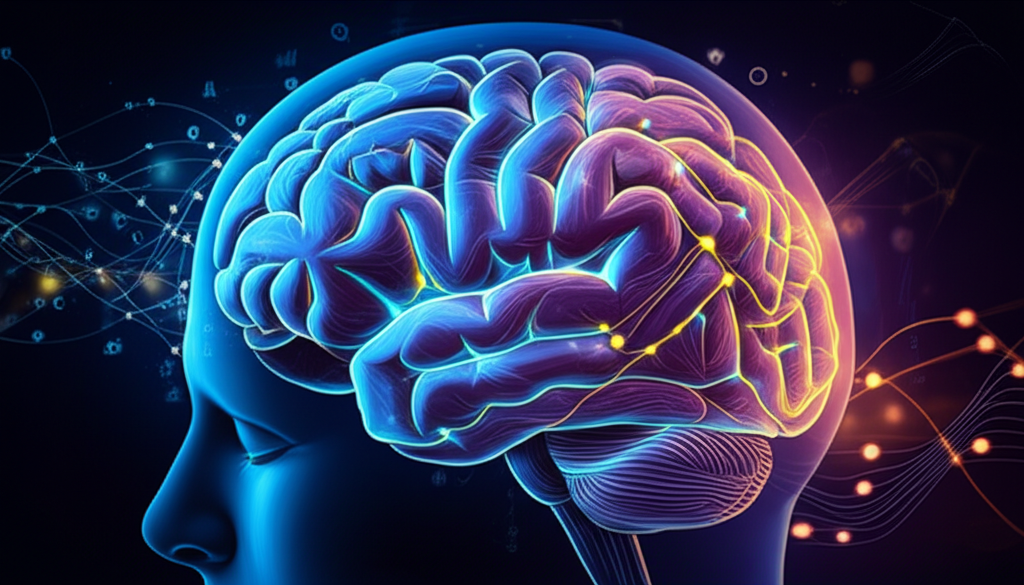
The human brain, a three-pound universe of grey and white matter, stands as the most complex known object in the cosmos. For centuries, our understanding of this extraordinary organ was limited, shrouded in philosophical debate and anatomical guesses. Today, thanks to advanced imaging, neuroscientific breakthroughs, and interdisciplinary research, we are continuously unveiling truths about its incredible capabilities and enduring mysteries that are nothing short of astounding. This voyage of discovery reveals an organ far more dynamic, interconnected, and influential than previously imagined, shaping not just our thoughts, but our very perception of reality.
The Astonishing Scale of Complexity
Packed within the confines of our skull, the brain houses an estimated 86 billion neurons, each capable of forming thousands of connections with other neurons. This intricate web translates into trillions of synaptic connections, creating a network so vast and dynamic it dwarfs any human-made supercomputer. To put it into perspective, if each synapse were a light switch, the number of possible configurations would exceed the number of atoms in the known universe. This immense connectivity allows for instantaneous processing of information, enabling functions from basic survival instincts to the deepest philosophical contemplation.
Beyond its physical architecture, the brain is an electrochemical marvel. Neurons communicate via electrical impulses and chemical neurotransmitters, creating a symphony of activity that orchestrates every sensation, emotion, memory, and action. This constant chatter consumes about 20% of the body’s total energy, despite comprising only about 2% of its weight, underscoring its relentless and demanding work. The sheer density of information storage and processing that occurs within this relatively small organ is a testament to nature’s unparalleled engineering.
The Remarkable Power of Neuroplasticity
One of the most profound truths unveiled in recent decades is the brain’s incredible capacity for neuroplasticity. Far from being a fixed, rigid structure after childhood, the adult brain constantly rewires itself in response to experience, learning, and even injury. This means that neural pathways can be strengthened, weakened, or even rerouted throughout one’s entire life.
Neuroplasticity is the biological basis for learning new skills, adapting to new environments, and recovering from brain damage. For instance, individuals who lose their sight early in life may develop heightened hearing or touch as their visual cortex is repurposed to process sensory information from other modalities. Similarly, stroke survivors can, through intensive therapy, train their brains to bypass damaged areas and regain lost functions. This ongoing ability to adapt highlights the brain’s dynamic nature, offering immense hope for personalized learning, therapeutic interventions, and enhancing cognitive function at any age. It challenges the old adage that “you can’t teach an old dog new tricks,” demonstrating that the human brain is perpetually in flux, always ready to learn and evolve.
Unraveling the Enigma of Consciousness and Memory
While we’ve made enormous strides in understanding the brain’s structure and function, the twin enigmas of consciousness and memory remain at the frontier of neuroscience. What exactly is consciousness – this subjective experience of being ‘me’? How does the electrochemical activity of billions of neurons give rise to the rich tapestry of our inner lives, our awareness, and our sentience? These questions continue to baffle scientists and philosophers alike. Current theories explore global neuronal workspaces, integrated information theory, and quantum consciousness, yet a definitive answer remains elusive.
Memory, while less abstract than consciousness, is no less complex. We know that memories are not stored in single locations but are distributed across vast neural networks. The formation of a memory involves intricate molecular and cellular changes, including the strengthening of synaptic connections (long-term potentiation). Different types of memory – short-term, long-term, episodic (personal events), semantic (facts), and procedural (skills) – each involve distinct neural pathways and processes. The stunning truth is that our memories are not static recordings; they are dynamic, reconstructed each time we recall them, making them susceptible to modification and even distortion.
The Brain’s Unique Role in Shaping Reality
Perhaps one of the most astonishing truths is the extent to which our brain actively constructs our perception of reality. We don’t passively receive information from our senses; our brain constantly interprets, filters, and even predicts what we are experiencing based on prior knowledge, expectations, and emotional states. What we “see,” “hear,” or “feel” is not a direct mirror of the external world but a sophisticated, personalized model generated by our neural machinery.
For example, when we look at a complex scene, our brain doesn’t process every tiny detail equally. It selectively focuses attention, filling in gaps and making assumptions to create a coherent narrative. This predictive coding allows us to respond quickly and efficiently, but it also means our perception can be biased, leading to optical illusions or differing interpretations of the same event among individuals. Our emotions, too, are deeply intertwined with brain function, influencing decision-making, social interactions, and even our physical health. The brain is not merely a data processor; it is the ultimate storyteller, creating our individual narrative of existence.
The Frontier of Brain Research: What’s Next?
The quest to understand the brain is an ongoing journey filled with promise. Emerging fields like optogenetics allow scientists to control specific neurons with light, while sophisticated brain-computer interfaces are enabling paralyzed individuals to control robotic limbs with their thoughts. Advances in artificial intelligence and machine learning are not only providing powerful tools for analyzing brain data but also inspiring new models of cognitive function.
The future holds incredible potential for treating debilitating neurological and psychiatric disorders, from Alzheimer’s and Parkinson’s to depression and schizophrenia. By unraveling the fundamental mechanisms of brain function and dysfunction, researchers hope to develop targeted therapies that can restore health and improve quality of life. As we continue to probe the depths of this remarkable organ, we are consistently reminded of its profound complexity and its unparalleled capacity to define who we are. Each discovery unveils a new layer of wonder, reinforcing the notion that the human brain remains the ultimate frontier of scientific exploration, holding countless more stunning truths yet to be unearthed.
0 Comments