
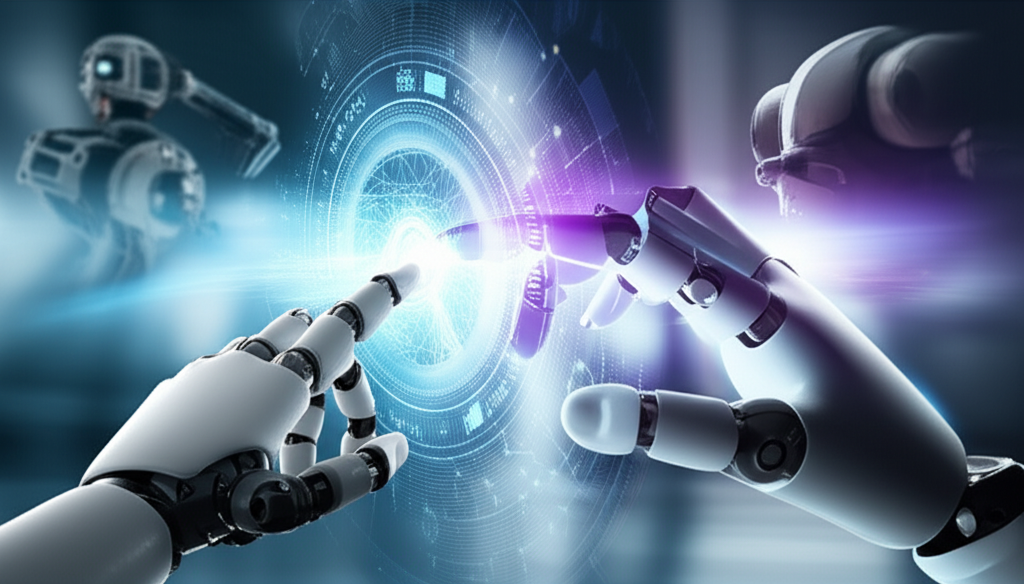
- From Simple Tools to Sentient Support: The Evolution of Robotics
- Key Drivers of Robotic Transformation
- Stunning Advancements Across Diverse Sectors
- Addressing the Challenges and Ethical Landscape
The future of robotics is no longer a distant dream painted in science fiction novels and blockbuster movies; it’s a rapidly unfolding reality, characterized by breathtaking advancements that promise to redefine nearly every facet of human existence. From sophisticated industrial automatons to remarkably human-like companions, the evolution of intelligent machines is accelerating at an unprecedented pace, unveiling capabilities that were once unimaginable. This wave of innovation isn’t just about building better machines; it’s about fundamentally reshaping industries, enhancing human potential, and opening doors to solutions for some of our most complex global challenges.
From Simple Tools to Sentient Support: The Evolution of Robotics
For centuries, the concept of automatons captivated the human imagination. Early forms, like the intricate mechanical toys of the 18th century, were marvels of engineering but lacked true autonomy. The industrial revolution brought us the first modern robots: fixed, programmable arms transforming manufacturing lines. These machines revolutionized production, but their intelligence was rudimentary, their movements confined to pre-programmed tasks.
Today, the landscape is profoundly different. We’re witnessing a paradigm shift driven by leaps in artificial intelligence (AI), machine learning (ML), advanced sensor technology, and breakthroughs in materials science. Modern robots are no longer just tools; they are becoming intelligent entities capable of perceiving their environment, learning from experience, making decisions, and interacting with the world in increasingly nuanced ways. This evolution is giving birth to a new generation of robots that are more adaptable, versatile, and collaborative than ever before.
Key Drivers of Robotic Transformation
Several interconnected technological advancements are fueling this robotic renaissance:
Artificial Intelligence and Machine Learning: This is arguably the most significant driver. AI endows robots with the ability to “think” – to process information, recognize patterns, and learn from data. Machine learning algorithms allow robots to improve their performance over time without explicit programming, making them more adaptable to dynamic environments. From sophisticated navigation in complex spaces to understanding human speech, AI is the brain empowering futuristic robots.
Advanced Sensor Technology: Robots are gaining enhanced “senses” through high-resolution cameras, LiDAR, ultrasonic sensors, and tactile sensors. These allow them to build detailed maps of their surroundings, detect objects, measure distances, and even identify textures and forces with incredible precision. This sensory richness enables safer operation and more intricate interaction with both objects and humans.
Improved Actuators and Materials: Lighter, stronger, and more flexible materials, combined with advanced motors and actuators, are leading to robots that are not only more durable but also more agile and capable of delicate maneuvers. Soft robotics, for instance, is creating machines with compliant bodies that can adapt to irregular shapes and perform tasks requiring gentle handling, moving away from rigid, metallic designs.
Enhanced Battery Life and Energy Efficiency: The ability for robots to operate autonomously for longer periods is crucial for their deployment in real-world scenarios. Breakthroughs in battery technology and more energy-efficient designs are extending operational times, making robots viable for tasks like long-distance deliveries or extended observational missions.
Cloud Robotics and Connectivity: Connecting robots to the cloud allows them to access vast amounts of data, leverage powerful remote computing resources, and collaborate with other machines and human operators. This shared knowledge base facilitates faster learning and more efficient operation across entire fleets of robots.
Stunning Advancements Across Diverse Sectors
The implications of these drivers are being felt across virtually every industry, promising stunning advancements:
Healthcare: Surgical robots like the da Vinci system are already enhancing precision in complex procedures, reducing recovery times. The next generation will see diagnostic robots, automated drug delivery systems, and sophisticated assistive robots helping the elderly and those with disabilities maintain independence. The future will also include microscopic nanobots capable of precision drug delivery or even internal repairs.
Manufacturing and Logistics: Beyond traditional assembly lines, collaborative robots (cobots) are working alongside humans, sharing workspaces and augmenting human capabilities. Autonomous mobile robots (AMRs) are transforming warehouses and distribution centers, handling inventory and order fulfillment with unprecedented efficiency. Drones and ground robots are poised to revolutionize last-mile delivery, offering swift and automated parcel services.
Exploration and Environmental Monitoring: Robots are indispensable for missions too dangerous or distant for humans. Mars rovers explore alien landscapes, while submersible robots delve into the deepest parts of the ocean, uncovering new species and monitoring environmental changes. These machines gather vital data that expands our understanding of the universe and our planet.
Service and Daily Life: From robotic vacuum cleaners to automated baristas, service robots are becoming integrated into our everyday lives. In hospitality, robots might check you into a hotel, deliver room service, or even prepare your meals. The evolution of humanoid robots suggests a future where intelligent assistants could offer companionship, educational support, or take on household chores, freeing up human time for creative and personal pursuits.
Agriculture: Precision agriculture is being revolutionized by robots that can monitor crop health, target weeds with unparalleled accuracy, harvest delicate produce, and automate soil analysis. This leads to higher yields, reduced pesticide use, and more sustainable farming practices.
Addressing the Challenges and Ethical Landscape
While the potential of robotics is immense, it’s crucial to acknowledge and address the challenges on the horizon. Concerns around job displacement, ethical AI development, data privacy, and the potential for autonomous decision-making require careful consideration. Societies must develop robust regulatory frameworks, invest in reskilling initiatives for the workforce, and foster public dialogue to ensure that these advancements serve humanity’s best interests.
The symbiotic relationship between humans and robots is perhaps the most exciting prospect. Rather than outright replacement, the future envisions a world where robots augment human capabilities, taking on repetitive, dangerous, or physically demanding tasks, allowing humans to focus on creative problem-solving, strategic thinking, and interpersonal connections.
In conclusion, the future of robotics promises a world transformed by intelligent automation. From enhancing precision in surgery to exploring distant planets and assisting in our daily lives, these stunning advancements are paving the way for a more efficient, productive, and perhaps, more humane future. The journey is just beginning, and the incredible innovations ahead will undoubtedly continue to surprise and inspire us.
0 Comments