
- Unveiling The Earliest Steps: The Genesis of Light Detection
- From Pits to Pinholes: The First Glimpse of Form
- The Revolutionary Lens: Sharpening The World
- A Kaleidoscope of Vision: The Diversity of Eye Designs
- The Human Eye: A Masterpiece of The Mammalian Design
- The Unending Journey: The Future of The Eye
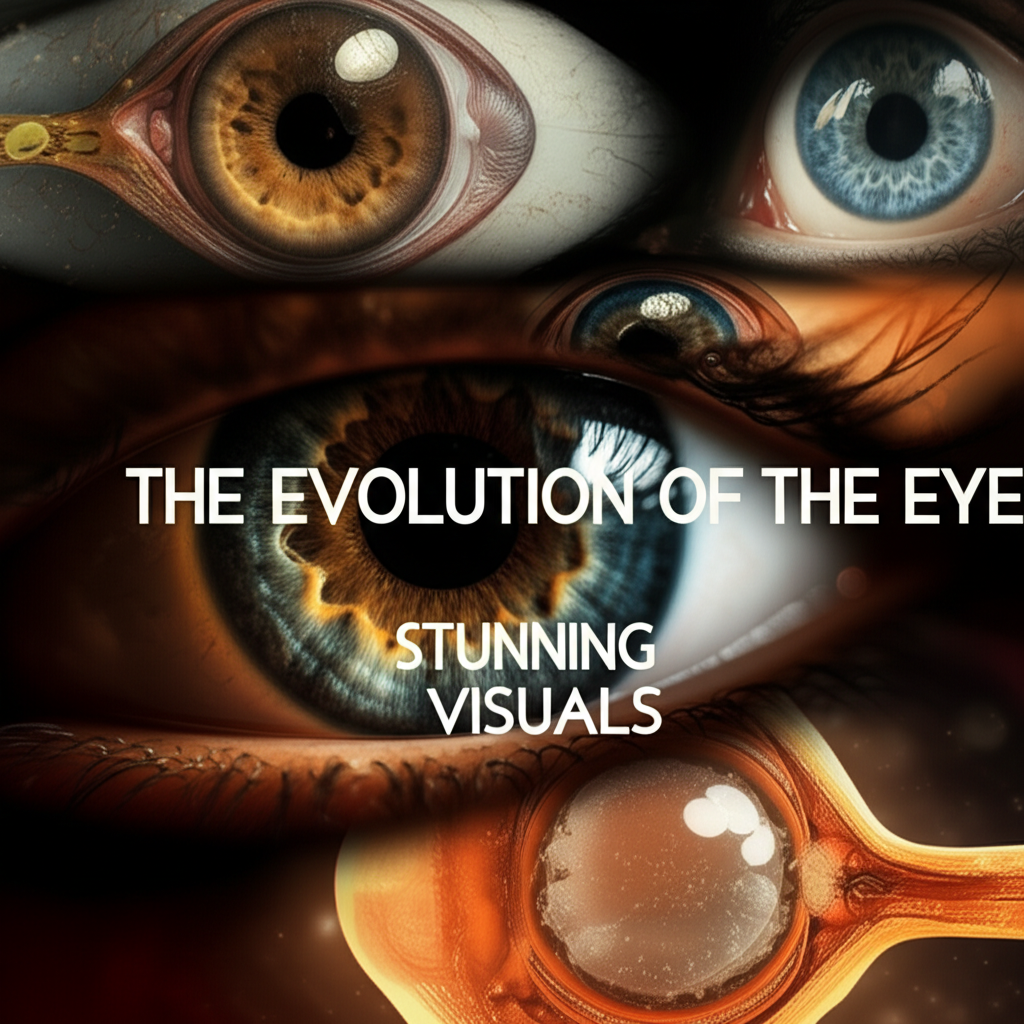
The Evolution of the Eye: Stunning Visuals Unveiled
The journey of sight, from its most rudimentary beginnings to the complex marvel we possess today, is one of evolution’s most compelling narratives. It is a story of gradual refinement, driven by the relentless pressures of natural selection, transforming simple light-sensitive patches into intricate organs capable of rendering the vibrant, detailed world around us. This incredible progression has not only shaped animal lifespans and behaviours but has fundamentally altered the course of life on Earth itself, unleashing an “arms race” of perception that continues to this day.
Unveiling The Earliest Steps: The Genesis of Light Detection
Pinpointing the absolute genesis of vision takes us back hundreds of millions of years, long before anything resembling an eye existed. The very first ‘proto-eyes’ were not eyes at all, but single cells containing photoreceptors – light-sensitive pigments. Imagine a simple, single-celled organism like a Euglena, which has a light-sensitive spot combined with a flagellum. This basic setup allowed it to distinguish between light and dark, guiding it towards photosynthetic areas or away from harmful UV radiation.
Over time, multicellular organisms began to aggregate these photoreceptor cells into patches on their skin, typically on the head region. A flatworm, for instance, possesses “eyespots” – depressions lined with photoreceptors – which can sense the direction of light, allowing it to move towards shade or food. While these spots couldn’t form images, they represented a critical leap: the ability to detect not just the presence of light, but its approximate source. This directional awareness offered a significant survival advantage, propelling organisms further along the visual evolutionary path.
From Pits to Pinholes: The First Glimpse of Form
The next crucial refinement involved the invagination of these light-sensitive patches into shallow pits. What might seem like a minor anatomical change was, in fact, revolutionary. By recessing the photoreceptors, the opening of the pit began to restrict the incoming light, introducing an element of spatial resolution. Light coming from different directions would hit different parts of the pit’s surface, providing more precise directional information.
As these pits deepened and their opening narrowed, they effectively became “pinhole cameras.” Consider the nautilus, a living fossil, whose eye still operates on this principle. It has no lens, but a small aperture allows light to enter, creating a dim but surprisingly clear image on the retina at the back of the chamber. While still blurry by modern standards and very susceptible to low light, the pinhole eye offered a distinct evolutionary advantage: the ability to discern shapes, outlines, and movements. This was no longer just sensing light; it was beginning to “see” the world.
The Revolutionary Lens: Sharpening The World
The true breakthrough in vision arrived with the development of the lens. Imagine the pinhole eye’s limitation: to get a sharper image, the hole needed to be tiny, letting in very little light. To get a brighter image, the hole needed to be larger, but then the image would be blurry. The invention of a transparent, refractive material – the lens – solved this dilemma.
By placing a curved, transparent structure over the pinhole, organisms could allow a wider aperture (more light) while simultaneously focusing that light onto a precise point on the retina, creating a sharp, bright image. Early lenses likely formed from protective epidermal cells that grew over the pit. Over generations, these cells mutated and differentiated into highly transparent, specialized tissues capable of bending light efficiently. This innovation, dating back to the Cambrian Period, is believed to have played a significant role in the “Cambrian Explosion,” a period of rapid diversification of animal life, as being able to see clearly unlocked a whole new dimension of predator-prey interactions and environmental exploration.
A Kaleidoscope of Vision: The Diversity of Eye Designs
Once the lens emerged, evolution experimented wildly, leading to an astonishing array of eye designs perfectly adapted to specific ecological niches.
The Compound Eye: Prevalent in insects and crustaceans, the compound eye is made up of thousands of individual light-sensing units called ommatidia, each with its own lens and photoreceptors. This provides a wide field of view and excellent motion detection, ideal for navigating complex environments and evading predators, though individual image resolution is lower than in camera-type eyes.
The Camera-Type Eye: Found in vertebrates (like humans) and cephalopods (like octopuses), this eye features a single lens that focuses light onto a retina. Despite evolving independently in these two groups, their functional similarities are a testament to convergent evolution, highlighting the efficiency of this design.
Specialized Eyes: Scallops possess multiple reflective mirror eyes, providing an array of simple light-detectors. Deep-sea fish have large, tubular eyes optimized to collect the faintest flickers of light in the abyssal darkness. Some mantis shrimp have arguably the most complex eyes in the animal kingdom, capable of perceiving up to 12 different color channels, including polarized and ultraviolet light, for intricate communication and hunting.
The Human Eye: A Masterpiece of The Mammalian Design
The human eye is a prime example of the camera-type eye, refined over millions of years to achieve exceptional vision.
It begins with the cornea, a transparent outer layer that provides the initial focusing power. Behind it, the iris, a muscle-controlled diaphragm, adjusts the pupil’s size to regulate light entry. The flexible lens then fine-tunes the focus, allowing us to see objects at varying distances by changing its shape. Finally, light projects onto the retina, a light-sensitive tissue at the back of the eye packed with rods (for dim light and motion) and cones (for detailed color vision). The optic nerve transmits these signals to the brain, where they are interpreted into the rich visual tapestry we experience.
While often cited as an example of intelligent design, the human eye also bears the marks of its evolutionary journey – for instance, the “inverted” retina where nerve fibers lie in front* of the photoreceptors, leading to a small blind spot. Yet, the brain ingeniously compensates for these minor architectural imperfections, creating a seamless, high-resolution, color-rich, and three-dimensional perception of the world.
The Unending Journey: The Future of The Eye
The evolution of the eye is not a story with an end. It is an ongoing process, continually adapting to shifts in environments, changes in prey, and new challenges. Species constantly refine their visual systems, driven by genetic mutations and the selective pressures that favor individuals with better sight. From nocturnal animals developing larger pupils and more rods, to prey animals expanding their peripheral vision, the eye remains a dynamic canvas of biological innovation.
As technology progresses, our understanding of eye development and function deepens, even inspiring bio-mimicry for artificial vision systems. But nothing quite matches the elegant, complex, and astounding natural history of the eye itself – a testament to life’s persistent quest to unveil the stunning visuals of its world.
0 Comments