- The Geological Dance of Gemstone Formation
- Unveiling The Earth's Gemstone Factories: Notable Origins
- The Rarity and Value: A Product of Origin
The allure of gemstones lies not just in their dazzling beauty, but also in the incredible, often millennia-long journeys they undertake deep within the Earth. From the fiery heart of volcanoes to the immense pressures of tectonic plates and the gentle flow of ancient waters, each gem tells a unique geological story. Understanding these origins provides a profound appreciation for their rarity, distinct characteristics, and the very forces that shaped our planet.
For millennia, humans have been captivated by the glimmer and color of precious stones. Whether adorning royalty, signifying love, or simply admired for their aesthetic appeal, gemstones are windows into Earth’s dynamic past. But how do these natural marvels come to be? Their formation processes are as diverse and complex as the gems themselves, a testament to the planet’s continuous, unseen artistry.
The Geological Dance of Gemstone Formation
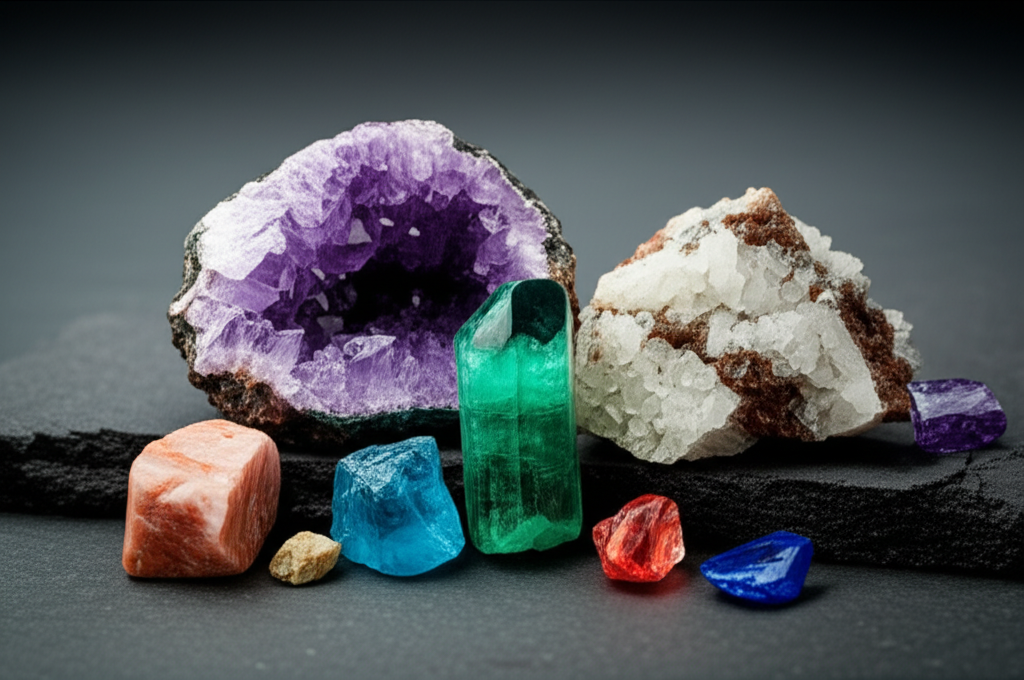
Gemstones are formed through various geological processes, each requiring specific conditions of temperature, pressure, and the availability of certain chemical elements. These processes can broadly be categorized into several types:
1. Igneous Formation: This is perhaps the most dramatic origin, as it involves intense heat. Igneous gems crystallize from magma (molten rock beneath the Earth’s surface) or lava (molten rock erupted onto the surface). As the magma cools slowly deep underground, large, well-formed crystals can grow. If it cools rapidly, smaller crystals may form, or amorphous structures like obsidian.
Examples: Diamonds, often brought to the surface through kimberlite pipes (volcanic conduits), are prime examples of igneous formation occurring under extreme pressure in the Earth’s mantle. Peridot, moonstone, and some varieties of sapphire and ruby can also be formed through igneous processes.
2. Metamorphic Formation: “Metamorphic” means “change in form.” These gems originate from existing rocks that are subjected to intense heat and pressure, typically during mountain-building events or when buried deep within the Earth’s crust. These conditions cause the minerals within the rock to recrystallize, forming new minerals or larger, more perfect crystals of existing ones.
Examples: Many of the world’s finest rubies and sapphires from regions like Myanmar and Sri Lanka are metamorphic. Emeralds, garnets, and some varieties of jade also commonly form under metamorphic conditions, resulting in their characteristic clarity and internal structures.
3. Sedimentary Formation: Unlike the high-energy environments of igneous and metamorphic processes, sedimentary gems form from the accumulation and compaction of sediments. Over vast stretches of time, layers of mineral particles, often carried by water, settle and solidify.
Examples: Opal is a classic example of a sedimentary gem. It forms when silica-rich water seeps into cracks and voids in rocks, depositing microscopic silica spheres that stack up. As the water evaporates, the silica solidifies into opal. Malachite, azurite, and some jaspers also originate from sedimentary processes, often in near-surface environments where mineral-rich waters interact with other existing minerals.
4. Hydrothermal Formation: This process involves hot, mineral-rich water circulating through cracks and fissures in existing rocks. As the water cools or its chemical composition changes, dissolved minerals precipitate out, forming crystals. This often occurs near volcanic activity or in areas with high geothermal gradients.
Examples: Amethyst, citrine, and many other quartz varieties are quintessential hydrothermal gems. Tourmaline, aquamarine, and even some emeralds (like those from Colombia) are also formed this way, with the circulating hot fluids transporting the necessary elements to crystallize within cavities.
Unveiling The Earth’s Gemstone Factories: Notable Origins
Certain locations worldwide are renowned for producing exceptionally beautiful or unique gemstones, often due to a perfect confluence of these geological processes.
Diamonds (Kimberley, South Africa; Siberia, Russia; Argyle, Australia): Diamonds are born deep in the Earth’s mantle, over 100 miles below the surface, under immense pressure and soaring temperatures (around 2,000°F). They are then violently brought to the surface millions of years later through volcanic eruptions that create “kimberlite pipes.” The erosion of these pipes can also lead to secondary deposits in rivers, known as “alluvial diamonds.”
Emeralds (Muzo, Colombia; Zambia; Brazil): Colombian emeralds are famously formed hydrothermally, with hot fluids carrying chromium (which gives emerald its green color) and beryllium into fractures in shale, where they crystallize. Zambian emeralds, however, often have a metamorphic origin, formed during tectonic plate collisions.
Rubies & Sapphires (Mogok, Myanmar; Sri Lanka; Kashmir, India): These two varieties of the mineral corundum owe their vibrant colors to trace elements – chromium for ruby’s red, and iron and titanium for sapphire’s blue. Many of the most prized rubies and sapphires are formed through metamorphic processes, where limestone or marble is subjected to heat and pressure, allowing the corundum crystals to grow. Volcanic activity can also concentrate these gems.
Opals (Coober Pedy, Australia): Australia is responsible for a vast majority of the world’s precious opal. Here, ancient inland seas left behind silica-rich sediments. Over millions of years, episodic wetting and drying cycles allowed silica-rich solutions to percolate down, depositing silica spheres in voids, which eventually solidified into exquisite opals with their characteristic play-of-color.
The Rarity and Value: A Product of Origin
The origin of a gemstone plays a crucial role in its perceived rarity, quality, and ultimately, its value. Specific geological formations can lead to unique color saturation, clarity, or crystal habits that are highly sought after. For example, Kashmir sapphires are revered for their “cornflower blue” color and velvety texture, attributed to their specific metamorphic formation. Colombian emeralds are prized for their bright, intense green, a product of their hydrothermal birth.
Furthermore, the very processes that create these gems are often infrequent and localized. The precise combination of elements, temperature, pressure, and time necessary to form a gem of significant size and quality is a geological lottery. This inherent rareness, coupled with the difficulty and danger of extraction, only adds to the mystique and value of these natural treasures. Trace elements unique to a gem’s origin can even act as a “fingerprint,” allowing gemologists to identify its source.
In conclusion, every gemstone is a miniature masterpiece, meticulously crafted by Earth’s powerful and patient forces. From raw magma to ancient sediments, the journey of a gemstone from deep underground to a dazzling adornment is a story of geological wonder. A deeper understanding of these stunning secrets allows us to appreciate not just the gem itself, but the extraordinary planetary processes that bring such beauty into existence.
0 Comments