
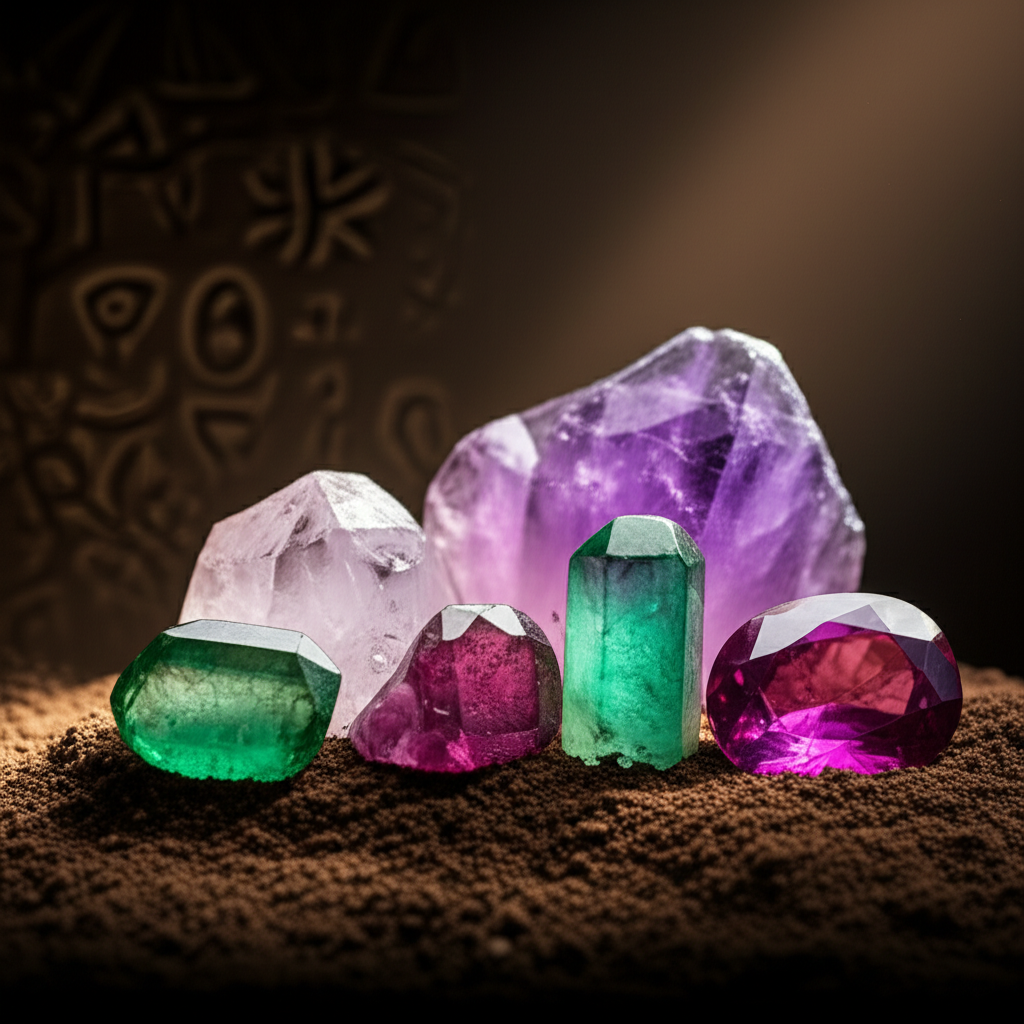
The allure of gemstones is as old as civilization itself, a timeless fascination interwoven with myths, legends, and the very fabric of human history. These sparkling treasures, born deep within the Earth’s crust, have captivated humanity for millennia, serving not just as adornment but also as symbols of power, piety, and protection. Unearthing the ancient origins of these precious stones reveals a breathtaking journey through geological eons and cultural evolution, uncovering fascinating secrets that continue to resonate today.
The Earth’s Fiery Forge: Birth of Gems
Before a gemstone can grace a royal crown or a delicate pendant, it must undergo an extraordinary journey within the planet. Most gemstones are minerals, formed under immense heat and pressure over millions, even billions, of years. Conditions deep within the Earth, driven by volcanic activity, tectonic plate movements, and hydrothermal processes, act as a colossal natural laboratory. For instance, diamonds, the hardest natural substance, crystallize from pure carbon hundreds of kilometers beneath the surface under extreme pressure and temperature, later brought closer to the surface by deep-seated volcanic eruptions.
Other gems like emeralds and rubies are formed through metamorphic processes, where existing rocks are transformed by intense heat and pressure, causing new minerals to crystallize. Aquamarines and topazes often grow in pegmatites, coarse-grained igneous rocks that crystalize from magma. The vast array of colors and compositions we see in gemstones today is a direct result of the diverse geological environments and chemical elements present during their formation. Each stone carries with it a story millions of years in the making, a testament to the slow, powerful forces of Earth.
The First Glimmer: Early Human Discoveries and Uses
Long before sophisticated mining operations, early humans stumbled upon the first gemstones. Drawn by their unusual colors, sparkle, and durability, our ancestors likely collected them from riverbeds or exposed rock formations. Early uses were pragmatic, beyond mere aesthetics. Harder stones like flint and obsidian were fashioned into tools and weapons, valued for their sharp edges. However, once humanity began to appreciate the intrinsic beauty of certain stones, the era of gem adornment began.
Archaeological evidence suggests that as early as the Stone Age, simple beads and pendants made from naturally occurring semi-precious stones were worn. Turquoise, lapis lazuli, and carnelian were among the earliest favored gemstones, found in ancient burial sites dating back thousands of years across different continents. These stones weren’t just decorative; they were believed to possess magical or protective properties, serving as talismans against evil, illness, or misfortune.
The Cradle of Civilization: Gems in Ancient Cultures
As civilizations flourished, so did the art and significance of gemstones. Each major ancient culture developed its unique relationship with these sparkling minerals.
Ancient Egypt, perhaps more than any other civilization, elevated gemstones to a profound level of spirituality and status. For the pharaohs and nobility, gems like turquoise, lapis lazuli (imported from Afghanistan), carnelian, and emeralds (mined locally in the Eastern Desert) were symbols of divine power, wealth, and eternal life. Lapis lazuli, with its deep celestial blue, was particularly revered, believed to represent the heavens and the gods. It adorned royal jewelry, death masks (most famously Tutankhamun’s), and sacred amulets. Scarab beetles carved from various gemstones were worn as powerful symbols of rebirth and protection.
In Mesopotamia, cylinder seals carved from hard stones like lapis lazuli, agate, and hematite served as signatures and symbols of authority. The Greeks and Romans associated specific gemstones with their gods and goddesses, believing they imbued wearers with certain qualities. Amethyst, for example, was believed by the Greeks to ward off drunkenness, while the Romans regarded garnets as tokens of friendship.
The ancient civilizations of the East, notably China and India, cultivated sophisticated gemstone cultures. Jade, in China, transcended mere beauty; it was considered the “Stone of Heaven,” embodying virtue, purity, and immortality. It was intricately carved into ceremonial objects, jewelry, and burial garments. India, with its rich history of diamond mining, was the primary source of diamonds for the world until the 18th century, valuing them for their clarity and strength.
Across the Atlantic, within the vast empires of the Maya, Aztec, and Inca, jade and turquoise were paramount. These stones were synonymous with water, fertility, and the gods, used in elaborate sacrificial offerings, ceremonial masks, and regal adornments. The scarcity and beauty of these gems reinforced the wearer’s status and connection to the divine.
The Evolution of Extraction and Craftsmanship
As demand for gemstones grew, so did the methods of extracting and working with them. Early mining was rudimentary, focusing on surface deposits or shallow open pits. Over time, techniques advanced, involving organized labor, rudimentary tools, and deeper shafts, often under perilous conditions. The trade routes, such as the legendary Silk Road, played a crucial role in distributing these precious materials across continents, fostering cultural exchange and demand.
Craftsmanship also evolved dramatically. Initially, stones were simply tumbled by natural processes in rivers or given a basic polish. With the advent of more sophisticated tools and knowledge, ancient artisans learned to drill, carve, and eventually facet gemstones, maximizing their brilliance and appeal. The Egyptians were masters of carving intricate shapes, while the Romans developed techniques for cameo work. The art of gem cutting, though vastly modernized, has its roots in these early attempts to unlock the inherent beauty of each unique stone.
The Enduring Legacy of Ancient Gemstone Secrets
Even today, the ancient origins of gemstones continue to influence our perception and appreciation of them. The symbolism attributed to stones by cultures millennia ago often persists, albeit in generalized forms like birthstones and astrological associations. The mystical and protective qualities once ascribed to lapis lazuli or jade resonate in modern beliefs about healing crystals and mindful adornment.
From the depths of the Earth to the hands of ancient artisans and the display cases of modern jewelers, gemstones stand as enduring symbols of beauty, mystery, and the profound connection between humanity and the natural world. Each gleaming facet and vibrant hue tells a story, a secret whispered across geological ages and human history, reminding us of the deep and powerful allure that has captured hearts for millennia.
0 Comments