
- The Astonishing Architecture of Our Gray Matter
- The Symphony of Cognition: How We Think and Learn
- The Power of Plasticity: Rewiring the Brain
- Memory: The Brain's Vast Library
- Decision-Making: The Neural Crossroads
- The Emotional Core: Feeling and Connection
- The Unconscious Mind: Beyond Our Awareness
- The Future of Understanding: Unraveling More Secrets
- Our Most Precious Organ
Unlocking the Mysteries Within: A Journey Into the Human Brain
The human brain, a mere three-pound organ nestled within our skull, is arguably the most complex and enigmatic structure in the known universe. It is the seat of consciousness, the architect of our thoughts, emotions, memories, and actions, and the very essence of who we are. For centuries, philosophers and scientists have grappled with its secrets, and while we’ve made astounding progress, much about this incredible organ remains cloaked in mystery, beckoning us to understand its amazing capabilities.
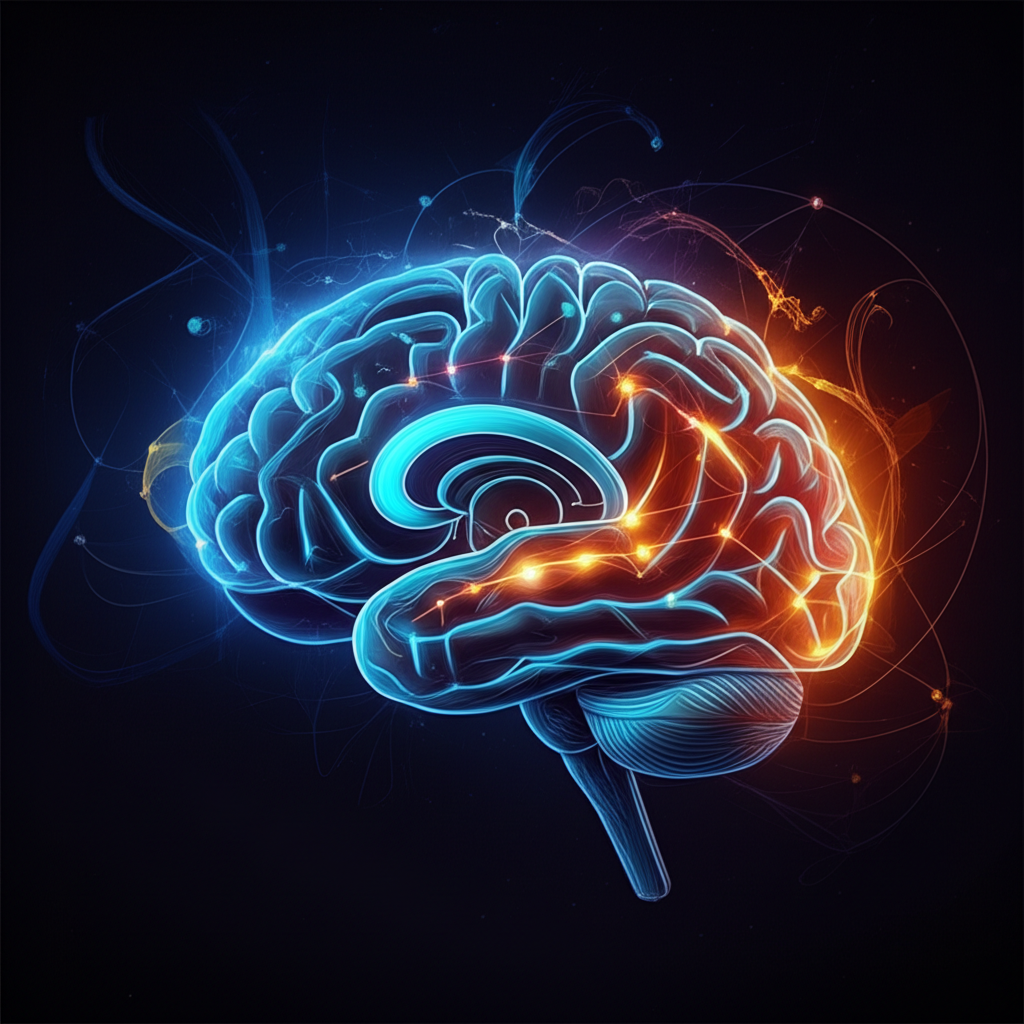
The Astonishing Architecture of Our Gray Matter
Despite its modest size, the brain is an engineering marvel. Composed of approximately 86 billion neurons, each capable of forming thousands of connections with others, it creates a staggering network of trillions of synapses. These tiny junctions are where electrochemical signals, carrying all our thoughts and sensations, are transmitted at speeds of up to 268 miles per hour. The brain’s wrinkled surface, the cerebral cortex, is not random but provides a vast surface area for processing complex information, a feature that distinguishes us from other species.
Divided into distinct lobes – the frontal, parietal, temporal, and occipital – each plays a crucial role. The frontal lobe is our command center for planning, decision-making, and personality. The parietal lobe processes sensory information like touch and spatial awareness. The temporal lobe handles hearing, memory, and language, while the occipital lobe is dedicated to visual processing. Beyond these, deeper structures like the cerebellum coordinate movement and balance, and the brainstem regulates essential life functions such as breathing and heart rate. This intricate, layered design allows for an unparalleled level of specialized function, yet all parts work in concert, a testament to the brain’s sophisticated design.
The Symphony of Cognition: How We Think and Learn
Our ability to think, reason, and adapt is rooted in the brain’s extraordinary cognitive functions. These processes allow us to interpret the world, solve problems, and continually evolve.
The Power of Plasticity: Rewiring the Brain
One of the most astounding discoveries in neuroscience is neuroplasticity – the brain’s ability to reorganize itself by forming new neural connections throughout life. This isn’t just a phenomenon of childhood; adult brains can adapt, learn new skills, and even recover from injury by rewiring their circuits. When you learn to play an instrument, master a new language, or even change a habit, you are witnessing neuroplasticity in action. This dynamism means our brains are not static machines but ever-evolving landscapes, constantly being shaped by our experiences and learning. It’s what allows for resilience and continuous personal growth.
Memory: The Brain’s Vast Library
Imagine a library with an infinite capacity, meticulously cataloging every experience, fact, and skill you’ve ever acquired. That’s a simplified view of our memory system. Memory is not a single entity but a complex interplay of different processes and regions. Short-term memory holds information fleetingly, like a phone number you just looked up. Working memory allows us to manipulate this information for tasks like mental arithmetic. Long-term memory, however, stores vast quantities of information, divided into:
Episodic Memory: Recalling personal events, like your last birthday party.
Semantic Memory: Knowledge of facts and concepts, like the capital of France.
* Procedural Memory: How to perform skills, like riding a bike, often without conscious thought.
The hippocampus plays a pivotal role in forming new memories, while other regions are responsible for storing and retrieving them, a process that is still being fully mapped out.
Decision-Making: The Neural Crossroads
Every day, we make countless decisions, from trivial choices to life-altering ones. This process involves a complex dance between logic, emotion, and stored experiences. The prefrontal cortex, a part of the frontal lobe, weighs options, predicts outcomes, and inhibits impulsive behaviors. However, our emotional centers, particularly the amygdala, often inform and influence these choices, sometimes driving intuitive “gut” feelings that can surprise us with their accuracy or, conversely, lead us astray. Understanding this interplay is key to comprehending human behavior and psychology.
The Emotional Core: Feeling and Connection
Our brain is not just a supercomputer; it is also the source of our deep capacity for emotion, empathy, and social connection. The limbic system, an ancient part of the brain, is central to these experiences. It includes structures like the amygdala, responsible for processing emotions such as fear and pleasure, and the hippocampus, which links emotions to memories.
Neurotransmitters, chemical messengers, play a vital role in our mood and well-being. Dopamine contributes to motivation and reward, serotonin regulates mood and sleep, and endorphins act as natural pain relievers and mood elevators. An imbalance in these chemicals can profoundly affect mental health, underpinning conditions like depression and anxiety. Furthermore, the brain mechanisms for empathy allow us to understand and share the feelings of others, forming the bedrock of our social structures and relationships.
The Unconscious Mind: Beyond Our Awareness
Much of what the brain does operates beneath the surface of our conscious awareness. From regulating our heartbeat and breathing to processing sensory input that doesn’t reach full consciousness, the unconscious mind is constantly at work. Habits, learned motor skills, and even our initial intuitive reactions often stem from these automatic processes.
Sleep, far from being inactive, is a critical period for the brain. During sleep, it consolidates memories, processes emotional experiences from the day, and literally cleanses itself of metabolic waste products built up during wakefulness. Our dreams, often a vivid tapestry of imagination and emotion, are still one of the most intriguing mysteries of the unconscious mind, offering glimpses into our deepest thoughts and anxieties.
The Future of Understanding: Unraveling More Secrets
While we have uncovered many of the brain’s amazing secrets, the journey of discovery is far from over. Modern neuroscience, utilizing advanced imaging techniques like fMRI, sophisticated computational models, and artificial intelligence, is rapidly expanding our knowledge. We are on the cusp of understanding more about consciousness itself, developing innovative treatments for neurological disorders like Alzheimer’s and Parkinson’s, and perhaps even enhancing cognitive abilities.
This ongoing quest not only satisfies our intellectual curiosity but also holds the key to improving human health, well-being, and understanding our place in the world.
Our Most Precious Organ
The human brain is a marvel of biological engineering, capable of astonishing feats of cognition, emotion, and adaptation. It is what allows us to learn, create, love, and dream. Protecting and nurturing this incredible organ through healthy lifestyle choices, continuous learning, and caring for our mental well-being is paramount. As we continue to unravel its amazing secrets, we gain not only a deeper understanding of ourselves but also the potential to shape a healthier, more enlightened future.
0 Comments