- What Exactly Are Mutations?
- The Crucial Link: Mutations and Genetic Variation
- Mechanisms of Change: How Mutations Drive Adaptation
- The Misconceptions About Mutations
- Mutations as a Foundation of Evolutionary Innovation
- Conclusion
The amazing role of mutations in evolution is nothing short of foundational, acting as the primary engine driving genetic diversity and the incredible adaptability of life on Earth. While often viewed negatively in popular culture, associated with deformities or diseases, mutations are, in reality, indispensable for the evolutionary process. Without these spontaneous alterations in an organism’s genetic code, the continuous adaptation, diversification, and even the very existence of complex life forms would be impossible. They are the raw material upon which natural selection and other evolutionary forces act, shaping the trajectory of species through countless generations.
What Exactly Are Mutations?
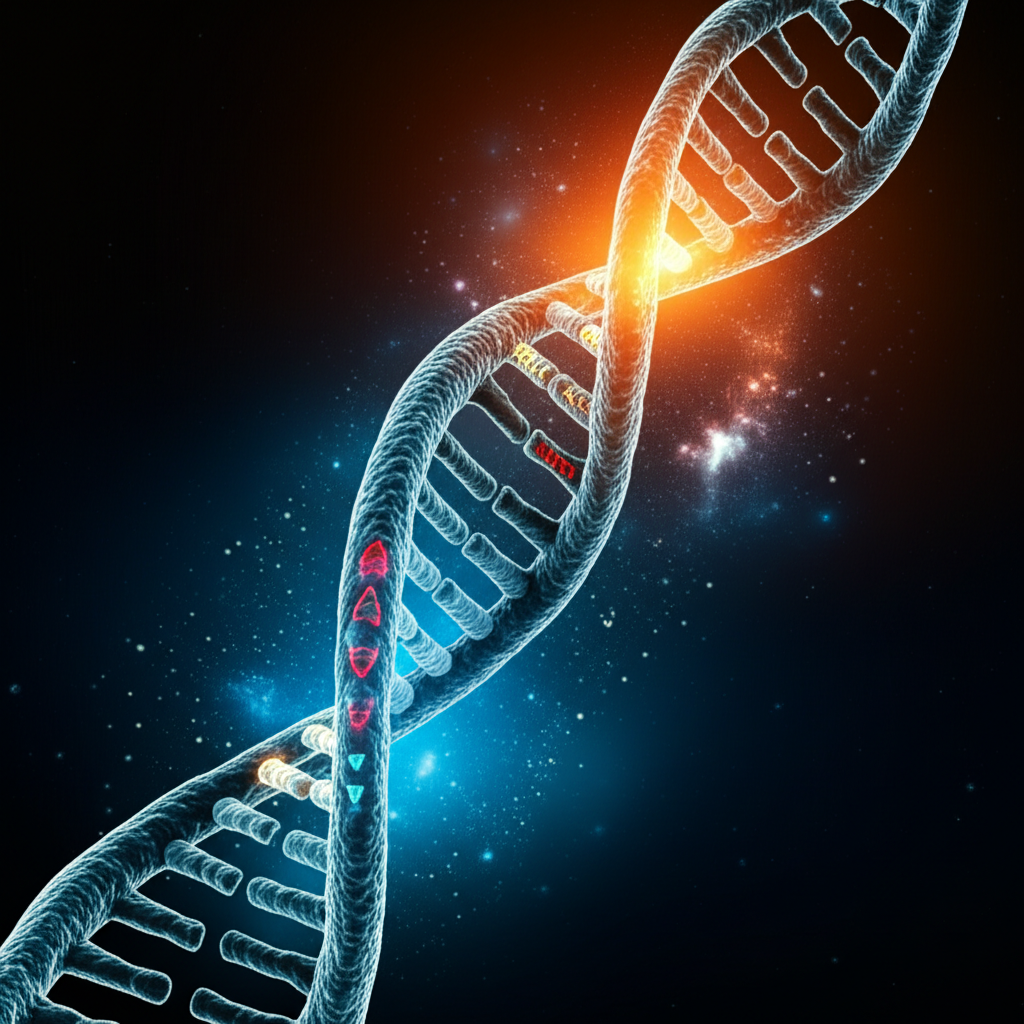
At their core, mutations are inheritable changes in the nucleotide sequence of an organism’s DNA, or in the RNA of RNA viruses. These changes can range from a single nucleotide substitution (a point mutation) where one base pair is swapped for another, to large-scale chromosomal rearrangements involving the deletion, insertion, or duplication of entire gene segments. Mutations can occur spontaneously during DNA replication—when errors are made by the DNA polymerase enzyme—or they can be induced by external factors called mutagens, such as radiation, certain chemicals, or even viruses.
It’s crucial to understand that mutations are random with respect to their fitness consequences. This means that whether a mutation turns out to be beneficial, neutral, or harmful to an organism’s survival and reproduction is a matter of chance and depends entirely on the environment and genetic context. The vast majority of mutations are either neutral, having no immediate observable effect on the organism, or deleterious, leading to reduced fitness. However, it is the rare beneficial mutations that provide the new variations essential for evolution to proceed.
The Crucial Link: Mutations and Genetic Variation
Genetic variation is the cornerstone of evolution. It refers to the differences in DNA sequences among individuals within a population. Without this variation, all individuals would be genetically identical, and there would be no differential survival or reproduction based on traits, which is the essence of natural selection. Mutations are the ultimate source of all new genetic variation. Existing variations in a population can be reshuffled through sexual reproduction via recombination, but entirely new alleles—different versions of a gene—can only arise through mutation.
Consider a population of bacteria exposed to an antibiotic. If there isn’t an existing gene variant that confers resistance, the only way for the population to survive is if a random mutation occurs in one of the bacteria, granting it resistance. This resistant bacterium then proliferates, eventually dominating the population. This direct link between mutation and the generation of novel traits highlights why mutations are not merely “errors” but the fundamental wellspring of biological innovation.
Mechanisms of Change: How Mutations Drive Adaptation
Mutations drive adaptation through several interconnected mechanisms:
Beneficial Mutations and Natural Selection: When a mutation confers an advantage to an individual in a specific environment, that individual is more likely to survive, reproduce, and pass on the advantageous gene to its offspring. Over time, the frequency of this beneficial mutation increases in the population. Classic examples include the development of antibiotic resistance in bacteria, insecticide resistance in insect populations, and the evolution of lactase persistence in human populations, allowing adults to digest milk. Each of these adaptations began with one or more specific mutations.
Neutral Mutations and Genetic Drift: Many mutations do not have an immediate or obvious effect on an organism’s phenotype or fitness. These neutral mutations can still become fixed or lost in a population through genetic drift, a random process particularly influential in small populations. While not directly driven by selection, neutral mutations are incredibly useful in tracking evolutionary history and establishing molecular clocks to estimate divergence times between species.
Gene Duplication and Novel Functions: A significant driver of evolutionary innovation arises from gene duplication. When a segment of DNA, including one or more genes, is duplicated, one copy can maintain its original essential function, while the other copy is free to accumulate mutations without immediately harming the organism. This ‘extra’ copy can then evolve to perform a completely new function, leading to the creation of new gene families and complex biological systems. The globin gene family, responsible for oxygen transport in vertebrates, is a prime example, having arisen through successive gene duplications and subsequent mutations.
The Misconceptions About Mutations
Popular media often propagates misunderstandings about mutations. It’s common to hear that mutations are always harmful, leading to diseases like cancer or severe disabilities. While it’s true that many mutations are indeed deleterious and can cause genetic disorders, this paints an incomplete picture. As noted, many are neutral, and a critical minority are beneficial.
Another misconception is that mutations are goal-directed or occur “because an organism needs them.” This is fundamentally incorrect. Mutations are random events, occurring without foresight or purpose. The environment doesn’t cause specific advantageous mutations to appear; rather, it selects* for mutations that have coincidentally arisen and happen to be beneficial in that context. The undirected nature of mutations, coupled with the directed force of natural selection, is the powerful engine of evolution.
Mutations as a Foundation of Evolutionary Innovation
Without a continuous supply of new genetic variation from mutations, life would be stuck in an evolutionary rut. Organisms would be unable to adapt to changing environments, new diseases, or competing species. Mutations are the architects of biodiversity, underpinning the vast array of life forms we observe across the planet. They are the ultimate source of the raw material from which new species emerge and existing species fine-tune their adaptations.
Understanding mutations is not just an academic exercise; it has profound implications across various fields. In medicine, studying mutations is crucial for comprehending genetic diseases, developing targeted therapies for cancers, and understanding pathogen evolution (like viruses mutating to avoid vaccines). In agriculture, mutations are leveraged to breed crops with desirable traits, such as increased yield or disease resistance.
Conclusion
Mutations, far from being mere errors, are absolutely essential for the ongoing process of evolution. They are the spontaneous, random changes in genetic material that introduce novelty into the genome, providing the essential raw material upon which natural selection and other evolutionary forces can act. From the single-celled organisms adapting to new environments to the complex biodiversity of life forms on Earth today, mutations have been and continue to be the invisible but omnipresent driving force behind all evolutionary change. They are truly the wellspring of life’s adaptability, creativity, and persistent journey through time.
0 Comments