- What Are Mutations? The Molecular Mechanics
- The Randomness and Significance of Mutation
- From Genetic Change to Phenotypic Impact
- Mutations as the Fuel for Natural Selection
- The Broader Evolutionary Landscape: Beyond Single Genes
- The Dual Nature: Harmful, Beneficial, and Neutral
- Conclusion
The intricate dance of life on Earth is constantly evolving, driven by a fundamental force often unseen, yet profoundly impactful: mutations. These seemingly small alterations in the genetic code are not mere errors but rather the essential wellspring of all biodiversity, fueling the grand spectacle of evolution that has shaped every organism, from the simplest bacteria to the most complex human. Far from being uniformly detrimental, mutations introduce the very variability upon which natural selection acts, pushing species towards adaptation, innovation, and ultimately, their profound evolutionary journey.
What Are Mutations? The Molecular Mechanics
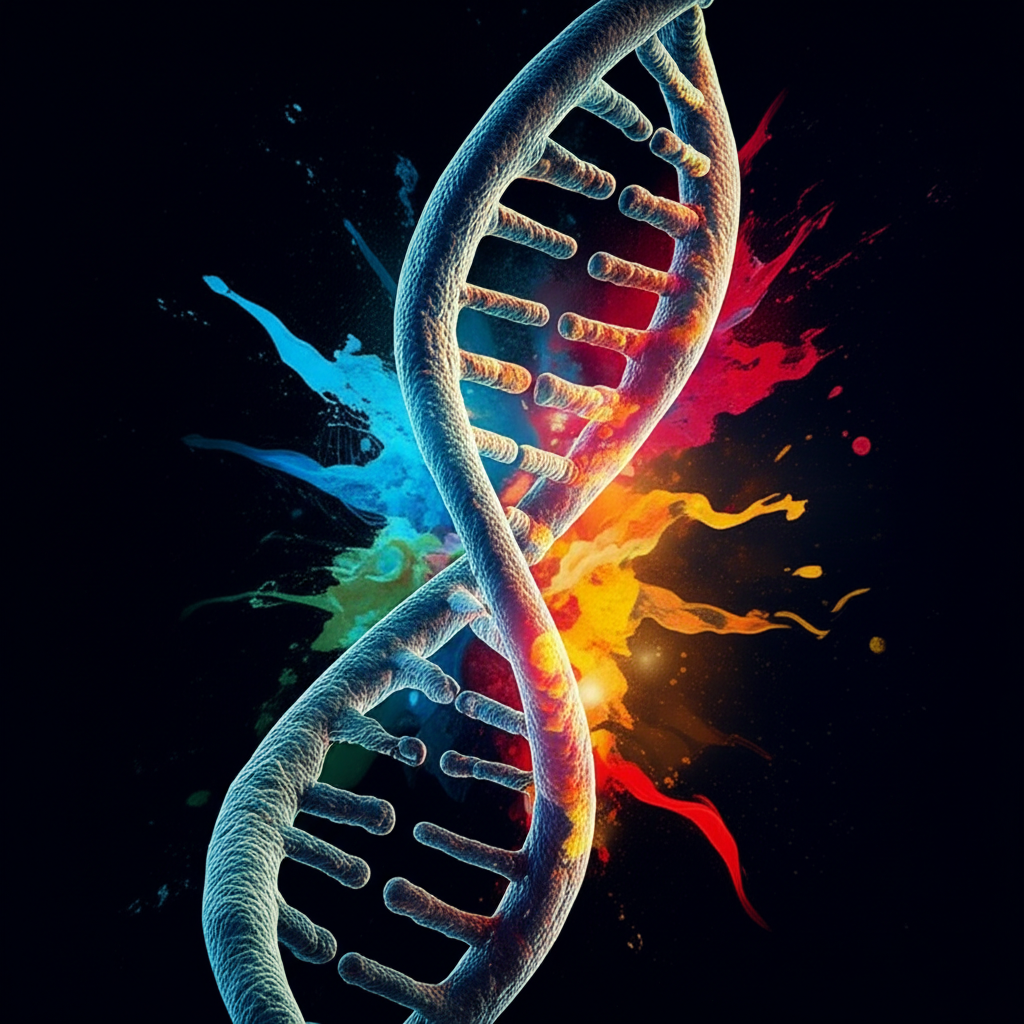
At their core, mutations are changes in the DNA sequence of an organism. DNA, the blueprint for life, consists of a precise order of nucleotide bases (Adenine, Guanine, Cytosine, Thymine). A mutation can involve a single base pair substitution (a “point mutation”), the insertion or deletion of one or more base pairs, or even larger-scale chromosomal changes where significant segments of DNA are rearranged, duplicated, or lost. These alterations can occur spontaneously during DNA replication – a process where errors are surprisingly common but mostly corrected – or they can be induced by external factors called mutagens, such as radiation, certain chemicals, or even viruses. While the cellular machinery has sophisticated repair mechanisms, some changes inevitably slip through, becoming permanent fixtures in the genome and, if they occur in germline cells, passable to the next generation.
The Randomness and Significance of Mutation
A critical aspect of mutations is their inherent randomness. They do not occur with any foresight or purpose; an organism does not “choose” to mutate in a beneficial way to survive a new environmental challenge. Instead, mutations arise without regard for their potential helpfulness or harm. This undirected nature is precisely why they are such powerful drivers of evolution. Imagine a vast library of possibilities, where each new book is randomly generated, sometimes nonsensical, sometimes brilliant, but always new. Life, through mutation, continuously explores this genetic library, generating novel traits and functions. This vast, undirected search guarantees that, given enough time, the genetic toolkit for adaptation to virtually any environmental pressure will eventually emerge.
From Genetic Change to Phenotypic Impact
Once a mutation occurs, its impact can vary widely at the phenotypic level – the observable characteristics of an organism. Some mutations are “silent,” meaning they alter the DNA sequence but do not change the amino acid sequence of the protein produced, or they occur in non-coding regions with no discernible effect. Other mutations can profoundly alter a protein’s function, leading to a new trait. For example, a mutation might change an enzyme’s efficiency, a structural protein’s strength, or a receptor’s sensitivity. It is these changes, however subtle or dramatic, that provide the grist for natural selection’s mill. They can manifest as changes in metabolism, appearance, resistance to disease, or even behavioral patterns, opening up new avenues for survival and reproduction.
Mutations as the Fuel for Natural Selection
The real power of mutations becomes evident when coupled with natural selection. Natural selection is the differential survival and reproduction of individuals due to differences in phenotype. Without mutations, there would be no variation within a population, and thus no raw material for selection to act upon. In a stable environment, advantageous mutations that enhance an individual’s fitness (its ability to survive and reproduce) will tend to increase in frequency over generations, while harmful mutations will be weeded out. A classic example is the development of antibiotic resistance in bacteria. Random mutations in bacterial DNA can confer resistance to an antibiotic; when exposed to that antibiotic, susceptible bacteria die, while the resistant ones survive and proliferate, quickly leading to a population dominated by the resistant strain. Over geological timescales, this process leads to the astounding diversity of life we observe today, with each species finely tuned to its ecological niche, or sometimes, expanding into entirely new ones.
The Broader Evolutionary Landscape: Beyond Single Genes
While point mutations in single genes are significant, mutations can also lead to more comprehensive evolutionary shifts. Chromosomal rearrangements, gene duplications, and even whole-genome duplications can create entirely new genetic information or alter regulatory networks in profound ways. For instance, gene duplication events can provide a spare copy of a gene, allowing one copy to maintain its original function while the other is free to mutate and potentially evolve a completely new function – a critical mechanism for the evolution of complexity. Such large-scale mutations have been instrumental in the emergence of new species and the development of complex features, from the intricate structures of the eye to the specialized branches of the nervous system.
The Dual Nature: Harmful, Beneficial, and Neutral
It’s crucial to acknowledge that not all mutations are beneficial, or even neutral. Many mutations are detrimental, impairing an organism’s function or reducing its fitness, and these are often selected against. However, even a seemingly harmful mutation can, under different environmental pressures, become beneficial. For instance, the mutation causing sickle cell anemia is detrimental in individuals with two copies of the gene, yet it confers resistance to malaria in heterozygotes, illustrating an evolutionary trade-off influenced by environment. Many mutations are also neutral, having no immediate impact on fitness, but they contribute to genetic drift and can become significant if environmental conditions change.
Conclusion
Mutations are not just random errors; they are the fundamental engine of evolution, the dynamic force that introduces novel genetic information into populations, enabling species to adapt, diversify, and thrive across Earth’s ever-changing landscapes. From the subtle shifts in a single gene to the grand reconfigurations of entire chromosomes, these molecular alterations provide the raw material upon which natural selection sculpts the incredible tapestry of life. Understanding the multifaceted nature of mutations is key to appreciating the profound evolutionary journey that underpins all biological complexity and diversity, continually unfolding and shaping our planet’s living inhabitants.
0 Comments