The intricate dance of life on Earth is a testament to constant change, a saga written over billions of years where simple organisms have transformed into the dazzling array we see today. At the very heart of this continuous transformation lies a fundamental biological phenomenon: mutations. Far from being merely errors or deviations, mutations are the raw material for evolution, the powerful engines that drive the genetic innovation necessary for species to adapt, diversify, and thrive in an ever-changing world. Without these seemingly small alterations to our genetic code, life as we know it would likely be static, unable to respond to new environmental pressures or unlock novel biological possibilities.
What Exactly Is a Mutation?
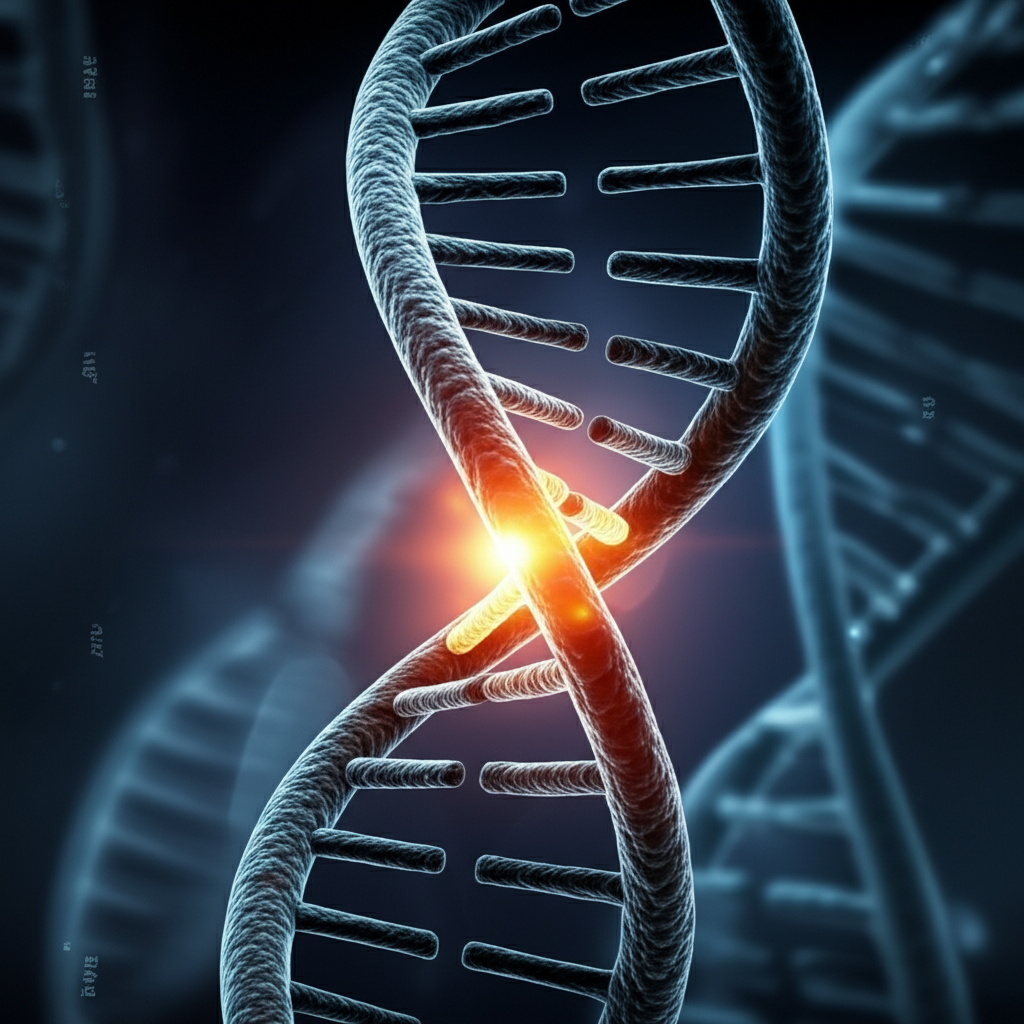
In the simplest terms, a mutation is a change in the DNA sequence of an organism. DNA, often called the blueprint of life, carries the instructions for building and operating every cell. When these instructions are altered, even slightly, the resulting protein or regulatory element might function differently, or not at all. Mutations can occur at various levels:
Point Mutations: A single nucleotide base (A, T, C, G) is changed, inserted, or deleted. These can lead to a change in a single amino acid in a protein, or even to a premature stop signal.
Frameshift Mutations: Involve the insertion or deletion of nucleotides not in multiples of three. This shifts the “reading frame” of the genetic code, drastically altering the downstream amino acid sequence and usually rendering the protein non-functional.
Chromosomal Mutations: Large-scale changes affecting entire chromosomes or sections of chromosomes, such as deletions, duplications, inversions, or translocations. These can have profound effects, often leading to significant developmental disorders or, in some cases, contributing to the evolution of new species through changes in gene dosage or arrangement.
These changes can arise spontaneously due to errors during DNA replication or repair, or they can be induced by external factors called mutagens, such as radiation (UV light, X-rays) or certain chemicals.
The Random Nature of Mutations
Crucially, mutations are random with respect to their utility. They do not occur because an organism “needs” them, nor are they directed towards providing an evolutionary advantage. A mutation simply happens. Imagine a typo in a complex instruction manual – the typo isn’t made because a new feature is required; it’s just an error. Similarly, a mutation doesn’t arise with the foresight of whether it will be beneficial, harmful, or neutral to the organism.
This randomness is a cornerstone of evolutionary theory. If mutations were goal-oriented, evolution would be a much more directed and perhaps faster process. Instead, nature works with the variations that randomly emerge, meticulously sifting through them over generations.
How Mutations Generate Genetic Variation
The primary role of mutations in evolution is to introduce new genetic variations into a population. Without mutations, the genetic makeup of a population would remain largely static over time, limited to existing alleles and their recombination through sexual reproduction. Mutations, however, create novel alleles – alternative forms of a gene – which can lead to new traits or characteristics.
For example, a mutation might change the color of an animal’s fur, alter its metabolic rate, or improve its resistance to a disease. These new traits, whether subtle or significant, become the raw material upon which other evolutionary forces, most notably natural selection, can act. A population with high genetic diversity, fueled by a healthy rate of mutation, is more resilient and adaptable to environmental shifts than a genetically uniform population.
Beneficial, Neutral, and Deleterious Outcomes
When a mutation occurs, its impact on the organism can fall into one of three broad categories:
1. Deleterious Mutations: These mutations are harmful to the organism, reducing its fitness or chances of survival and reproduction. Many genetic diseases in humans, like cystic fibrosis or Huntington’s disease, are the result of deleterious mutations. Natural selection tends to weed out these mutations from a population over time.
2. Neutral Mutations: These have no significant effect on the organism’s fitness, either positive or negative. Many mutations occur in non-coding regions of DNA or result in a synonymous codon change (where the altered codon still codes for the same amino acid). While seemingly insignificant, neutral mutations can accumulate over time and serve as genetic markers for studying evolutionary relationships between species. They can also, under changed environmental conditions, become beneficial or deleterious.
3. Beneficial Mutations: These mutations provide an advantage to the organism, increasing its fitness in a particular environment. For instance, a mutation conferring resistance to an antibiotic in bacteria, or improved camouflage for an animal, would be considered beneficial. These are the rare gems that natural selection favors and promotes, leading to adaptation and evolutionary change.
The Interplay with Natural Selection
While mutations provide the variation, it is natural selection that gives direction to evolution. Natural selection is the process by which individuals better adapted to their environment tend to survive and produce more offspring. If a beneficial mutation arises, individuals carrying that mutation are more likely to survive, reproduce, and pass on the advantageous gene to subsequent generations. Over many generations, the frequency of that beneficial allele will increase in the population, leading to an adaptation.
Consider the classic example of bacterial antibiotic resistance. If a random mutation occurs in a bacterium that makes it resistant to an antibiotic, that bacterium will survive while others without the mutation perish when exposed to the drug. This resistant bacterium then reproduces, passing on the resistance gene, and quickly, the population becomes dominated by drug-resistant strains. This is a powerful, real-time example of evolution driven by mutation and natural selection.
Real-World Examples of Evolutionary Drivers
The impact of mutations as evolutionary drivers is evident throughout the tree of life:
Lactose Tolerance in Humans: Most adult mammals lose the ability to digest lactose after weaning. However, a specific mutation in the LCT gene allows some human populations (particularly those with a history of dairy farming) to produce lactase into adulthood, providing a significant nutritional advantage and illustrating recent human evolution.
Insecticide Resistance: Just like antibiotics in bacteria, insecticides create a strong selective pressure. Random mutations in insect populations can confer resistance to these chemicals, leading to the rapid evolution of resistant pest populations, posing major challenges in agriculture and public health.
Sickle Cell Anemia: While often considered a deleterious mutation, the mutation causing sickle cell anemia also confers resistance to malaria in heterozygotes (individuals with one copy of the gene). In regions where malaria is prevalent, this dual effect maintains the mutation in the population, showcasing the complex interplay of selective pressures.
The Ongoing Tapestry of Life
Mutations are not relics of a distant past but are occurring continuously, shaping the ongoing evolutionary trajectory of every living organism. From the subtle changes that allow viruses to evade our immune systems to the grand transformations that gave rise to entirely new species over millennia, mutations are the constant source of novelty. They fuel the creativity of evolution, ensuring that life remains a dynamic, adaptable, and ever-diversifying force. Understanding mutations is therefore not just an academic exercise; it’s key to comprehending the very essence of life’s resilience and its boundless capacity for change.
0 Comments