- What Exactly Are Mutations?
- The Spectrum of Impact: Not Always Negative
- The Dynamic Dance: Mutation and Natural Selection
- Types of Mutations and Their Inheritance
- The Unseen Architects of Change: Guiding Evolution's Path
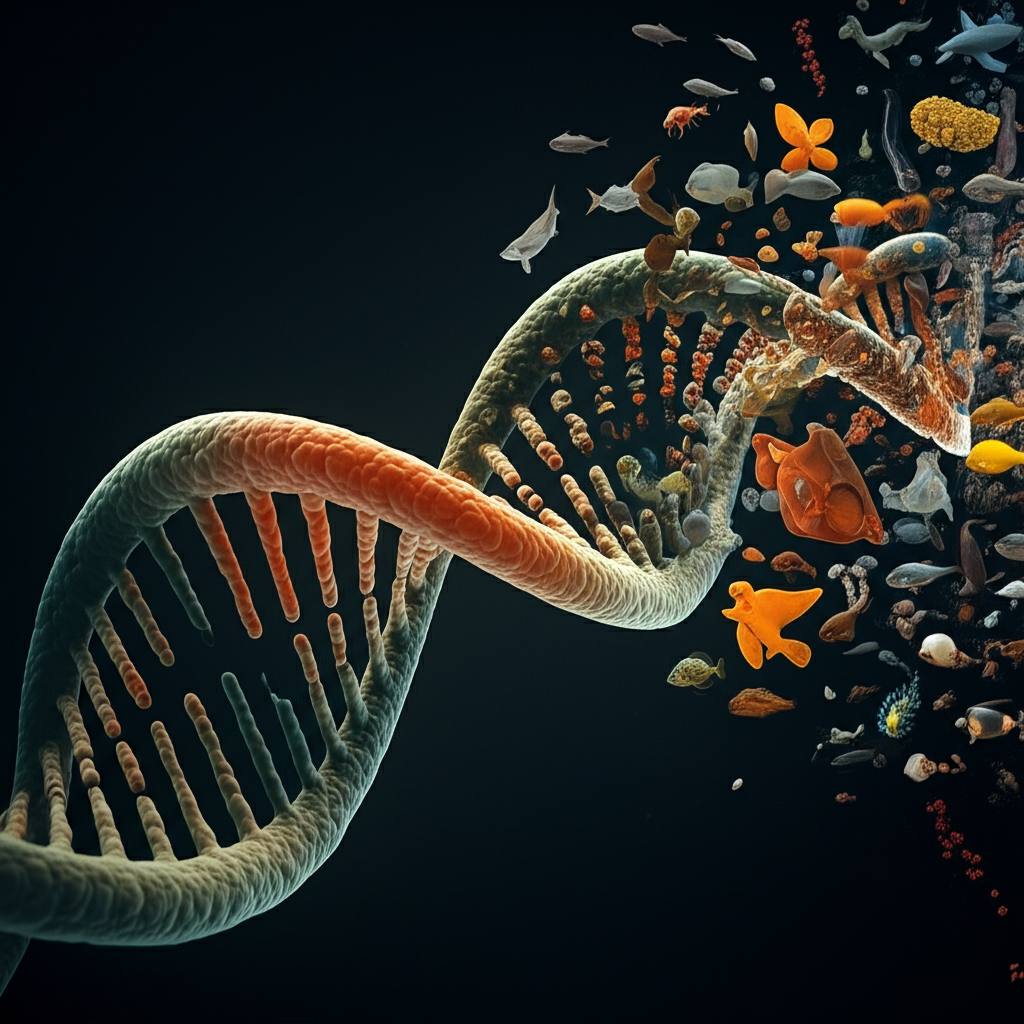
The intricate machinery of life, with all its astonishing diversity and complexity, owes its very existence to the phenomenon of mutation. Far from being merely random errors or defects, mutations are the fundamental wellspring of genetic variation, providing the raw material upon which the powerful forces of natural selection can act. They are the essential power in evolution, driving the continuous adaptation, diversification, and innovation that has shaped every living organism on Earth, from the simplest bacteria to the most complex multicellular beings. Without them, life as we know it would be static, unable to evolve, adapt, or thrive in an ever-changing world.
What Exactly Are Mutations?
At their core, mutations are simply changes in the DNA sequence of an organism. DNA, the blueprint of life, is a long molecule composed of building blocks called nucleotides. These nucleotides — Adenine (A), Guanine (G), Cytosine (C), and Thymine (T) — are arranged in a specific order that carries the instructions for building and maintaining an organism. A mutation occurs when there is an alteration to this sequence. This can range from a single nucleotide change (a point mutation) to large-scale chromosomal rearrangements involving entire segments or even whole chromosomes.
These changes can arise in several ways. Most commonly, they occur spontaneously during DNA replication, when the cellular machinery responsible for copying DNA makes an error. While cells have sophisticated repair mechanisms to correct these mistakes, some inevitably slip through. Mutations can also be induced by environmental factors called mutagens, such as certain chemicals (e.g., those found in tobacco smoke), ultraviolet (UV) radiation from the sun, or even some viruses. Regardless of their origin, these alterations introduce novelty into the genetic code, setting the stage for evolutionary change.
The Spectrum of Impact: Not Always Negative
The common public perception often associates mutations with negative outcomes, conjuring images of genetic disorders or detrimental changes. While it’s true that some mutations can be harmful, leading to diseases like cystic fibrosis or certain cancers, this is only one facet of their multifaceted nature. In reality, the impact of a mutation can fall into a broad spectrum:
Harmful Mutations: These mutations alter genes in a way that impairs an organism’s function, reduces its fitness, or even proves lethal. They are often weeded out by natural selection.
Neutral Mutations: Many mutations have no discernible effect on an organism’s survival or reproduction. These might occur in non-coding regions of DNA (which don’t code for proteins) or result in a change to a gene that doesn’t alter the resulting protein’s function. Neutral mutations can accumulate over time, serving as molecular clocks that track evolutionary history.
Beneficial Mutations: Critically, some mutations confer an advantage to the organism, enhancing its fitness or allowing it to better adapt to its environment. These are the engines of evolutionary progress, providing the raw material for adaptation and diversification.
The Dynamic Dance: Mutation and Natural Selection
The true power of mutations in evolution becomes clear when we consider their interaction with natural selection. Natural selection is the process by which individuals better adapted to their environment tend to survive and produce more offspring. But for natural selection to occur, there must be variation within a population for it to act upon. Mutations are the primary source of this variation.
Imagine a population without mutations. Every individual would be genetically identical. If the environment changed – perhaps a new predator emerged, a food source disappeared, or a disease swept through – the entire population would either adapt as a whole or perish. There would be no individuals with a slight genetic advantage to enable survival and propagation of new traits.
With mutations, however, genetic novelty is constantly being introduced. A beneficial mutation might make an individual slightly more resistant to a disease, better able to utilize a scarce resource, or more attractive to mates. These individuals are then more likely to survive, reproduce, and pass on their advantageous mutation to their offspring. Over generations, these beneficial traits become more common in the population, gradually leading to adaptation and evolutionary change.
Classic examples abound: the development of antibiotic resistance in bacteria, where random mutations allow some bacteria to survive antibiotic treatment and proliferate; the famous case of the peppered moth in industrial England, where a mutation for darker wings provided camouflage against sooty trees; or the human ability to digest lactose into adulthood, a beneficial mutation that became advantageous in populations that domesticated dairy animals.
Types of Mutations and Their Inheritance
Mutations are also categorized by where they occur:
Germline Mutations: These occur in the reproductive cells (sperm or egg) and are heritable, meaning they can be passed down from parent to offspring. These are the mutations that contribute to long-term evolutionary change.
* Somatic Mutations: These occur in body cells (non-reproductive cells) and are not inherited by offspring. While they can lead to issues like cancer in the individual, they do not play a direct role in the large-scale evolution of a species.
Both spontaneous errors during DNA replication and induced damage from mutagens contribute to both germline and somatic mutations, constantly fueling the genetic variation pipeline.
The Unseen Architects of Change: Guiding Evolution’s Path
Ultimately, mutations are not guided by a purpose or a foresight of what would be “beneficial.” They are largely random events at the molecular level. It is the subsequent action of natural selection, operating on this random variation in the context of specific environments, that gives mutations their evolutionary direction and significance. They are the unseen architects of change, constantly tinkering with the genetic blueprint, allowing life to explore new forms, develop new functions, and adapt to the endless challenges and opportunities presented by our dynamic planet.
From the evolution of flight in birds to the diverse array of human skin tones, from the specialized enzymes that break down novel compounds to the intricate defenses against pathogens, mutations are the engines behind these evolutionary leaps. They are not just errors; they are the fundamental creative force of evolution, essential for the enduring vitality and incredible diversity of life on Earth.
0 Comments