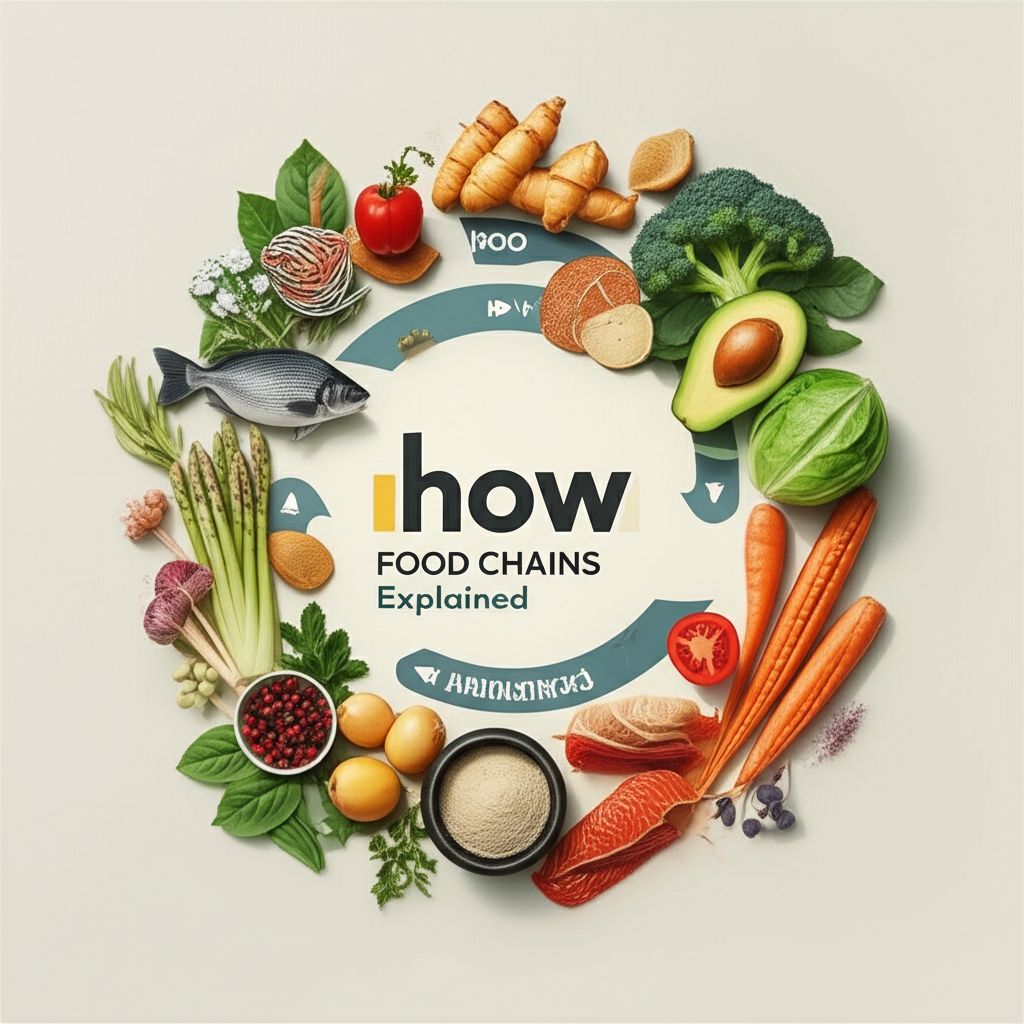
How the intricate dance of life unfolds in nature is often distilled into a concept we call a food chain. Far from being simple linear paths, these chains represent a fundamental mechanism of energy transfer and nutrient cycling within an ecosystem. Understanding them is crucial, as they illustrate the foundational connections that allow all species, from microscopic plankton to towering redwoods and apex predators, to not only survive but thrive. At its core, a food chain describes who eats whom, revealing the flow of energy from one organism to another.
The Foundation: Producers – The Architects of Energy
Every food chain begins with producers. These remarkable organisms are the unsung heroes of our planet, capable of creating their own food from inorganic sources. The vast majority of producers are photosynthetic, meaning they harness energy from the sun to convert carbon dioxide and water into glucose (sugar) and oxygen. This process is called photosynthesis.
Common examples of producers include:
Plants: Trees, grasses, flowers, and shrubs.
Algae: From microscopic phytoplankton in oceans to large seaweeds.
Some bacteria: Cyanobacteria, for instance, are also photosynthetic.
Without producers, life as we know it would cease to exist. They form the base of the energetic pyramid, converting solar energy into a usable form that can then be passed up through the subsequent levels of the food chain.
From Herbivore to Apex: The Consumers
Organisms that cannot produce their own food are called consumers, or heterotrophs. They obtain energy by consuming other organisms. Consumers are categorized into different trophic levels based on what they eat:
Primary Consumers (Herbivores): These are the first consumers in the chain, feeding directly on producers. Examples include rabbits eating grass, deer browsing on leaves, or zooplankton grazing on phytoplankton.
Secondary Consumers (Carnivores or Omnivores): These organisms eat primary consumers. A fox eating a rabbit, a frog dining on an insect, or a small fish eating zooplankton are all secondary consumers. If they eat both plants and animals, they are omnivores.
Tertiary Consumers (Carnivores or Omnivores): Moving further up the chain, tertiary consumers feed on secondary consumers. An owl eating a snake which ate a mouse (a primary consumer) is a good example.
Quaternary Consumers (Apex Predators): In some longer food chains, organisms that eat tertiary consumers are present. These are often apex predators, meaning they are at the very top of their food chain and typically have no natural predators themselves. Lions, great white sharks, and eagles are classic examples.
How Energy Moves Through a Food Chain
A critical aspect of food chains is the transfer of energy. When one organism eats another, energy is transferred, but not all of it. A central ecological principle known as the “10% Rule” states that only about 10% of the energy from one trophic level is transferred to the next. The remaining 90% is lost as heat during metabolic processes, growth, and waste and respiration.
This significant energy loss at each step explains why food chains rarely have more than four or five trophic levels. There simply isn’t enough energy to sustain a larger population at higher levels. This also means that biomass (the total mass of living organisms) generally decreases as you move up the food chain. For instance, it takes a vast amount of grass to support a smaller number of rabbits, which in turn supports an even smaller number of foxes.
The Essential Clean-Up Crew: Decomposers
While producers bring energy into the ecosystem and consumers transfer it, decomposers play an equally vital role in recycling nutrients. These organisms, primarily bacteria and fungi, break down dead organic matter (plants, animals, and waste products) into simpler inorganic substances.
By doing so, decomposers:
Return nutrients to the soil and water: These recycled nutrients (like nitrogen, phosphorus, and carbon) become available for producers to absorb and utilize again.
Clean up the environment: Without them, dead organisms and waste would accumulate, rendering the planet uninhabitable.
Decomposers are the clean-up crew that ensures the continuous cycle of life, transforming waste into the building blocks for new life.
From Simple Chains to Complex Webs
While a food chain provides a simplified, linear view of energy flow, real ecosystems are far more intricate. Most organisms eat, and are eaten by, multiple other species. This interconnectedness forms a food web, which is essentially a network of many interlinked food chains.
A food web offers a more realistic and comprehensive picture of energy flow within an ecosystem. Its complexity contributes to the stability of the ecosystem. If one species in a simple chain disappears, the entire chain can collapse. In a web, however, other food sources or predators might exist, offering a buffer against such catastrophic failures. For example, a hawk might eat mice, snakes, and small birds. If the mouse population declines, the hawk can rely more heavily on its other food sources, maintaining its population and the overall balance.
Why Understanding These Connections Matters
Understanding how food chains and webs function is not merely an academic exercise; it has profound implications for environmental conservation and human well-being.
Ecological Balance: Disruptions to one part of a food chain or web can have cascading effects throughout the entire ecosystem. The removal of a top predator, for instance, can lead to an overpopulation of herbivores, which then overgraze and damage plant communities.
Human Impact: Human activities, from pollution and habitat destruction to overfishing and farming, constantly impact food chains. Toxins can bioaccumulate, meaning they become more concentrated at higher trophic levels, posing significant health risks to apex predators, including humans.
Conservation Efforts: Conservation strategies often focus on protecting key species or entire trophic levels to maintain the health and biodiversity of ecosystems.
In conclusion, the seemingly simple concept of who eats whom reveals a stunningly complex and essential blueprint for life. From the energy captured by producers to the critical recycling by decomposers, and the intricate connections within food webs, every organism plays a vital role. Recognizing these connections is the first step towards appreciating the delicate balance of nature and our responsibility in preserving it for future generations.
0 Comments