
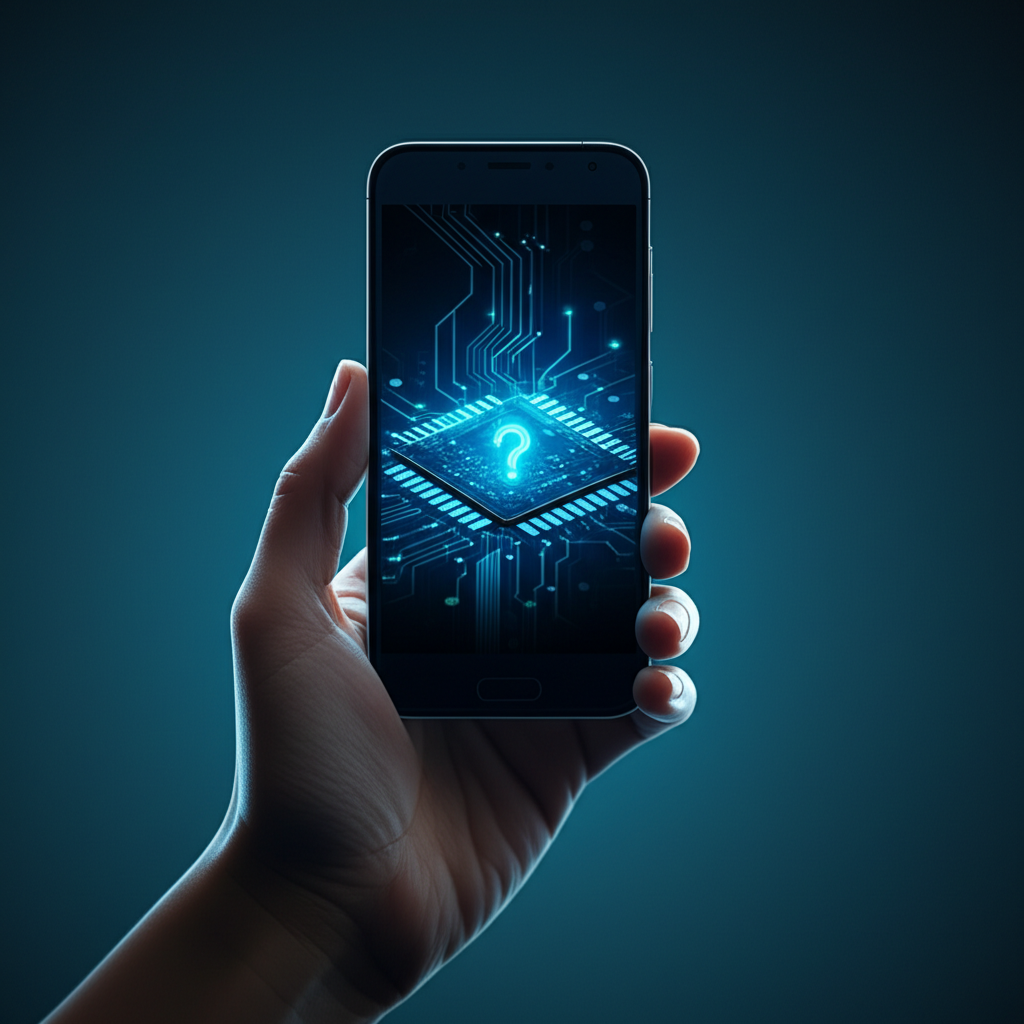
How do these pocket-sized marvels, our smartphones, manage to execute such a vast array of complex tasks with seemingly effortless speed and precision? From capturing stunning high-resolution photos and running graphic-intensive games to powering advanced artificial intelligence applications and seamlessly streaming content, the intricate dance of data processing within a smartphone is a testament to remarkable engineering and innovation. Far more than just communication devices, modern smartphones are sophisticated mobile computing platforms, brimming with specialized chips and optimized software designed to handle billions of operations per second, transforming raw input into meaningful output in an instant.
The Brain of the Operation: The System-on-a-Chip (SoC)
At the very heart of a smartphone’s ability to process data lies the System-on-a-Chip (SoC). Unlike traditional computers that have separate components like a CPU, GPU, and chipset spread across a motherboard, an SoC integrates virtually all of these critical processing units onto a single tiny semiconductor die. This highly integrated design is crucial for efficiency, power management, and the compact form factor demanded by mobile devices.
An SoC typically comprises several key components working in concert:
Central Processing Unit (CPU): This is the general-purpose workhorse, responsible for executing most of the operating system instructions, managing applications, and handling sequential tasks. Modern smartphone CPUs often feature multiple cores (e.g., dual-core, octa-core), with a “big.LITTLE” or similar architecture that combines powerful performance cores for demanding tasks with energy-efficient cores for lighter operations, optimizing both speed and battery life.
Graphics Processing Unit (GPU): The GPU is a specialized processor designed to rapidly render images, videos, and graphical elements. It excels at parallel processing, making it indispensable for gaming, watching high-definition content, and powering the smooth user interface. Without a powerful GPU, your phone’s screen would be a static, low-resolution mess.
Neural Processing Unit (NPU) / AI Accelerator: As artificial intelligence and machine learning become increasingly prevalent, dedicated NPUs have emerged. These units are optimized for AI workloads like facial recognition, natural language processing, real-time translations, computational photography enhancements, and augmented reality (AR) applications. They handle these tasks far more efficiently than general-purpose CPUs or GPUs, often using less power.
Image Signal Processor (ISP): Integral to the camera experience, the ISP is a specialized processor that takes raw data from the camera sensor and quickly processes it into a viewable image or video. This includes tasks like noise reduction, color balance, exposure adjustments, autofocus, and HDR (High Dynamic Range) stitching, all happening in split seconds as you snap a photo.
Digital Signal Processor (DSP): DSPs are optimized for processing audio signals, speech, and other sensor data. They play a crucial role in call quality, voice command recognition, and handling audio playback with minimal latency.
Memory Controller: This component manages the flow of data between the SoC and the device’s main memory (RAM).
Modems: For connectivity, the SoC includes modems for cellular (4G, 5G), Wi-Fi, and Bluetooth, allowing the device to communicate wirelessly.
How the System-on-a-Chip Orchestrates Data Flow
The processing journey within a smartphone begins the moment you interact with it. When you tap the screen, launch an app, or speak a command, sensors or input devices generate electrical signals. These signals are then routed through various I/O (Input/Output) controllers and high-speed buses to the relevant processing units within the SoC.
For instance, tapping an app icon on the display triggers the touch controller to send data to the CPU. The CPU, guided by the operating system, retrieves the app’s code from the device’s storage and loads relevant parts into the faster Random Access Memory (RAM). RAM acts as the smartphone’s short-term memory, holding data and program instructions that the CPU and other components need to access quickly and frequently. The more RAM a phone has, the more applications and processes it can keep active simultaneously without slowing down.
Once in RAM, the CPU begins executing the app’s instructions. If the app requires graphical rendering (like a game or user interface animation), the CPU offloads those tasks to the GPU. For AI-driven features (like object recognition in a camera app), the NPU takes over. The ISP works in parallel with the camera sensor to process image data instantly, making real-time previews possible.
Data isn’t just processed; it’s also constantly being written to and read from storage. Long-term storage, typically NAND flash memory (e.g., UFS or eMMC), holds the operating system, applications, photos, videos, and other user data even when the phone is powered off. When you open a photo, the CPU retrieves it from flash storage, loads it into RAM, and then works with the GPU to display it on the screen.
How Specialized Processors Enhance Specific Tasks
The heterogeneous computing approach – utilizing different, specialized processors for different types of tasks – is key to a smartphone’s efficiency and performance. Rather than having the general-purpose CPU handle every single operation, offloading specific workloads to optimized units like the GPU, NPU, ISP, or DSP dramatically reduces power consumption and speeds up execution.
Consider computational photography: when you take a picture, the ISP might fuse multiple exposures, perform noise reduction, and apply software-based bokeh effects. An NPU might then analyze the scene to identify objects and faces, automatically adjusting settings or applying filters. This intricate process, involving several specialized chips, happens within milliseconds, delivering a perfectly processed image.
How Smartphones Efficiently Manage Power and Performance
The vast processing power in such a compact device comes with challenges, most notably heat generation and battery life. Smartphone designers employ several strategies to manage these:
Dynamic Voltage and Frequency Scaling (DVFS): The SoC constantly monitors workloads and dynamically adjusts the clock speed and voltage of its various cores. When performing light tasks, cores slow down and use less power; for demanding tasks, they ramp up.
Thermal Throttling: If the device begins to overheat, the system will temporarily reduce the processing speed to prevent damage, a process known as thermal throttling.
Operating System Optimization: Android and iOS are meticulously optimized to efficiently manage resources, schedule tasks, and put inactive components into a low-power state, ensuring smooth operation while conserving battery life.
* Advanced Packaging and Materials: Modern SoCs use advanced fabrication processes with smaller transistor sizes, which inherently draw less power. Specialized materials and cooling solutions (like vapor chambers in high-end phones) help dissipate heat.
The Future of Mobile Processing
The relentless march of innovation continues. Future smartphones will likely feature even more powerful and specialized NPUs, pushing the boundaries of on-device AI for even more personalized and intelligent experiences. We can expect advancements in augmented and virtual reality, increasingly complex computational photography, and seamless integration with emerging IoT devices, all driven by ever more powerful and energy-efficient data processing capabilities packed into our pockets.
From a simple tap to a complex AI-driven command, the data processing capabilities of smartphones are a marvel of modern technology. They seamlessly integrate powerful, specialized hardware with intelligent software, creating a user experience that is both intuitive and incredibly capable. The synergy between components within the tiny SoC, orchestrated by the operating system, allows these devices to connect us, entertain us, and empower us in ways that were unimaginable just a few short decades ago.
0 Comments