- What Exactly Is Photosynthesis?
- The Essential Ingredients for Life's Recipe
- Where the Magic Happens: The Chloroplast
- How Photosynthesis Works: The Two Main Stages
- 1. The Light-Dependent Reactions
- 2. The Light-Independent Reactions (The Calvin Cycle)
- The Amazing Outputs: Oxygen and Glucose
- Why Photosynthesis is So Important for Life on Earth
- Conclusion
How the world around us sustains life is a question with a profoundly beautiful answer: photosynthesis. This incredible biological process, often described as nature’s ultimate energy factory, is the foundation for almost all life on Earth. From the towering redwoods to the smallest blades of grass, plants, algae, and some bacteria possess the extraordinary ability to convert light energy into chemical energy, creating the food they need to grow and the oxygen we breathe. Understanding this complex yet elegantly simple mechanism reveals the intricate dance of nature that keeps our planet vibrant and thriving.
What Exactly Is Photosynthesis?
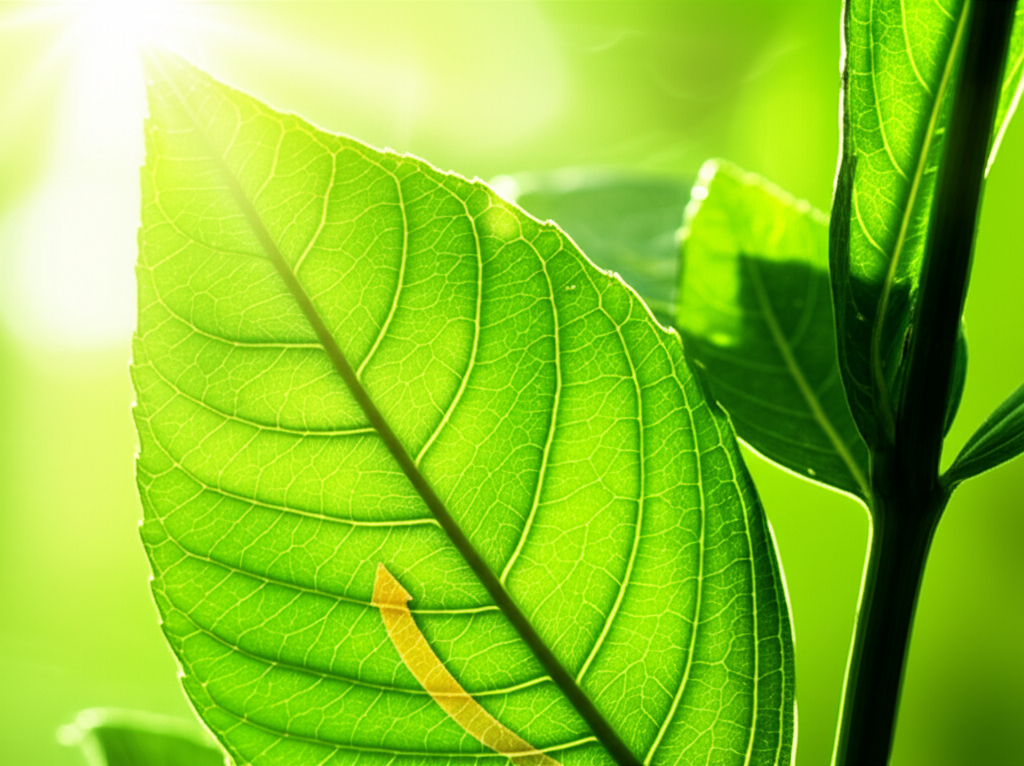
At its core, photosynthesis is the process by which green plants and certain other organisms transform light energy into chemical energy. This chemical energy is stored in carbohydrate molecules, such as sugars, which are synthesized from carbon dioxide and water. The word “photosynthesis” itself provides a clue: “photo” means light, and “synthesis” means to make. So, it literally means “making with light.” This essential process underpins nearly every food web, making it arguably the most vital chemical reaction on our planet.
The Essential Ingredients for Life’s Recipe
Just like any recipe, photosynthesis requires specific ingredients to work its magic. These are readily available in the environment:
1. Sunlight: This is the primary energy source. Plants capture photons of light through specialized pigments.
2. Water (H₂O): Absorbed from the soil by roots, water travels up to the leaves. It provides the electrons needed for the energy conversion and is also a source of hydrogen ions.
3. Carbon Dioxide (CO₂): A gas present in the atmosphere, carbon dioxide enters the plant through tiny pores on the leaves called stomata. It serves as the carbon source for building sugar molecules.
Where the Magic Happens: The Chloroplast
The primary site of photosynthesis within a plant cell is an organelle called the chloroplast. These tiny green energy factories are abundant in the cells of plant leaves. Inside each chloroplast, a crucial green pigment called chlorophyll is found. Chlorophyll is what gives plants their characteristic green color, and more importantly, it’s responsible for absorbing the light energy that fuels photosynthesis. Different types of chlorophyll absorb different wavelengths of light, primarily red and blue light, reflecting green light, which is why we see plants as green.
How Photosynthesis Works: The Two Main Stages
Photosynthesis isn’t a single, continuous reaction but rather two interconnected stages, each with a distinct purpose:
1. The Light-Dependent Reactions
These reactions, as their name suggests, require direct sunlight. They occur in the thylakoid membranes within the chloroplasts. Here’s a simplified breakdown of how this stage unfolds:
Light Absorption: Chlorophyll molecules within structures called photosystems capture light energy.
Water Splitting (Photolysis): The absorbed light energy is used to split water molecules (H₂O). This process releases electrons, hydrogen ions (protons), and molecular oxygen (O₂). The oxygen is released into the atmosphere – it’s the very breath we take!
Energy Carriers Formed: The high-energy electrons released from water are passed along an electron transport chain. This movement of electrons powers the production of two crucial energy-carrying molecules:
ATP (Adenosine Triphosphate): Often called the “energy currency” of the cell.
NADPH (Nicotinamide Adenine Dinucleotide Phosphate): An electron carrier that holds high-energy electrons.
The ATP and NADPH produced during the light-dependent reactions are then carried over to the second stage of photosynthesis, where they will power the synthesis of sugars.
2. The Light-Independent Reactions (The Calvin Cycle)
Also known as the Calvin Cycle, these reactions do not directly require light, but they depend on the ATP and NADPH produced during the light-dependent stage. They occur in the stroma, the fluid-filled space surrounding the thylakoids within the chloroplast. This is how the plant actually builds its food:
Carbon Fixation: Carbon dioxide (CO₂) from the atmosphere enters the stroma. An enzyme called RuBisCO catalyzes the attachment of CO₂ to an existing five-carbon sugar molecule called RuBP (ribulose-1,5-bisphosphate). This forms an unstable six-carbon compound that quickly splits into two molecules of a three-carbon compound.
Reduction: The energy stored in ATP and the high-energy electrons carried by NADPH are used to convert these three-carbon compounds into a higher-energy three-carbon sugar called G3P (glyceraldehyde-3-phosphate).
Regeneration: Most of the G3P molecules are used to regenerate RuBP, ensuring the cycle can continue to fix more carbon dioxide. The remaining G3P molecules are the building blocks for the plant’s food.
The Amazing Outputs: Oxygen and Glucose
The grand finale of this intricate process yields two incredibly vital products:
1. Oxygen (O₂): Released as a byproduct during the light-dependent reactions when water molecules are split. This atmospheric oxygen is indispensable for the respiration of almost all aerobic life forms, including humans and animals.
2. Glucose (C₆H₁₂O₆): The sugar formed from the G3P molecules during the Calvin Cycle. Glucose serves as the plant’s primary energy source, used for growth, repair, and reproduction. It can also be converted into more complex carbohydrates like starch for storage or cellulose to build cell walls.
Why Photosynthesis is So Important for Life on Earth
The significance of photosynthesis extends far beyond the leaves of a plant. It directly impacts virtually every living organism and the very atmosphere of our planet:
Foundation of Food Chains: Plants are producers, forming the base of nearly all food webs. Herbivores eat plants, carnivores eat herbivores, and so on. Without photosynthesis, there would be no primary food source, and life as we know it would cease to exist.
Oxygen Production: It continuously replenishes the oxygen in our atmosphere, making it breathable for aerobic organisms. Without this constant supply, atmospheric oxygen levels would plummet.
Carbon Dioxide Regulation: Photosynthesis removes vast amounts of carbon dioxide from the atmosphere, helping to regulate Earth’s climate and mitigate the greenhouse effect. Plants act as natural carbon sinks, playing a crucial role in maintaining environmental balance.
Energy Source: The chemical energy stored in glucose powers not only the plant itself but ultimately provides energy for all organisms that consume plants or consume organisms that have consumed plants.
Conclusion
Photosynthesis, a process often taken for granted, is nothing short of miraculous. It is a stunning display of nature’s engineering, efficiently harnessing the sun’s energy to create the building blocks of life. From the microscopic organelles within a leaf to the vast global cycles of oxygen and carbon, understanding how photosynthesis works provides a profound appreciation for the interconnectedness and delicate balance of our planet’s ecosystems. It is, truly, an amazing and elegantly simple recipe for life itself.
0 Comments