- The Earth's Dynamic Crust: A Prerequisite for Mountains
- Collision Course: How Fold Mountains Rise
- From Ocean Depths: Understanding How Volcanic Mountains Erupt
- Stretching the Earth: How Fault-Block Mountains Emerge
- Dome Mountains and Erosion: Shaping the Landscape
- The Slow Dance of Geological Time
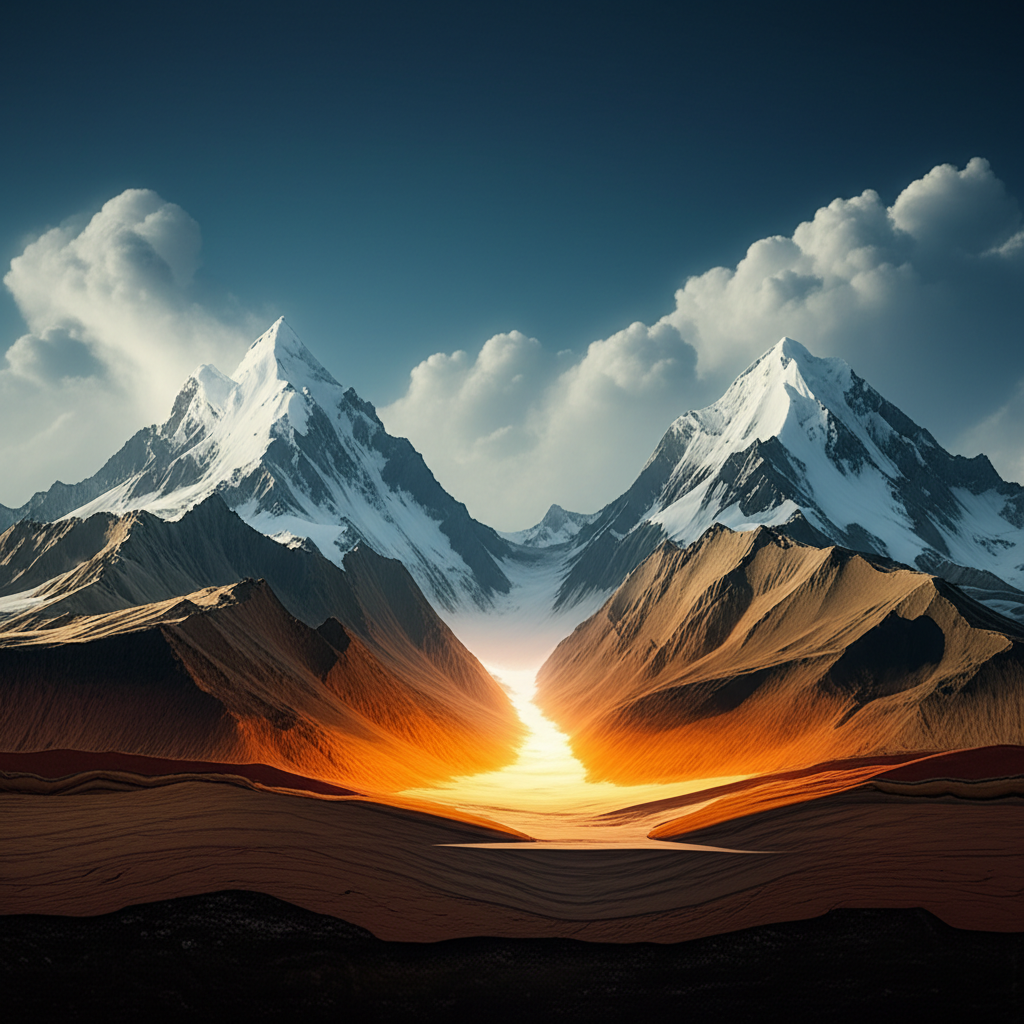
How mountains form is a question that has captivated humanity for centuries, inspiring awe and wonder at the majestic giants that punctuate our planet’s surface. From the soaring peaks of the Himalayas to the rugged beauty of the Andes, these natural masterpieces are far more than just elevated landmasses; they are profound testaments to the Earth’s dynamic and ever-changing geological processes. While their creation might seem like a mysterious, supernatural event, the “stunning secrets” behind their formation are, in essence, rooted in simple, yet incredibly powerful, scientific principles.
At the heart of mountain building lies the theory of plate tectonics – the foundational concept that explains the movement of the Earth’s rigid outer shell, known as the lithosphere. This shell is broken into several colossal pieces, or plates, that are constantly, albeit slowly, gliding across the planet’s mantle. It is at the boundaries where these plates interact that the magic of mountain formation truly begins.
The Earth’s Dynamic Crust: A Prerequisite for Mountains
Our planet’s surface is not a static canvas but a constantly shifting mosaic of tectonic plates. These colossal rafts of rock move at speeds comparable to the growth of a fingernail, but over millions of years, these tiny increments accumulate into significant shifts. When these plates collide, pull apart, or grind past each other, the immense forces unleashed are capable of warping, folding, and uplifting crustal material, eventually giving birth to the mountains we see today. Different types of plate interactions lead to different kinds of mountains, each with its unique characteristics and formation story.
Collision Course: How Fold Mountains Rise
Perhaps the most dramatic and towering mountains are born from head-on collisions at convergent plate boundaries. This is where two continental plates, each bearing immense weight and pressure, slowly but inexorably crash into one another. Unlike oceanic crust, which is denser and can be forced downwards into the mantle (a process called subduction), continental crust is buoyant. When two continental plates meet, neither wants to yield easily.
Instead, the immense compressional forces cause the crust to buckle, fold, and thrust upwards, much like a carpet pushed against a wall. Layers of rock that were once horizontal are squeezed and deformed, forming immense wrinkles and overthrust faults. The Himalayas, home to Mount Everest, are the most spectacular example of this process, a result of the Indian plate colliding with the Eurasian plate over tens of millions of years, and they are still growing today. The Alps in Europe and the Appalachians in North America (an ancient mountain range) also formed through similar continental-continental collisions.
From Ocean Depths: Understanding How Volcanic Mountains Erupt
Volcanic mountains present a different, yet equally awe-inspiring, mechanism of formation, often found where an oceanic plate collides with either another oceanic plate or a continental plate. In these scenarios, the denser oceanic plate is forced to slide beneath the lighter plate in a process called subduction. As the subducting plate descends into the Earth’s mantle, it begins to melt due to intense heat and pressure, forming magma.
This buoyant magma then rises through fissures and cracks in the overlying crust. When it reaches the surface, it erupts, spewing out lava, ash, and gases, which accumulate over countless eruptions to build towering volcanic cones. The Cascade Range in the Pacific Northwest of North America, including peaks like Mount Rainier and Mount St. Helens, is a prime example of volcanic mountains formed by the subduction of the Juan de Fuca plate beneath the North American plate. Similarly, the Andes Mountains along the western edge of South America are a result of the Nazca plate subducting beneath the South American plate, giving rise to numerous active volcanoes. When two oceanic plates collide and one subducts beneath the other, it can form chains of volcanic islands known as island arcs, such as the Japanese archipelago.
Stretching the Earth: How Fault-Block Mountains Emerge
Not all mountains are born from compression and volcanic activity. Some emerge from the very opposite – the pulling apart and stretching of the Earth’s crust. This occurs at divergent plate boundaries or in regions experiencing significant crustal extension. When the crust is subjected to tensional forces, it thins and fractures into large blocks. Along these fractures, known as normal faults, some blocks of crust are uplifted, while adjacent blocks sink down.
The uplifted blocks are called horsts, and the sunken blocks are called grabens. The tilted and uplifted horsts form characteristic fault-block mountains with steep, jagged fronts and gentler backslopes. The stunning Sierra Nevada range in California, with its dramatic eastern escarpment, is a classic fault-block mountain range. Another magnificent example is the Basin and Range Province, which covers much of Nevada and parts of surrounding states, characterized by numerous parallel fault-block ranges separated by broad valleys.
Dome Mountains and Erosion: Shaping the Landscape
Beyond the primary tectonic mechanisms, other forces contribute to mountain sculpting. Dome mountains form when a large mass of molten rock (magma) pushes up the overlying sedimentary layers, creating a rounded uplift without actually erupting. Over vast stretches of geological time, the softer outer layers erode away, exposing the harder, crystalline core of the dome. The Black Hills of South Dakota are an excellent example of dome mountains.
It’s also crucial to remember that once uplifted by any of these methods, mountains immediately become subject to the relentless forces of erosion. Wind, water, ice, and gravity constantly wear away at their peaks and slopes, carving out valleys, deepening canyons, and shaping the rugged contours we admire. Erosion plays a massive role in exposing the underlying geology and giving mountains their final, iconic forms.
The Slow Dance of Geological Time
Ultimately, the formation of mountains is an epic tale told over millions of years. It’s a slow dance of colossal forces, where continents drift, oceans open and close, and the Earth’s inner heat drives the magnificent processes that constantly reshape its surface. Understanding these “hows” allows us to appreciate not only their static beauty but also the incredible dynamic power pulsating beneath our feet. Each peak stands as a monument to immense geological pressure, a testament to our planet’s living, breathing nature, continuously evolving and creating new wonders for us to explore and admire.
0 Comments