- The Newtonian Classic: Gravity as a Force
- Einstein's Revolution: The Curvature of Spacetime
- The Modern Picture and Unanswered Questions
- The Continuing Marvel of Gravity
How does the invisible hand that pulls apples to the ground, keeps planets in orbit, and shapes entire galaxies truly operate? Gravity, a fundamental force of nature, is something we experience every second of our lives, yet its precise mechanisms have bewildered humanity for millennia. From ancient contemplations to modern cosmological insights, our understanding of gravity has evolved dramatically, revealing a universe far more intricate and dynamic than once imagined. This article aims to unpack the stunning explanations that have emerged, shedding light on the “how” behind this omnipresent force.
The Newtonian Classic: Gravity as a Force
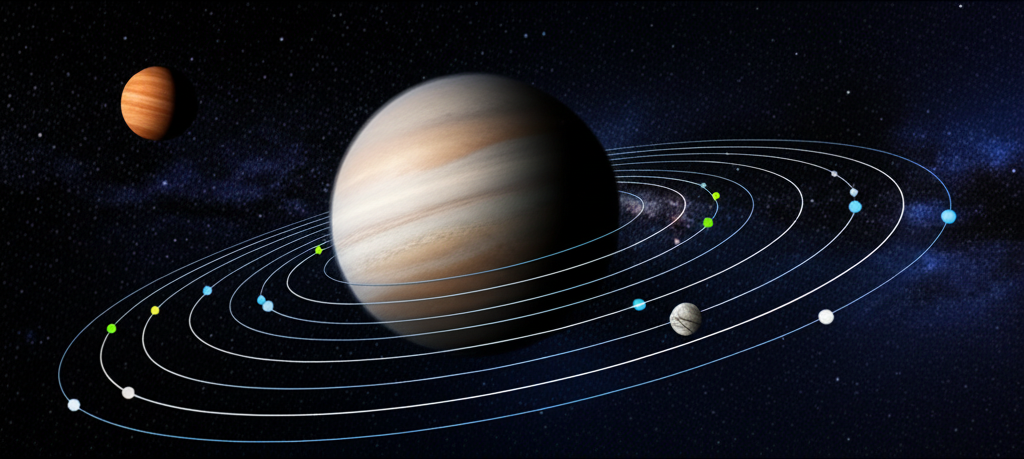
For centuries, the most widely accepted explanation for gravity came from Sir Isaac Newton. In the late 17th century, Newton observed the falling of an apple and the motion of the moon, proposing a universal law that united these seemingly disparate phenomena. He posited that gravity is an attractive force existing between any two objects possessing mass. The more massive the objects, and the closer they are, the stronger this gravitational pull.
Newton’s Universal Law of Gravitation mathematically described this interaction with remarkable accuracy. It stated that the gravitational force between two objects is directly proportional to the product of their masses and inversely proportional to the square of the distance between their centers. This “inverse square law” explained why gravity weakens rapidly with distance – double the distance, and the force becomes four times weaker.
How did Newton’s theory redefine understanding?
Newton’s genius lay in providing a quantifiable, predictive framework. His equations successfully explained planetary orbits, the tides, and the trajectory of projectiles, leading to significant advancements in astronomy and physics. Humanity could, for the first time, calculate and predict gravitational effects with high precision. However, despite its immense success, Newton’s theory had a crucial limitation: it described what gravity does, but not how it does it. It offered no mechanism for objects to exert influence across vast, empty space without any apparent contact – a concept he famously called “action at a distance,” which even he found mysterious.
Einstein’s Revolution: The Curvature of Spacetime
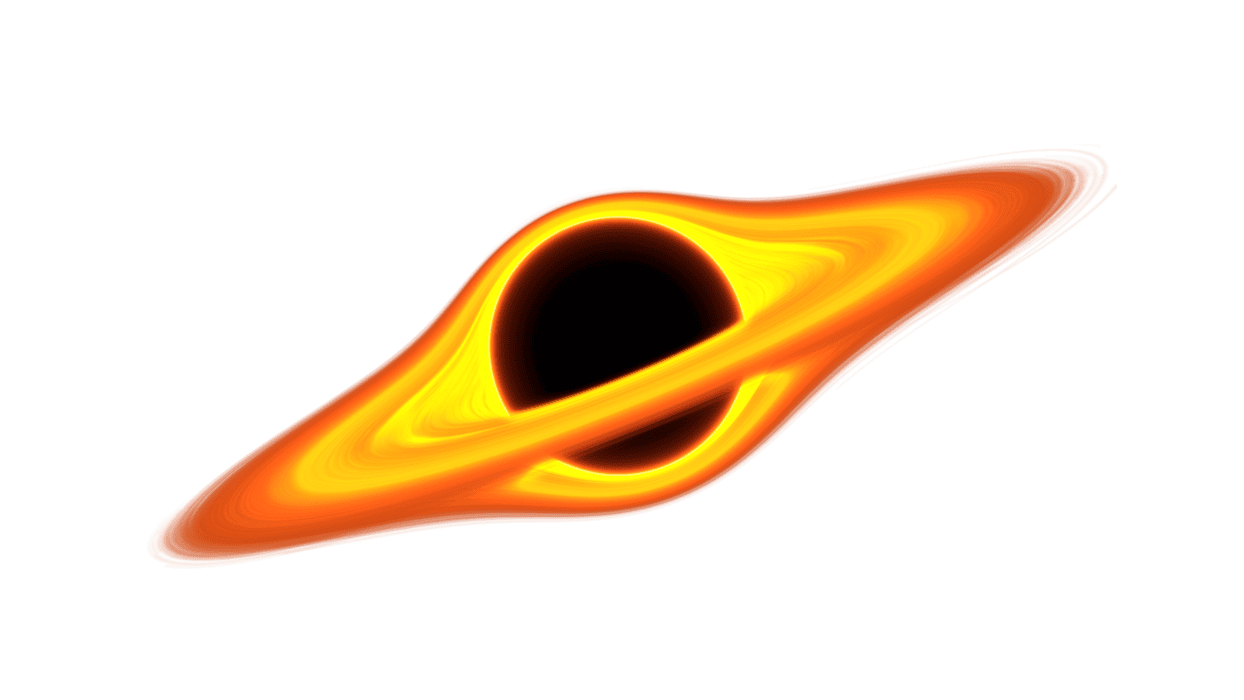
The true “how” of gravity began to be unveiled in the early 20th century with Albert Einstein’s groundbreaking theory of General Relativity (GR). Einstein didn’t see gravity as a force pulling objects together, but rather as a manifestation of the geometry of the universe itself.
Imagine spacetime – the three dimensions of space merged with the dimension of time – not as a rigid, unchanging backdrop, but as a flexible, dynamic fabric. According to Einstein, massive objects, like stars and planets, warp or curve this fabric of spacetime around them, much like a bowling ball placed on a stretched rubber sheet.
When other objects, like smaller planets or light rays, encounter this curved spacetime, they don’t experience a “pull” from the massive object. Instead, they simply follow the shortest possible path – called a geodesic – through the curved geometry. On a flat surface, the shortest path is a straight line. But on a curved surface, the “straightest” path appears curved from an outside perspective. Thus, a planet orbiting a star isn’t being “pulled” by a force; it’s simply rolling along the curvature in spacetime created by the star’s immense mass.
How Einstein Redefined Reality: The Curvature of Spacetime
This revolutionary perspective resolved Newton’s “action at a distance” problem. Gravity isn’t a force reaching out and grabbing objects; it’s an intrinsic property of the spacetime through which objects are moving. The massive object itself shapes the path.
Einstein’s theory made several stunning predictions that later proved true:
Gravitational Lensing: Massive objects bend light. This was famously confirmed during a solar eclipse in 1919, where light from distant stars was observed to bend around the sun, seemingly shifting the stars’ apparent positions.
Gravitational Time Dilation: Time literally slows down in the presence of strong gravity. This effect, though tiny on Earth, is crucial for the accuracy of GPS satellites, which must account for the slightly different rate at which time passes on Earth’s surface compared to their higher orbits.
Gravitational Waves: Ripples in spacetime itself, caused by accelerating massive objects like colliding black holes. These ripples were directly detected for the first time in 2015 by the LIGO experiment, providing a direct confirmation of a century-old prediction.
Black Holes: Regions of spacetime where gravity is so intense that nothing, not even light, can escape. Their existence, once purely theoretical, is now well-established.
The Modern Picture and Unanswered Questions
Today, Einstein’s General Relativity stands as our most accurate and comprehensive description of gravity on large scales, from the orbits of planets to the structure of galaxies and the evolution of the entire universe. It successfully explains phenomena that Newton’s theory could not, fundamentally altering our understanding of space, time, and matter.
However, the story of “how gravity works” is still unfolding. While GR excels in the macroscopic world, it struggles to integrate with quantum mechanics, the theory describing the universe at the tiniest, subatomic scales. Physicists are actively searching for a quantum theory of gravity, often hypothesizing the existence of a hypothetical particle called the “graviton,” which would mediate the gravitational force, much like photons mediate the electromagnetic force.
Furthermore, enigmatic phenomena like dark matter and dark energy, which constitute the vast majority of the universe’s mass-energy content, hint that our understanding of gravity, or at least the matter and energy it interacts with, is still incomplete. These cosmic mysteries are pushing physicists to explore even more exotic theories, such as string theory and loop quantum gravity, in their quest for a unified theory of everything.
The Continuing Marvel of Gravity
From Newton’s precise calculations to Einstein’s revolutionary spacetime fabric, our journey to comprehend “how gravity works” has been one of incredible intellectual leaps. What once seemed a simple force is now understood as an elegant distortion of the very fabric of reality, dictating the dance of celestial bodies and the fate of the cosmos. While fundamental questions remain, the stunning explanations we’ve uncovered thus far offer a profound testament to humanity’s enduring curiosity and capacity to unravel the deepest secrets of the universe. The invisible hand of gravity, once merely observed, is now beautifully explained as the very architecture of existence itself.
0 Comments