- Understanding the Basics: What is a Food Chain?
- The Key Players: Trophic Levels Explained
- Decomposers: The Unsung Heroes
- How Energy Flows Through a Food Chain
- Why Food Chains Matter: The Ecological Significance
- How to Analyze and Interpret a Food Chain
How life sustains itself on Earth is a fundamental question, and at the heart of the answer lies the concept of the food chain. Far more than just a simple sequence of who eats whom, food chains are the invisible threads that weave together all living organisms, demonstrating the incredible interconnectedness of our planet’s ecosystems. Understanding these chains is crucial to appreciating the delicate balance of nature, the flow of energy, and the impact of every species, including our own, on the world around us. This guide will clarify the intricate workings of food chains, from their basic components to their vital ecological significance.
Understanding the Basics: What is a Food Chain?
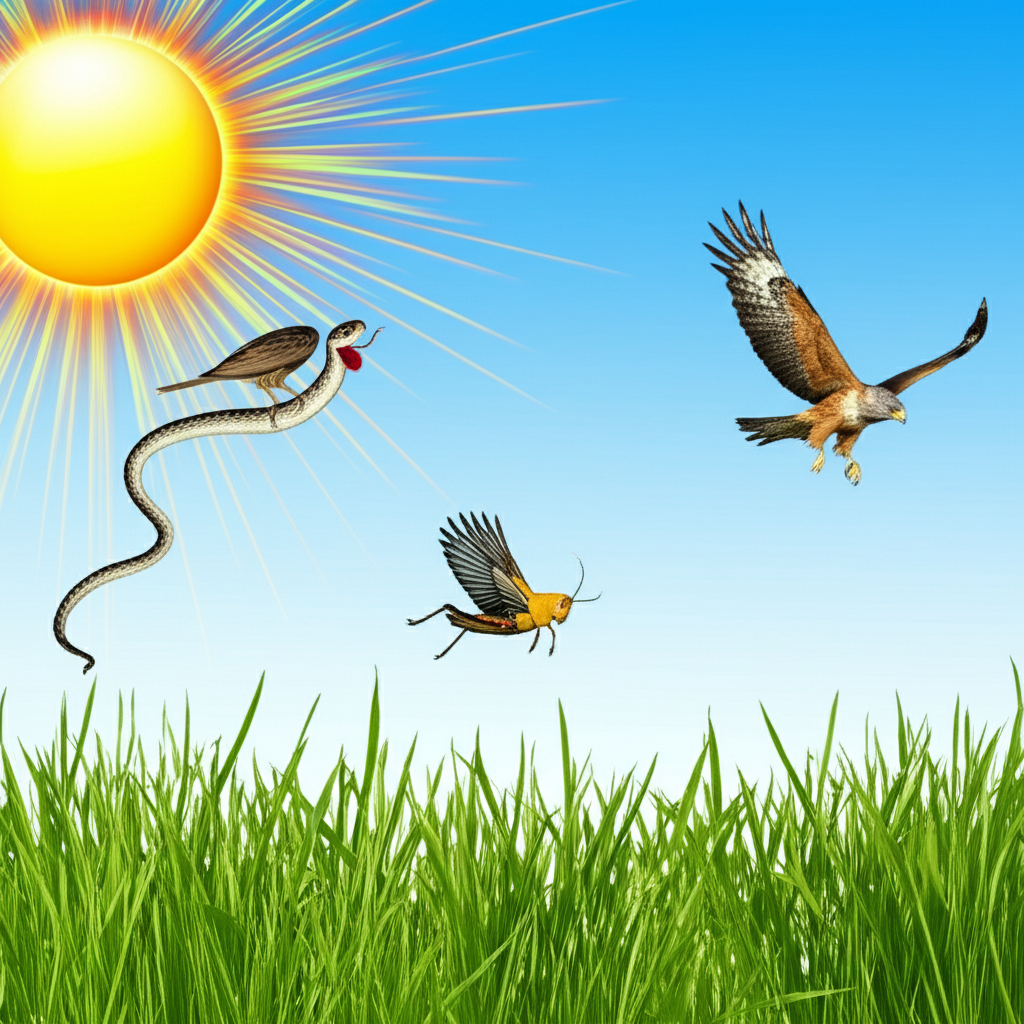
At its core, a food chain describes a linear sequence showing how energy is transferred from one living organism to another within an ecosystem. It begins with the initial source of energy—usually the sun—and traces how that energy moves through various organisms as they consume each other. Think of it as a pathway for nutrients and energy, demonstrating a direct feeding relationship. While individual food chains are useful for illustrating ecological principles, in reality, organisms often feed on and are fed by multiple species, forming more complex “food webs” – a vast network of interconnected food chains.
The Key Players: Trophic Levels Explained
Every organism within a food chain occupies a specific “trophic level,” indicating its position in the energy transfer sequence. These levels are universal across all ecosystems:
Producers (Autotrophs): These are the foundation of every food chain. Producers create their own food, primarily through photosynthesis, converting sunlight into chemical energy. Examples include plants, algae, and some bacteria. Without producers, no other life forms could exist as they capture the initial energy input.
Primary Consumers (Herbivores): Organisms at this level feed directly on producers. They are herbivores, specialists in consuming plant matter. Think of a rabbit munching on grass, a caterpillar eating leaves, or zooplankton grazing on phytoplankton in the ocean.
Secondary Consumers (Carnivores/Omnivores): These creatures eat primary consumers. They can be carnivores (meat-eaters) or omnivores (eating both plants and animals). A fox preying on a rabbit, a frog catching an insect, or a small fish eating zooplankton are all examples of secondary consumers.
Tertiary Consumers (Top Carnivores/Omnivores): Perched higher up the chain, tertiary consumers feed on secondary consumers. These are often apex predators in their local environment, though not necessarily the absolute top. An eagle hunting a snake (which ate a frog, which ate an insect) is a tertiary consumer. Humans often occupy a tertiary or even secondary consumer level, depending on our diet.
Quaternary Consumers: In particularly long food chains, organisms that eat tertiary consumers are known as quaternary consumers. For instance, an orca feeding on a seal (which might have eaten a large fish, which ate a smaller fish, which ate zooplankton) would be a quaternary consumer.
Decomposers: The Unsung Heroes
While not technically a trophic level in the direct consumption sequence, decomposers play an absolutely critical role in completing the cycle of a food chain. Organisms like bacteria, fungi, and detritivores (e.g., earthworms, beetles) break down dead organic matter from all trophic levels—plants, animals, and waste products. By doing so, they recycle essential nutrients back into the soil, water, and air, making them available again for the producers. Without decomposers, nutrients would be locked up in dead organisms, and life would eventually grind to a halt.
How Energy Flows Through a Food Chain
The movement of energy through a food chain is not a perfectly efficient process. A crucial concept here is the “10% Rule.” This rule states that on average, only about 10% of the energy from one trophic level is transferred to the next. The remaining 90% is lost, primarily as heat during metabolic processes, or is used for life functions (movement, growth, reproduction) by the organism at that level, or is not consumed at all.
This stark energy loss explains why food chains rarely extend beyond four or five trophic levels. There simply isn’t enough energy left to support more levels at the top. It also explains the characteristic pyramid shape of biomass and energy in an ecosystem, with a massive base of producers supporting progressively smaller populations at higher trophic levels. For example, it takes far more grass to support a single rabbit, and far more rabbits to support a single fox.
Why Food Chains Matter: The Ecological Significance
Understanding how food chains work is far more than an academic exercise; it’s vital for grasping the health and stability of an ecosystem.
Ecosystem Balance: Food chains help maintain population balance. If the population of a primary consumer explodes due to a lack of predators, it can devastate producer populations. Conversely, removing a producer can cause a ripple effect, impacting all levels above it.
Indicator of Health: The presence and abundance of certain species within a food chain can indicate the overall health of an ecosystem. A diverse and robust food chain usually signifies a stable and healthy habitat.
Bioaccumulation and Biomagnification: Food chains demonstrate how toxins and pollutants can become concentrated. If a producer absorbs a small amount of a contaminant, a primary consumer eating many of those producers will accumulate more. A secondary consumer eating many primary consumers will accumulate even more, leading to a phenomenon called biomagnification, where toxins become increasingly concentrated at higher trophic levels, posing serious threats to top predators.
* Human Impact: Human activities, from overfishing to habitat destruction and pollution, directly impact food chains. Disrupting one link can have cascading effects, risking species extinction, altering ecosystems, and even threatening our own food security.
How to Analyze and Interpret a Food Chain
When examining a food chain, consider these questions to fully understand its dynamics:
1. Identify the Producers: What organisms form the base of the chain, converting light or chemical energy into organic matter?
2. Trace Energy Flow: In what direction does the energy move? From producer to primary consumer, primary to secondary, and so on.
3. Determine Trophic Levels: Which organisms are primary, secondary, or tertiary consumers?
4. Consider Decomposers: What role do they play in recycling nutrients back into the system?
5. Predict Impacts: What would happen if one component of the chain were removed or its population significantly altered? How would this affect the levels above and below it?
Ultimately, food chains are simple yet powerful models that reveal the fundamental relationships and energy transfers that underpin all life on Earth. By recognizing the intricate balance and interconnectedness they represent, we can better understand and work to protect the delicate ecosystems that sustain us all.
0 Comments