
- The Ocean's Immense Scale: Just How Deep Are We Talking?
- Exploring the Abyss: How Humanity Ventures into the Deep
- Layers of the Deep: A Vertical Journey Through Ocean Zones
- Life Under Pressure: How Marine Organisms Thrive
- The Unexplored Frontier: How Much More Awaits Discovery?
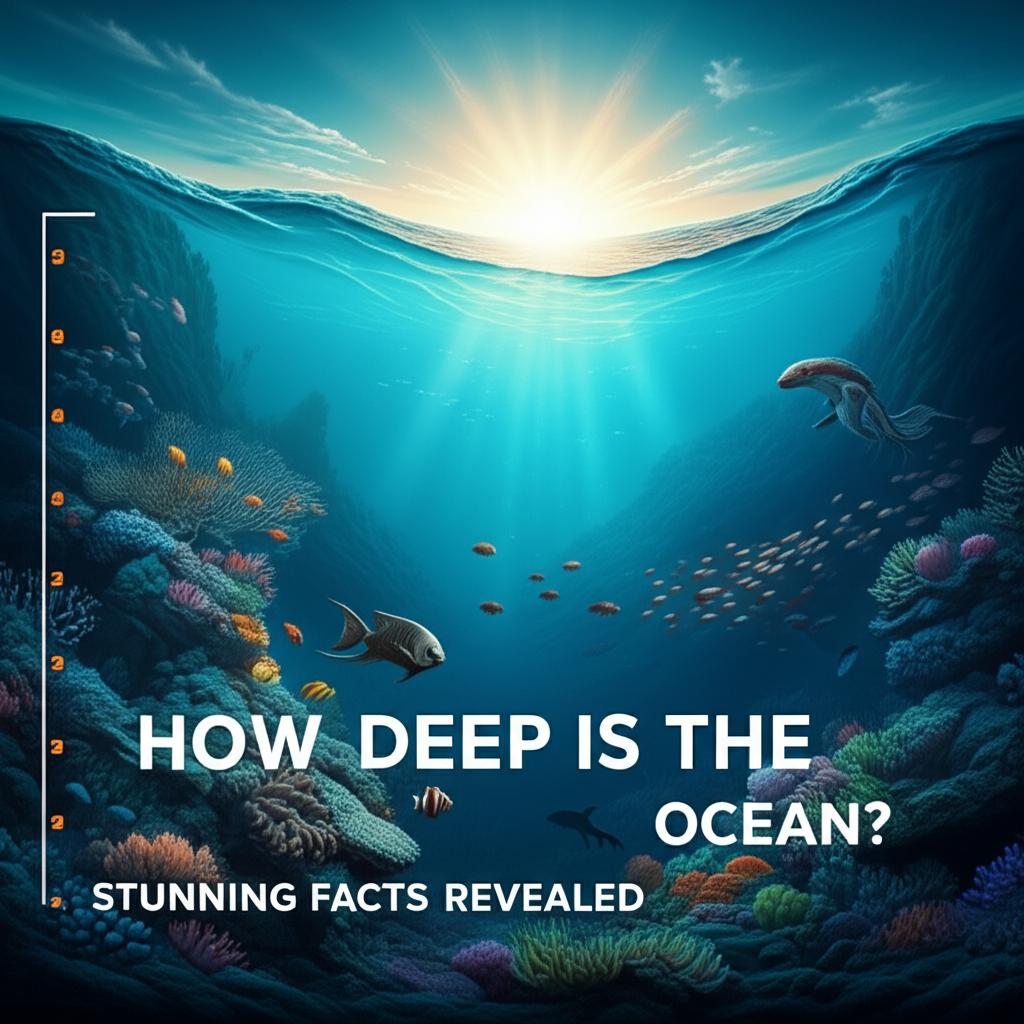
How deep the ocean truly is remains a question that evokes wonder, mystery, and a profound sense of scale. For centuries, humanity has gazed upon the vast surface of our planet’s oceans, recognizing their immense power and beauty, yet their true depths have largely remained an enigmatic frontier. Far more than just a massive body of water, the ocean is a complex, layered world, stretching downwards into regions where sunlight never penetrates, pressures are crushing, and life takes on forms both alien and awe-inspiring. Unraveling the secrets of these abyssal landscapes reveals not only stunning geological features but also remarkable adaptations of life and a stark reminder of how little we still know about the largest habitat on Earth.
The Ocean’s Immense Scale: Just How Deep Are We Talking?
To grasp the magnitude of the ocean’s depth, it’s helpful to start with averages before plunging into extremes. While the average depth of the ocean is approximately 3,682 meters (12,080 feet), this figure merely scratches the surface of the grand picture. The ocean floor is not a flat basin but a dynamic topographical landscape, featuring vast plains, towering underwater mountain ranges (mid-ocean ridges), and deep, narrow valleys known as oceanic trenches. These trenches represent the deepest scars on our planet’s surface, formed at convergent plate boundaries where one tectonic plate slides beneath another.
Consider this: if you could shrink Mount Everest and place it inverted into the deepest part of the ocean, its peak would still be more than a mile below the surface. This mind-bending comparison highlights the sheer vertical expanse that lies beneath the waves.
Exploring the Abyss: How Humanity Ventures into the Deep
The quest to discover exactly how deep the ocean truly goes has been a monumental scientific endeavor. The deepest known point on Earth is the Challenger Deep, located at the southern end of the Mariana Trench in the western Pacific Ocean. Measurements have consistently placed its maximum depth at around 10,929 meters (35,856 feet), though some estimates push it slightly beyond 11,000 meters (36,000 feet). To put this into perspective, that’s nearly 7 miles straight down from the surface.
Reaching such extreme depths is an incredible feat of engineering. The pressure at the Challenger Deep is over 1,000 times greater than at sea level – equivalent to the weight of 50 Boeing 747s pressing down on you. Only a handful of specialized submersibles, like the Bathyscaphe Trieste (which first reached it in 1960), the uncrewed Kaiko and Nereus, and James Cameron’s Deepsea Challenger (in 2012), have successfully withstood these crushing pressures to visit this ultimate abyss. Their voyages have provided invaluable data, demonstrating that even at these seemingly uninhabitable depths, life finds a way.
Layers of the Deep: A Vertical Journey Through Ocean Zones
The ocean is often divided into distinct vertical zones, each characterized by specific light levels, temperatures, and pressures:
Sunlight Zone (Epipelagic): Extending from the surface down to about 200 meters (660 feet). This is where most marine life thrives, powered by photosynthesis.
Twilight Zone (Mesopelagic): From 200 to 1,000 meters (660 to 3,300 feet). Only faint light penetrates here, insufficient for photosynthesis. Many species here migrate to the surface at night to feed.
Midnight Zone (Bathypelagic): From 1,000 to 4,000 meters (3,300 to 13,100 feet). Total darkness reigns, and temperatures hover just above freezing.
Abyssal Zone (Abyssopelagic): From 4,000 to 6,000 meters (13,100 to 19,700 feet). This perpetually dark and cold zone covers vast stretches of the deep ocean floor.
Hadal Zone (Hadopelagic): Encompassing the extreme depths of oceanic trenches, from 6,000 meters (19,700 feet) to the absolute deepest points. This zone, named after Hades, is truly an alien landscape.
Understanding these layers helps explain how varied and complex the deep-sea ecosystem truly is. Each zone presents unique challenges and opportunities for life, leading to astonishing evolutionary adaptations.
Life Under Pressure: How Marine Organisms Thrive
Despite the absence of light, freezing temperatures, and immense pressure, the deep ocean teems with life. Organisms here have evolved incredible strategies to survive:
Bioluminescence: Many deep-sea creatures produce their own light, using it to attract mates, lure prey, or evade predators in the perpetual darkness.
Chemosynthesis: Unlike surface ecosystems that rely on sunlight for photosynthesis, many deep-sea communities thrive around hydrothermal vents, where volcanic activity releases superheated, mineral-rich water. Bacteria here perform chemosynthesis, converting chemicals into energy, forming the base of a unique food web supporting giant tube worms, clams, and crabs.
Unique Adaptations: Fish living in the Hadal Zone often lack swim bladders (which would rupture under pressure) and have flexible, gelatinous bodies composed of specialized proteins and fats that prevent their cells from being crushed. Their metabolism is also adapted to slow, energy-efficient lifestyles, making the most of scarce resources.
The discovery of these resilient life forms has revolutionized our understanding of how life can adapt to seemingly impossible conditions, constantly pushing the boundaries of what we thought possible.
The Unexplored Frontier: How Much More Awaits Discovery?
Despite significant advancements in oceanographic technology, the vast majority of the deep ocean remains unexplored. It’s estimated that less than 20-25% of the ocean floor has been mapped to a high resolution, and an even smaller fraction has been physically visited. This signifies that countless species, geological features, and ecological processes still await discovery.
The deep ocean plays a critical role in regulating Earth’s climate, housing immense biodiversity, and potentially holding keys to new medicines and biotechnological advancements. Continued exploration is essential not only to satisfy our innate curiosity but also to understand and protect this vital part of our planet. The mysteries of how deep the ocean truly goes, and what unseen wonders it holds, continue to inspire generations of scientists, explorers, and dreamers alike.
In conclusion, the ocean’s depths are far more than just deep; they are a sprawling, dynamic, and profoundly mysterious world. From the pressure-cooker environment of the Mariana Trench to the bioluminescent wonders of the Midnight Zone, every layer reveals new dimensions of our planet’s complexity. The ongoing journey to understand how deep the ocean truly is and how it functions offers endless fascination and underscores the importance of protecting this breathtaking blue frontier.
0 Comments