
How Brains Think: Unlock Its Amazing Secrets
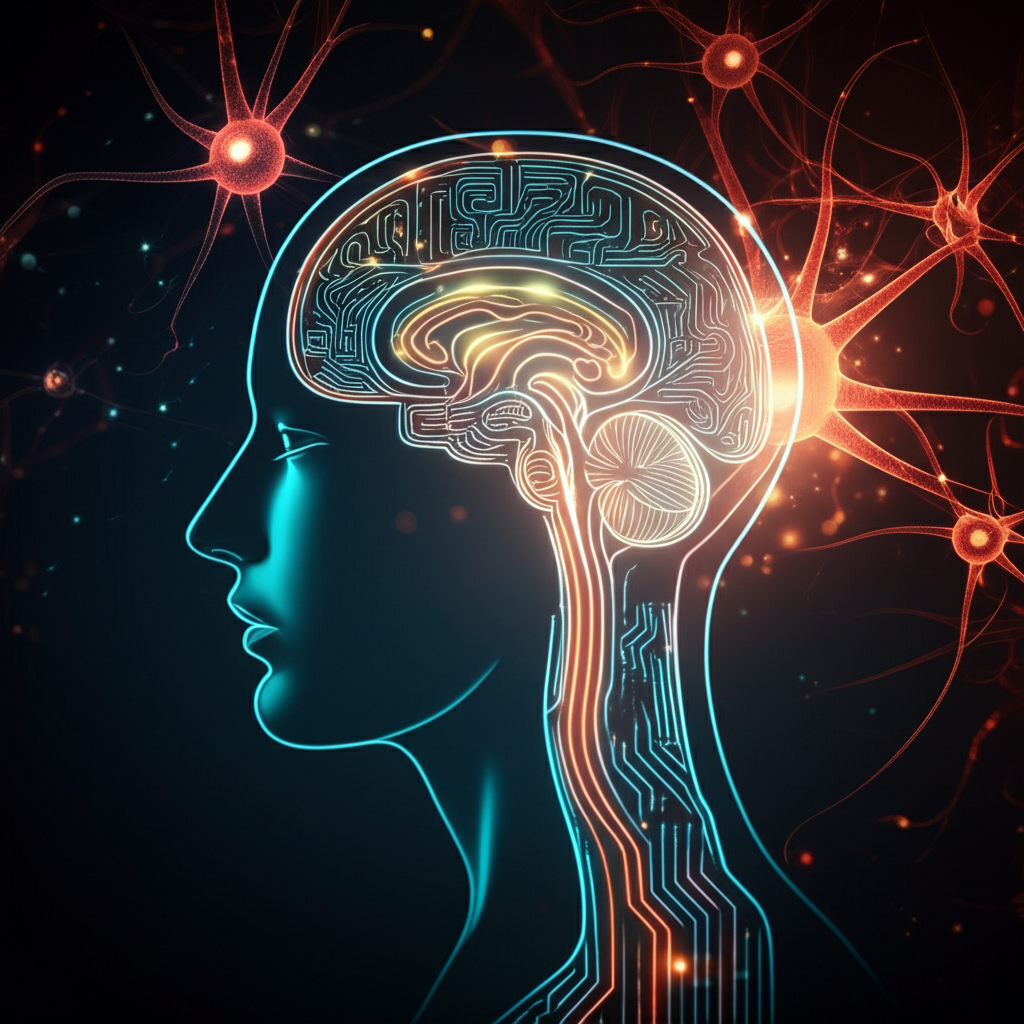
How brains think is one of humanity’s most profound and enduring mysteries, a complex symphony of electrical impulses and chemical reactions that underpins every thought, emotion, and action we take. Far from being a simple supercomputer, the human brain is an organic marvel, constantly adapting, learning, and self-organizing. Understanding even a fraction of its inner workings can illuminate not only what makes us distinctively human but also how we develop, remember, and navigate the world around us. This intricate organ, weighing merely three pounds, houses an estimated 86 billion neurons, each capable of forming thousands of connections, making the number of potential pathways truly astronomical.
The Fundamental Units: Neurons and Synapses
At the core of all brain activity are neurons, the specialized cells that transmit information through electrical and chemical signals. Each neuron has a cell body, dendrites that receive signals, and an axon that sends them. When a neuron “fires,” it generates an electrical impulse called an action potential, which travels down the axon to its terminal. Here, it encounters a synapse – a tiny gap separating it from another neuron.
Across this synaptic gap, neurotransmitters, chemical messengers, are released. These neurotransmitters bind to receptors on the receiving neuron, either exciting it to fire its own action potential or inhibiting it from doing so. This rapid-fire communication network forms the basis of all brain processes, from processing sensory input to complex decision-making. The strength and number of these synaptic connections are not static; they change over time, a process known as synaptic plasticity, which is fundamental to learning and memory.
Mapping the Mind: Brain Regions and Their Roles
While thoughts aren’t confined to single, isolated points, different regions of the brain are specialized for particular functions. The cerebrum, the largest part of the brain, is divided into two hemispheres, left and right, and further into four main lobes:
Frontal Lobe: Located at the front of the brain, this lobe is our command center for higher-level cognitive functions. This is where personality, decision-making, problem-solving, planning, and voluntary movement originate. It’s crucial for regulating social behavior and impulse control.
Parietal Lobe: Situated behind the frontal lobe, the parietal lobe processes sensory information from the body, including touch, temperature, pressure, and pain. It also plays a significant role in spatial awareness and navigation.
Temporal Lobe: Found beneath the frontal and parietal lobes, the temporal lobe is responsible for processing auditory information, understanding speech, and plays a vital role in memory formation and retrieval, particularly long-term memories.
Occipital Lobe: Located at the back of the brain, the occipital lobe is dedicated to processing visual information received from the eyes, helping us interpret shapes, colors, and motion.
Beneath the cerebrum lie other critical structures: the cerebellum coordinates voluntary movements, balance, and posture; the brainstem regulates vital involuntary functions like breathing and heart rate. The limbic system, a collection of structures including the amygdala and hippocampus, is central to emotions, motivation, and memory. Understanding how these regions interact provides insight into human behavior.
The Dynamic Brain: Plasticity and Learning
One of the most astonishing qualities of the brain is its plasticity – its ability to reorganize itself by forming new neural connections throughout life. This isn’t just a phenomenon of childhood; adult brains can also adapt and change. Every time we learn a new skill, form a new memory, or even experience something new, our brain physically changes, strengthening some connections and weakening others. This is why practices like meditation, learning a musical instrument, or acquiring a new language can literally reshape the brain, improving cognitive functions and even resilience. Neuroplasticity is the core mechanism behind rehabilitation after brain injury, demonstrating the brain’s incredible capacity to rewire itself.
Memory: The Brain’s Archives
Our ability to think, learn, and perform complex tasks is intrinsically linked to memory. The brain stores information in various forms:
Sensory Memory: A fleeting memory of sensory input, lasting only a few seconds.
Short-Term/Working Memory: Holds a small amount of information for a brief period, allowing us to manipulate it (e.g., remembering a phone number just long enough to dial it).
* Long-Term Memory: Divided into explicit (conscious recall of facts and events) and implicit (unconscious skills and habits) memory, this is where vast amounts of information are stored for extended periods, sometimes for a lifetime.
The hippocampus plays a crucial role in consolidating short-term memories into long-term ones. The intricate process of encoding, storage, and retrieval of memories allows us to build upon past experiences, learn from mistakes, and construct our personal narratives. The remarkable how brain’s think involves this continuous dance between current perceptions and stored knowledge.
Consciousness and Beyond: The Unanswered Questions
Despite monumental advancements in neuroscience, some of the brain’s secrets remain deeply elusive. Questions surrounding consciousness – what it is, where it resides, and how subjective experience arises from objective neural activity – continue to challenge scientists and philosophers alike. Decision-making, creativity, intuition, and the very sense of self are complex emergent properties of brain activity that we are only beginning to unravel.
The journey to understand how brains think is an ongoing scientific adventure. Each discovery chips away at the enormous complexity, revealing a masterpiece of biological engineering that continuously learns, adapts, and enables the rich tapestry of human experience. From the firing of a single neuron to the grand symphony of consciousness, the brain is an awe-inspiring testament to the power of biological evolution.
0 Comments