
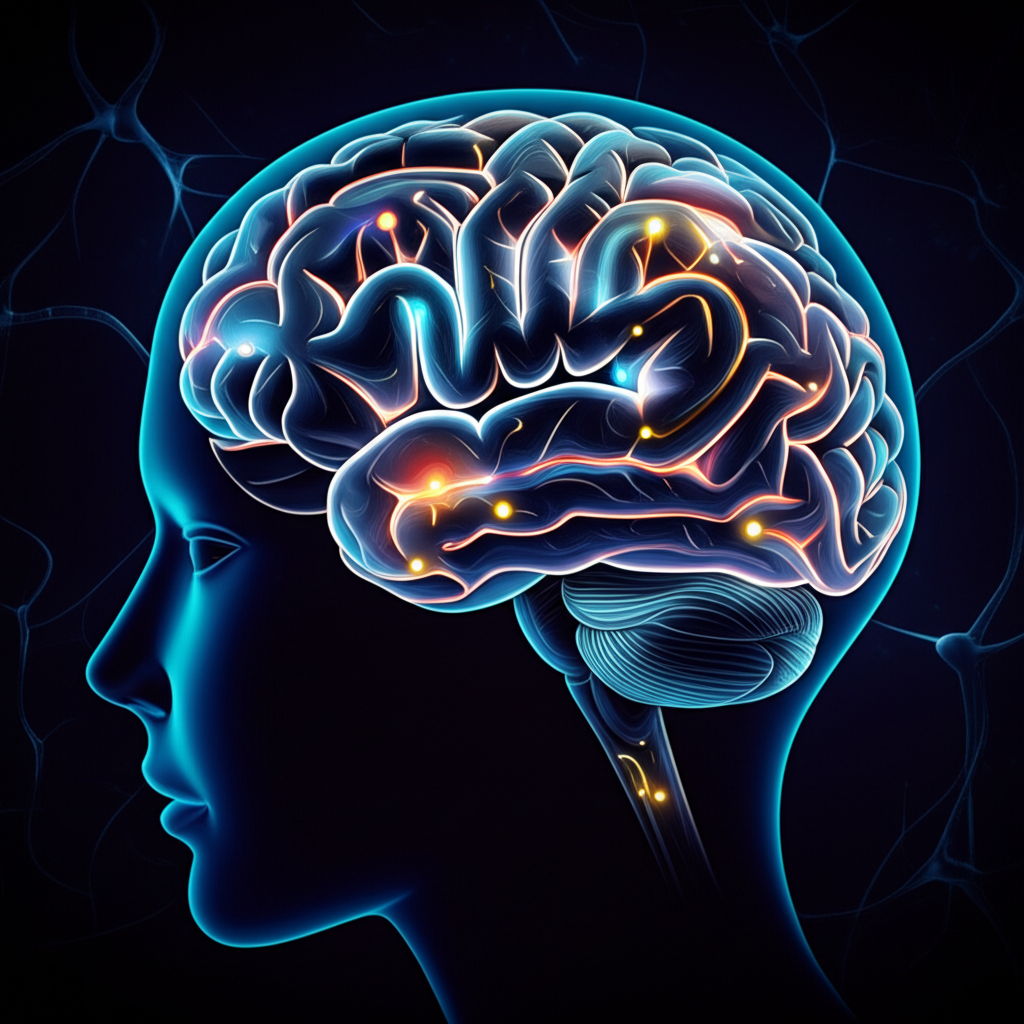
How do brains create thoughts? This profound question has captivated philosophers and scientists for centuries, standing as one of the ultimate frontiers in understanding ourselves. While there isn’t a single, definitive “ultimate discovery” that has neatly unravelled this intricate mystery, a spectacular tapestry of scientific breakthroughs continues to illuminate the astonishing mechanisms by which billions of tiny cells conjure our inner world of ideas, memories, emotions, and decisions. It’s a journey that takes us from the microscopic dance of molecules to the grand symphony of neural networks, revealing a complexity that is both humbling and awe-inspiring.
At its core, the brain is an electrochemical organ, a biological supercomputer composed primarily of specialized cells called neurons. There are an estimated 86 billion neurons in the human brain, each a tiny processor capable of generating electrical impulses and releasing chemical signals. The sheer number is mind-boggling, but it’s their intricate connectivity that truly underpins our capacity for thought. Each neuron typically connects to thousands of others, forming a sprawling, dynamic network — a dense forest where information constantly flows.
The Fundamental Symphony: Neurons and Synapses
The genesis of thought can be traced back to these fundamental units. A neuron communicates by generating an electrical spark, known as an action potential, which races down its axon. Upon reaching the end of the axon, this electrical signal triggers the release of neurotransmitters – chemical messengers – into a tiny gap called a synapse. These neurotransmitters then bind to receptors on an adjacent neuron, either exciting it to fire its own action potential or inhibiting it from doing so. This rapid-fire, electrochemical conversation occurs billions of times per second, establishing the very substrate of our mental experience.
It’s crucial to understand that no single neuron holds a complete thought. Rather, thoughts emerge from patterns of activity across distributed networks of neurons. Think of it like a ripple effect: a sensory input – say, the smell of coffee – activates a specific pattern of neurons in the olfactory bulb. This pattern then propagates and interacts with other neural networks associated with memory (the last time you had coffee), emotion (the comfort it brings), and language (the word “coffee”). The unique combination and sequence of these activations give rise to the conscious perception and associated thoughts.
From Electrical Signals to Conceptual Ideas: How Information Emerges
The magic truly begins when individual neuronal firings coalesce into meaningful patterns. Our brains are not just reacting; they are actively constructing our reality. When you look at a tree, your retina doesn’t send an image to your brain; it sends a barrage of electrical signals representing light, color, and edges. Different areas of the visual cortex process these raw inputs, assembling them into representations of lines, shapes, and finally, a coherent “tree.” This bottom-up processing then interacts with top-down processes, where your existing knowledge and expectations influence what you perceive. A botanist, for example, observing the same tree, will generate richer, more detailed thoughts than someone unfamiliar with flora.
Memory plays a colossal role in this constructive process. Thoughts are rarely brand new; they are often echoes, syntheses, and elaborations of past experiences. The hippocampus is vital for forming new declarative memories, while the cerebral cortex stores long-term memories across vast networks. When you think about your childhood home, for instance, your brain isn’t pulling up a single file; it’s reactivating a widespread network of neurons that were active when you formed those memories – linking visual details, spatial layouts, emotional resonance, and even specific sounds or smells. This reactivation is not a perfect recall but a dynamic reconstruction, colored by your current state and knowledge.
The Orchestra of Brain Regions: How Complex Thoughts Arise
Beyond individual neurons and local circuits, complex thoughts require the integrated effort of functionally specialized brain regions working in concert. The prefrontal cortex, located at the front of your brain, is often considered the seat of executive functions – planning, decision-making, problem-solving, and inhibiting impulsive behaviors. It’s the conductor of the cognitive orchestra, allowing us to hold multiple pieces of information in mind, weigh options, and formulate strategic thoughts.
Meanwhile, the limbic system, deep within the brain, is crucial for processing emotions. Our feelings are inextricably linked to our thoughts, guiding our attention and influencing our judgments. A thought of fear, for example, involves not only the prefrontal cortex evaluating a threat but also the amygdala triggering physiological responses and emotional memories. The parietal lobes integrate sensory information, helping us understand spatial relationships and navigate our world, while the temporal lobes are vital for language processing and auditory perception.
The true marvel is the seamless, dynamic interplay between these regions. Neuroscientists use advanced imaging techniques like fMRI (functional magnetic resonance imaging) and EEG (electroencephalography) to observe this activity, revealing a constant ebb and flow of information across the brain. A thought isn’t confined to one area; it’s a global event, a transient but robust pattern of synchronized activity spanning multiple specialized modules, forming what some refer to as a “global workspace” of consciousness.
The Ever-Evolving Discovery
While we have made immense strides in mapping the brain’s anatomy and observing its activity, the ultimate “how” remains a profound and ongoing quest. We can pinpoint where thoughts happen, when they occur, and even some of the mechanisms involved, but the leap from electrochemical signals to the subjective experience of consciousness – the feeling of “being you” and having private thoughts – remains an elusive mystery, often referred to as the “hard problem of consciousness.”
Future discoveries will likely involve ever more sophisticated computational models, breakthroughs in artificial intelligence, and new ways to observe the brain in action at both cellular and network levels. These endeavors promise to deepen our understanding of this incredible organ, revealing more about not just how we think, but ultimately, what it means to be human. The journey to fully comprehend how brains create thoughts is far from over, but each step forward reveals a universe of complexity and beauty waiting to be explored.
0 Comments