- From Our Doorstep to the Cosmic Abyss
- The Milky Way: Our Galactic Home
- Galaxies, Clusters, and Cosmic Webs
- How Do We Measure Such Immense Distances?
- The Observable Universe: A Glimmer of the Unknown
- Our Place in the Grand Tapestry
How do we even begin to grasp the sheer, mind-bending scale of the cosmos? From our cozy spot on Earth, gazing up at the twinkling night sky, it’s easy to feel a sense of wonder. But that wonder deepens immeasurably when one truly starts to comprehend just how vast, how ancient, and how exquisitely structured our universe actually is. It’s a journey from the familiar to the utterly unimaginable, a testament to the power of scientific inquiry and the boundless mysteries that await our understanding.
From Our Doorstep to the Cosmic Abyss
Our exploration of cosmic scale naturally begins with what we know best: Earth. Our home planet is a relatively small sphere, taking just over 24 hours to complete a rotation and 365 days to orbit the Sun. The Sun itself is an average star, yet it’s about 109 times wider than Earth. The distance between Earth and the Sun, approximately 150 million kilometers (93 million miles), defines an Astronomical Unit (AU), a fundamental stepping stone in measuring the depths of space. Light from the Sun takes roughly 8 minutes to reach us. From here, the numbers begin to swell.
Our solar system, encompassing eight planets, dwarf planets, myriad asteroids, and comets, spans a staggering distance. Neptune, the outermost major planet, orbits at about 30 AU from the Sun. But the solar system’s true extent reaches far beyond, to the Oort Cloud, a vast spherical shell of icy objects thought to be the source of long-period comets. The Oort Cloud extends perhaps 50,000 to 100,000 AU from the Sun – nearly a quarter of the way to the nearest star. At these distances, light travel time is measured not in minutes, but in hours or even days.
Beyond our solar system lies our immediate stellar neighborhood. The closest star to our Sun, Proxima Centauri, is about 4.24 light-years away. A light-year, the distance light travels in one Earth year, equates to roughly 9.46 trillion kilometers (5.88 trillion miles) – a number so large it’s almost meaningless without context. If our sun were a tennis ball in New York, Proxima Centauri would be another tennis ball in Los Angeles. The spaces between stars are immense, yet these are just the first steps into the grand cosmic scale.
The Milky Way: Our Galactic Home
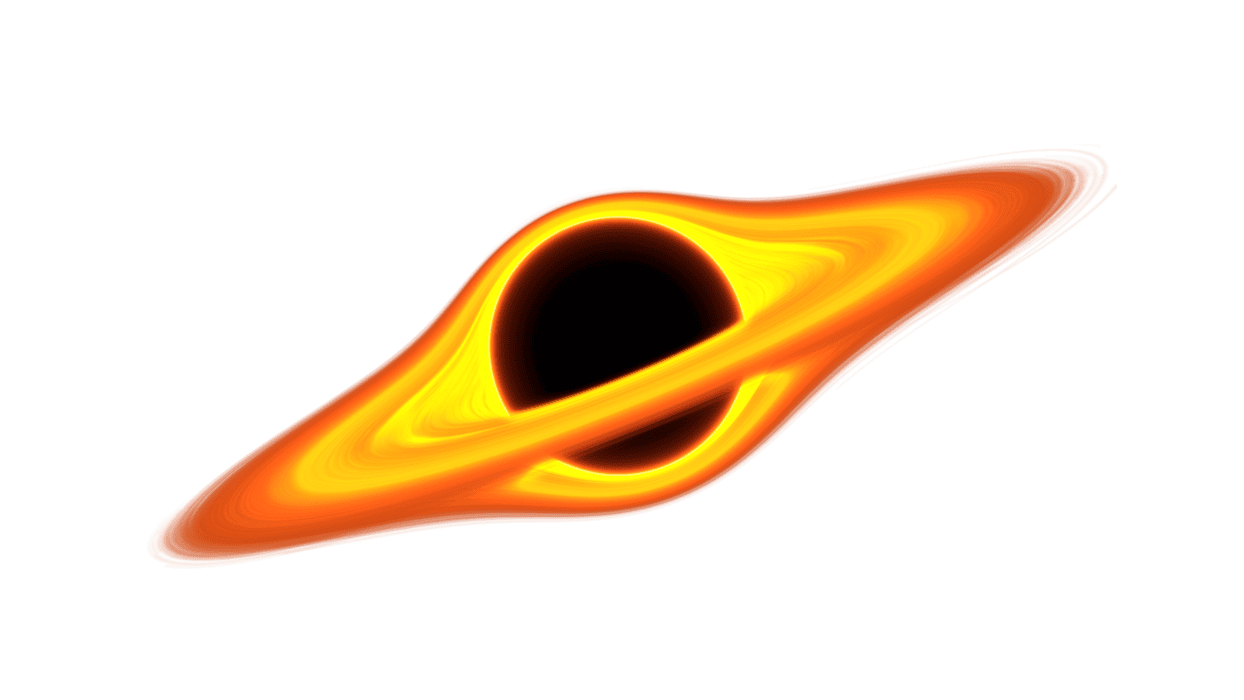
Our Sun is just one of an estimated 100 to 400 billion stars that comprise the Milky Way Galaxy. This majestic spiral galaxy is a colossal structure, stretching around 100,000 to 120,000 light-years in diameter. Our solar system resides in one of its spiral arms, about two-thirds of the way out from the galactic center. Even at the speed of light, it would take 100,000 years to traverse our home galaxy from one side to the other. The stars, gas, and dust within the Milky Way orbit a central supermassive black hole, Sagittarius A. The sheer number of stars, each a potential sun to its own system, makes the Milky Way a universe unto itself.
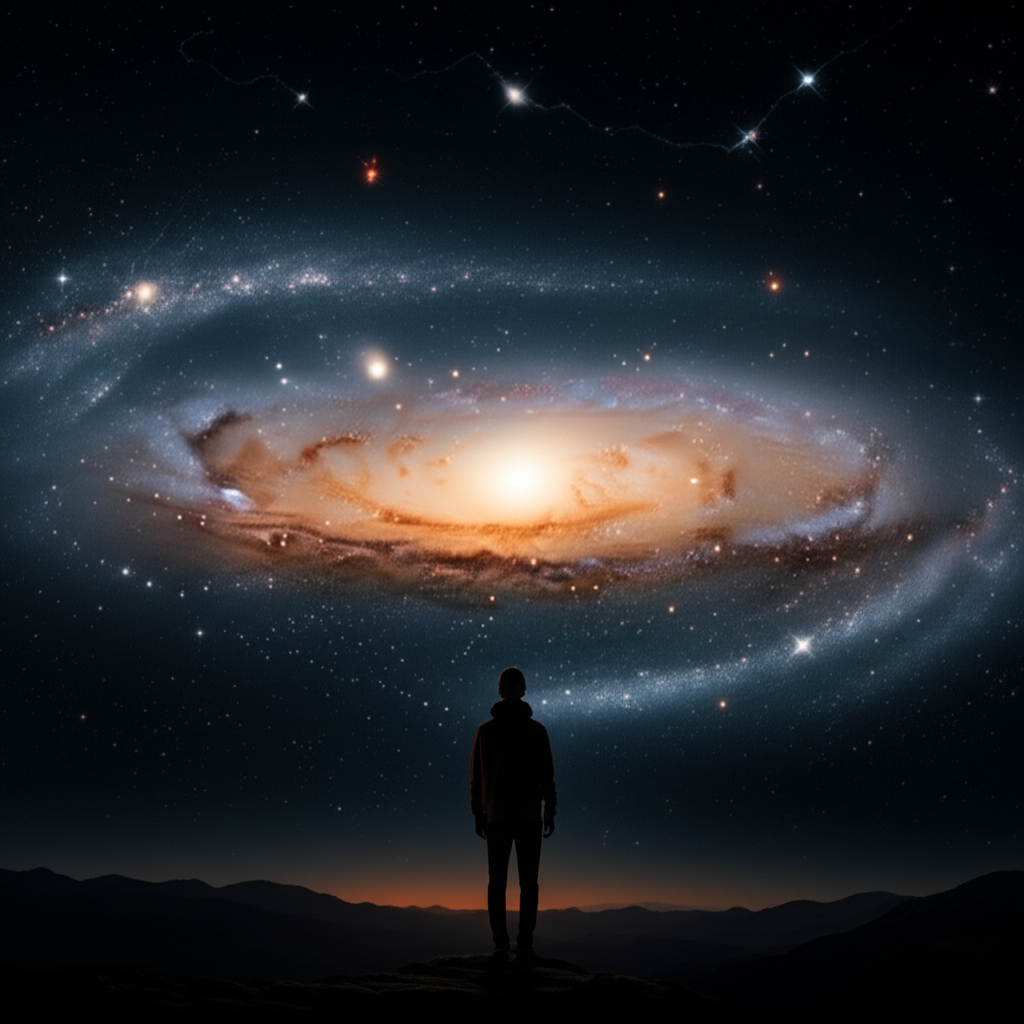
But the Milky Way is not alone. It’s part of a small collection of galaxies called the Local Group, which also includes the Andromeda Galaxy. Andromeda, a massive spiral galaxy even larger than our own, is about 2.5 million light-years away. It’s visible to the naked eye as a faint smudge on a clear night – the most distant object you can see without a telescope. Andromeda and the Milky Way are on a collision course, destined to merge in about 4.5 billion years, forming a new, larger galaxy affectionately dubbed “Milkomeda.”
Galaxies, Clusters, and Cosmic Webs
The Local Group, with its few dozen galaxies, is merely a tiny speck in a vaster structure known as the Virgo Supercluster. This supercluster contains over a thousand galaxy groups and clusters, spanning an incredible 110 million light-years across. And even the Virgo Supercluster is just one node in an even larger, more complex cosmic marvel: the Laniakea Supercluster, home to approximately 100,000 galaxies spread across 520 million light-years.
On the largest observable scales, galaxies and clusters of galaxies are not randomly distributed but form colossal filaments and sheets, separated by immense voids, creating a “cosmic web” that resembles the structure of a brain or a sponge. This web is thought to be the scaffolding of the universe, shaped by gravity over billions of years.
How Do We Measure Such Immense Distances?
Understanding these incredible distances requires ingenuity and a sophisticated “cosmic distance ladder,” each rung building upon the last:
1. Radar Mapping (within our Solar System): Bouncing radar signals off planets provides precise local measurements.
2. Parallax (nearby stars): As Earth orbits the Sun, nearby stars appear to shift slightly against the background of more distant stars. This small angular shift, or parallax, allows astronomers to calculate distances up to a few thousand light-years.
3. Standard Candles (galaxies): For greater distances, astronomers rely on “standard candles” – objects with known intrinsic luminosities.
Cepheid Variables: These pulsating stars have a direct relationship between their pulsation period and their true brightness. By comparing their apparent brightness to their known intrinsic brightness, their distance can be calculated. These work for distances up to tens of millions of light-years.
* Type Ia Supernovae: These specific types of stellar explosions are incredibly bright and consistent in their peak luminosity, making them detectable across billions of light-years. They act as cosmic mile markers for the most distant galaxies.
4. Redshift and Hubble’s Law (deep universe): For the most distant objects, beyond the range of standard candles, astronomers use the concept of redshift. As the universe expands, light from receding galaxies is stretched to longer (redder) wavelengths. The faster a galaxy is moving away, the greater its redshift. Edwin Hubble discovered that a galaxy’s recession velocity is directly proportional to its distance from us. By measuring the redshift, we can infer its distance using Hubble’s Law.
The Observable Universe: A Glimmer of the Unknown
Through these methods, we have been able to map what we call the “observable universe,” a gargantuan sphere with Earth at its center. Its current estimated diameter is approximately 93 billion light-years. It’s crucial to understand that this is the observable universe – the portion of the universe from which light has had enough time to reach us since the Big Bang.
The universe itself could be, and many scientists believe it is, far larger than what we can observe, possibly even infinite. Because the universe has a finite age (around 13.8 billion years), there’s a limit to how far light could have traveled to reach us. Furthermore, the expansion of space means that objects that emitted light 13.8 billion years ago are now much farther away than 13.8 billion light-years.
Our Place in the Grand Tapestry
This journey through the staggering scale of the universe is humbling. It reminds us that our planet, our solar system, and even our galaxy are but tiny specks in an unimaginably vast cosmic ocean. Yet, within this immensity, lies profound beauty and an intricate dance of physical laws. The very atoms that compose us were forged in the hearts of stars billions of years ago.
The exploration of the universe’s scale is not just an exercise in numbers; it’s an ongoing quest for understanding our origins, our place, and ultimately, our future. Each new telescope, each new mission, pushes the boundaries of our knowledge, revealing more about the stunning scale of our endless universe, and cementing our shared human endeavor to comprehend the magnificent cosmos we inhabit.
0 Comments