
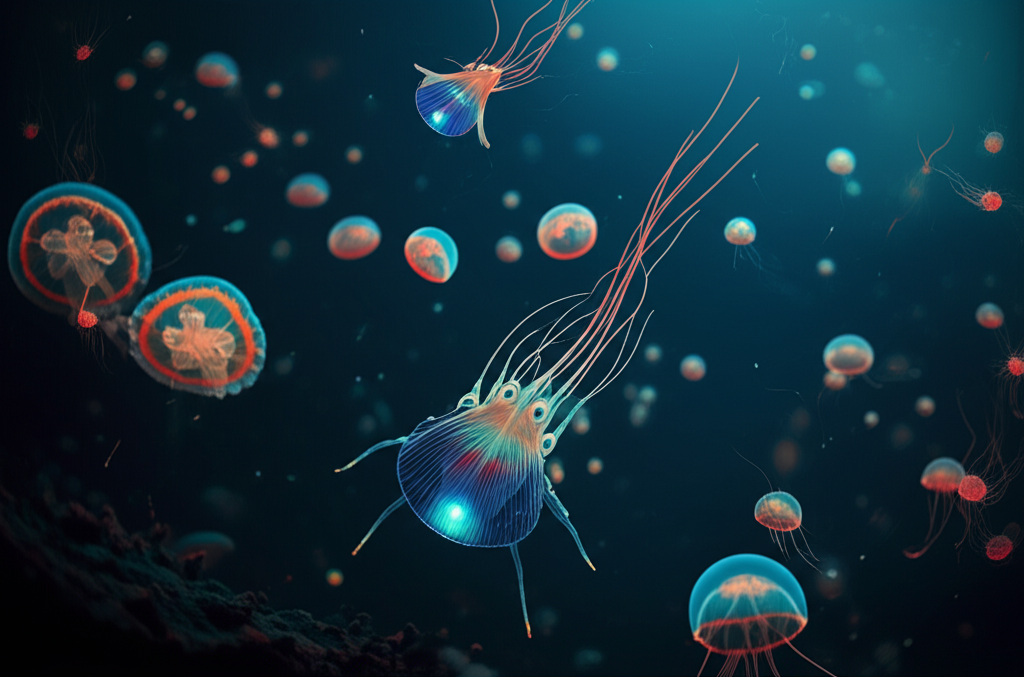
Bioluminescent Creatures represent some of nature’s most enchanting and mysterious marvels, illuminating the darkest depths of the oceans, the damp floors of forests, and even the twilight skies. These living light sources have captivated humanity for centuries, inspiring folklore and scientific inquiry alike. From the flickering dance of fireflies on a summer evening to the ethereal glow of deep-sea anglerfish, the ability to produce light chemically, known as bioluminescence, is a testament to the astonishing adaptability and creativity of life on Earth.
The Science Behind the Spark
At its core, bioluminescence is a chemical reaction occurring within a living organism, resulting in the emission of “cold light.” Unlike incandescence, which produces heat as a byproduct (think of an old light bulb), bioluminescence generates light with minimal heat loss. The primary ingredients for this biological alchemy are typically a molecule called luciferin and an enzyme called luciferase. When luciferin reacts with oxygen, catalyzed by luciferase, energy is released in the form of light. In some cases, other cofactors like ATP (adenosine triphosphate) or calcium ions are also necessary to initiate or regulate the reaction. Diverse forms of luciferin and luciferase exist across different species, leading to variations in the color and intensity of the light produced, ranging from blues and greens common in marine environments to the yellows and oranges seen in terrestrial insects.
Why Do Organisms Glow? The Purposes of Bioluminescence
The evolutionary drivers behind bioluminescence are as diverse as the creatures themselves. This glowing ability serves a multitude of critical functions for survival and reproduction:
Attraction: Perhaps the most famous example is the firefly, which uses species-specific flash patterns to attract mates. In the deep sea, some anglerfish lure unsuspecting prey directly to their mouths with a glowing appendage, while others use light to attract partners in the vast darkness.
Defense: Bioluminescence can be a powerful deterrent. Some squid and crustaceans squirt a cloud of glowing fluid to distract predators, akin to a smoke screen. Other organisms use a “burglar alarm” effect, where a small organism, when attacked, lights up vigorously, attracting a larger predator that then targets the original attacker rather than the glowing prey.
Camouflage: Counterillumination is a sophisticated form of camouflage where organisms match the faint light filtering down from the surface, effectively erasing their silhouette from predators looking up from below.
Communication: Beyond mating signals, some organisms use light for intra-species communication, perhaps to coordinate group movements or define territories.
Illumination: While rare, a few deep-sea creatures, like certain flashlight fish, use their light organs to illuminate their surroundings, helping them locate prey or navigate the dark environment.
The Mesmerizing World of Bioluminescent Creatures
The realm of bioluminescent creatures spans nearly all kingdoms of life, showcasing incredible diversity in form and function.
Marine Marvels: The ocean, particularly its abyssal zones, is home to a staggering array of bioluminescent life. Over 90% of deep-sea organisms are believed to be bioluminescent. Anglerfish, with their infamous glowing lure, are iconic examples. Dragonfish possess red light emission, thought to allow them to see their red-pigmented prey, which are invisible to most other deep-sea predators. Jellyfish and comb jellies light up with ethereal pulses and waves, creating stunning displays. Tiny dinoflagellates cause the ocean to sparkle when disturbed, turning crashing waves or boat wakes into glowing phenomena.
Terrestrial Lights: On land, fireflies are the most recognized luminaries. Each species has a unique flash pattern, acting as a secret code for potential mates. Certain millipedes and earthworms also exhibit bioluminescence, often as a defense mechanism or a byproduct of metabolic processes.
Fungi that Flicker: In the damp darkness of forests, various species of fungi emit a ghostly green glow, a phenomenon known as “foxfire.” The purpose of fungal bioluminescence is still debated, but theories suggest it might attract insects for spore dispersal or deter grazers.
* Bacteria’s Brilliance: Some bacteria are inherently bioluminescent, and they often live in symbiotic relationships with other organisms. These bacteria might reside in specialized light organs of fish and squid, providing a constant glow in exchange for nutrients and a protected environment.
Ecological Implications and Human Fascination
Bioluminescence plays a vital role in marine ecosystems, shaping predator-prey dynamics, reproductive strategies, and the flow of energy in the deep sea. Without bioluminescence, the deep ocean would be an entirely different, perhaps less thriving, environment.
Beyond ecological significance, humanity’s fascination with bioluminescent creatures has opened doors to numerous scientific discoveries and technological innovations. Researchers study these organisms to understand the fundamental principles of light production, leading to applications in biotechnology. Bioluminescent proteins are now widely used as reporters in medical diagnostics and genetic research, allowing scientists to “see” processes within cells and organisms. The potential for creating self-lighting plants or sustainable lighting solutions using genetically engineered bioluminescent pathways is a captivating prospect currently being explored. Moreover, “bio-tourism” destinations like bioluminescent bays offer breathtaking natural light shows, drawing visitors from around the globe and highlighting the importance of conservation for these unique habitats.
The world of bioluminescent creatures is a testament to evolution’s infinite creativity, a reminder that even in the most extreme environments, life finds a way to shine. As scientists continue to explore the vast unknown regions of our planet, especially the deep oceans, it is certain that more incredible secrets of these living lights await unveiling, promising further inspiration and understanding of the natural world.
0 Comments