
- The Deep-Seated Human Curiosity
- The Technologies Driving the Search
- The Hurdles and The Hope
- The Implications of First Contact
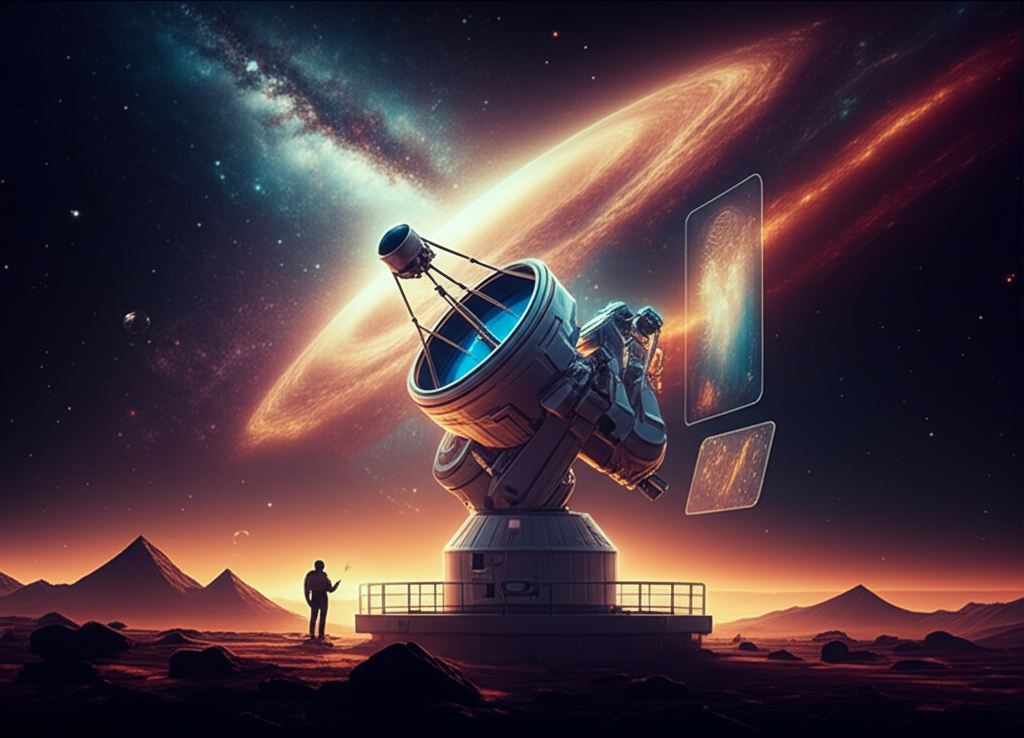
The ultimate search for alien life represents not just a scientific endeavor, but a profound philosophical journey that probes the very nature of existence. For centuries, humanity has gazed upon the stars and pondered a singular, captivating question: Are we alone? This thrilling quest, driven by insatiable curiosity and ever-advancing technology, has propelled us beyond our planetary cradle, transforming idle speculation into a rigorous scientific pursuit. From the icy moons of our solar system to the distant exoplanets orbiting alien suns, the hunt for extraterrestrial life promises to redefine our place in the cosmos, offering a revelation that could fundamentally alter human civilization forever.
The Deep-Seated Human Curiosity
Why do we spend vast resources and dedicate brilliant minds to such a speculative quest? The answer lies in our intrinsic nature. Humans are explorers, questioners, seekers of knowledge. The discovery of life beyond Earth, whether microbial or intelligent, would be an epiphany unlike any other. It would answer fundamental questions about the ubiquity of life in the universe, the processes by which it arises, and even the conditions necessary for its survival and evolution. It would be the ultimate affirmation that the universe teems with possibilities, or perhaps, a stark reminder of our unique solitude. This deep-seated curiosity fuels every experiment, every observation, and every mission directed towards the void above.
The Technologies Driving the Search
Our ability to search for alien life has been revolutionized by incredible leaps in technology. No longer are we confined to peering through small optical telescopes; an array of sophisticated instruments now scan the cosmos with unprecedented precision.
The Search for Extraterrestrial Intelligence (SETI): This organized effort primarily focuses on listening for artificial radio signals or observing unusual light patterns from distant civilizations. Radio telescopes like the Arecibo Observatory (before its collapse) and the Allen Telescope Array meticulously monitor vast swaths of the sky, hoping to intercept a message that proves we are not alone. There’s also a growing interest in optical SETI, looking for powerful, brief laser pulses.
Exoplanet Hunting and Biosignatures: The discovery of thousands of exoplanets since the 1990s, particularly those within their star’s habitable zone (the region where liquid water could exist), has dramatically narrowed the search. Missions like NASA’s Kepler and TESS satellites have cataloged these distant worlds. Now, the focus is shifting to characterizing their atmospheres. The James Webb Space Telescope (JWST), with its unparalleled infrared capabilities, is already beginning to analyze the atmospheric compositions of exoplanets, searching for “biosignatures” – chemical indicators like oxygen, methane, or even unusual combinations of gases that could suggest the presence of life.
In-Situ Exploration within Our Solar System: We don’t have to look light-years away. Our own cosmic neighborhood holds tantalizing prospects. Mars, with its ancient riverbeds and subsurface ice, has been a prime target for robotic exploration. Rovers like Curiosity and Perseverance are actively searching for signs of past microbial life or extant extremeophiles. Beyond Mars, the icy moons of Jupiter and Saturn, particularly Europa and Enceladus, harbor vast subsurface oceans warmed by tidal forces. Missions like NASA’s Europa Clipper are designed to fly close, analyze plumes of water vapor erupting from Europa’s surface, and assess its potential for harboring life. These environments, shielded from harsh radiation, could offer conditions suitable for simple organisms.
The Hurdles and The Hope
While the prospect of discovery is thrilling, the search is fraught with challenges. The sheer vastness of space means that even signals traveling at the speed of light take immense durations to reach us. Interstellar distances make direct exploration incredibly difficult, pushing the boundaries of our engineering capabilities. Furthermore, defining “life” itself, especially at a fundamental or non-terrestrial level, can be complex. What if alien life operates on entirely different biological principles?
Despite these formidable hurdles, the hope remains undimmed. Each new exoplanet discovery, each analysis of a distant atmosphere, each tantalizing piece of evidence from a Martian sample or an icy moon, incrementally pushes us closer to an answer. The “Great Filter” hypothesis, which posits that there might be a bottleneck preventing the widespread emergence of intelligent life, adds another layer of intrigue and urgency to our efforts. Are we past it, or is it still ahead?
The Implications of First Contact
Should the search conclude with a definitive discovery, the impact on human civilization would be nothing short of revolutionary. If we find microbial life, it would fundamentally alter our understanding of biology and the prevalence of life itself. It would suggest that life is not a fluke but a common occurrence in the universe. If, however, we were to detect or communicate with an intelligent civilization, the implications would be even more profound.
Such an event would challenge established religions, reshape philosophies, and likely accelerate scientific and technological progress in unimaginable ways. It would force humanity to confront its place in a larger cosmic community, a moment anticipated with both exhilarating hope and cautious apprehension. Protocols for contact, interspecies communication, and the ethical considerations of such an encounter are already topics of serious discussion among scientists and policymakers. This isn’t merely academic speculation; it’s a critical preparation for a potential future that could arrive sooner than we think.
The ultimate search for alien life is a journey through the unknown, propelled by an enduring human spirit of inquiry. It’s a quest that stretches our imagination, pushes the boundaries of our technology, and invites us to consider the universe not as an empty void, but as a potentially bustling tapestry of existence. While the silence has been profound so far, the ongoing pursuit of answers, fueled by incredible advancements and unwavering determination, makes the possibility of discovery not a matter of if, but perhaps, when. And when that day comes, it will undoubtedly be the most thrilling revelation in human history.
0 Comments