- The Ultimate Strange Wave-Particle Duality
- The Historical Genesis of a Radical Idea
- Early Clues: Light's Dual Nature
- The Quantum Revolution: Particles Behaving as Waves
- The Indisputable Evidence: The Double-Slit Experiment Revisited
- Decoding The Enigma: Interpretations of Duality
- The Copenhagen Interpretation
- Other Perspectives
- The Profound Implications of Duality
The Ultimate Strange Wave-Particle Duality
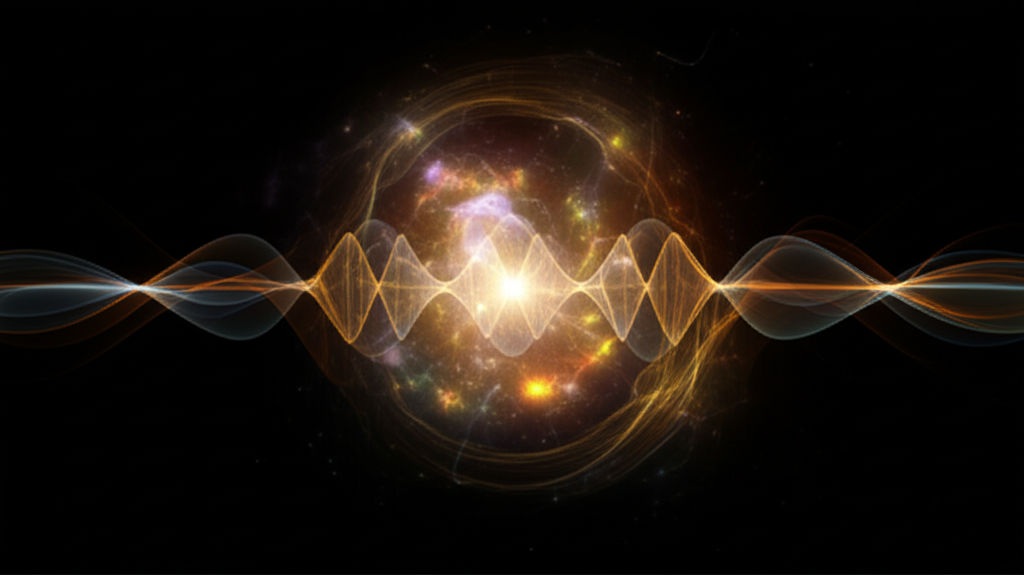
The wave-particle duality stands as one of the most enigmatic and fundamental concepts within quantum mechanics, challenging our classical understanding of reality to its very core. It posits that every particle or quantum entity may be described as either a particle or a wave, and both descriptions are necessary to understand its behavior. This isn’t just a quirky anomaly; it’s a profound truth that underpins the very existence of everything, from the light that allows us to see to the electrons that power our devices. To grasp this ultimate strangeness is to peer into the heart of quantum reality itself, where the distinctions we take for granted blur into a fascinating, interconnected dance.
The Historical Genesis of a Radical Idea
For centuries, scientists grappled with the nature of light. Was it a stream of tiny particles, or a ripple in an ether? This debate formed the initial battleground where the seeds of duality were sown.
Early Clues: Light’s Dual Nature
Isaac Newton, a titan of classical physics, championed the corpuscular theory, suggesting light was composed of discrete particles. However, Christiaan Huygens argued for a wave-like nature. It was Thomas Young’s famous double-slit experiment in the early 19th century that seemed to settle the debate decisively in favor of waves. When light was shone through two narrow slits, it produced an interference pattern on a screen behind, a characteristic behavior of waves. This pattern could not be explained if light were merely particles. For nearly a century, light was firmly understood as a wave.
The Quantum Revolution: Particles Behaving as Waves
The turn of the 20th century, however, brought a series of revolutionary discoveries that shattered this comfortable understanding. Max Planck, while studying blackbody radiation, proposed that energy was not continuous but emitted and absorbed in discrete packets, or “quanta.” Albert Einstein, building on Planck’s work, explained the photoelectric effect by suggesting that light itself was quantized, consisting of individual “photons” – particles of light that carried specific amounts of energy. This elegantly explained why light of a certain frequency could eject electrons from a metal, regardless of its intensity. Light, it seemed, acted as both a wave and a particle depending on how it was observed.
Then came Louis de Broglie in 1924, who extended this revolutionary idea. If light, a wave, could also behave as a particle, why couldn’t matter – which was traditionally thought of solely as particles – also exhibit wave-like properties? De Broglie proposed that all matter has associated “matter waves,” with a wavelength inversely proportional to its momentum. This audacious hypothesis was experimentally verified a few years later with electron diffraction experiments by Davisson and Germer, and G.P. Thomson, showing that electrons could indeed produce interference patterns, just like light waves. The stage was set for the ultimate strange duality.
The Indisputable Evidence: The Double-Slit Experiment Revisited
No discussion of wave-particle duality is complete without revisiting the double-slit experiment, this time performed with particles like electrons. When electrons are fired one by one at two slits, logic dictates they should either go through one slit or the other and create two distinct bands on the screen, like tiny bullets. This is the particle behavior we’d expect.
However, precisely like light, individual electrons create an interference pattern over time, accumulating to form bright and dark fringes. This clearly indicates wave-like behavior, as if each electron passed through both slits simultaneously, interfering with itself.
The paradox deepens when physicists try to observe which slit the electron goes through. If a detector is placed at the slits to determine the electron’s path, the interference pattern vanishes, and the electrons behave like classical particles, forming two distinct bands. The act of “looking” at the electron forces it to choose a single path, collapsing its wave function and suppressing its wave-like nature. This “measurement problem” is central to quantum mechanics and underscores the profound influence of observation on quantum reality. It’s as if the electron knows it’s being watched and changes its behavior accordingly.
Decoding The Enigma: Interpretations of Duality
Given its counter-intuitive nature, wave-particle duality has spawned multiple interpretations, each attempting to make sense of the bizarre quantum world.
The Copenhagen Interpretation
Developed primarily by Niels Bohr and Werner Heisenberg, this is the most widely accepted interpretation. It states that quantum particles do not have definite properties (like position or momentum) until they are measured. Before measurement, they exist in a superposition of all possible states, described by a wave function representing probabilities. The act of observation “collapses” this wave function, forcing the particle to settle into one specific state. Thus, the wave function is not a physical wave but a mathematical tool to calculate probabilities. For the Copenhagen school, trying to visualize a quantum entity as either strictly a wave or strictly a particle is misguided; it is both, or neither, until observed. As physicist David Mermin famously summarized, “Shut up and calculate!”
Other Perspectives
While dominant, Copenhagen is not the only game in town. The Many-Worlds Interpretation, proposed by Hugh Everett III, suggests there is no wave function collapse. Instead, every time a quantum measurement is made, the universe splits into multiple parallel universes, one for each possible outcome. In this view, the electron does go through both slits, but in different universes. Another significant alternative is the Pilot-Wave Theory (or de Broglie-Bohm theory), which posits that particles always have definite positions and are guided by a genuine, but often unobservable, “pilot wave.”
The Profound Implications of Duality
The ultimate strangeness of wave-particle duality is not just a theoretical curiosity; it has profound implications for both fundamental physics and practical technology. It forms the bedrock of quantum mechanics, which in turn explains the stability of atoms, the nature of chemical bonds, and the behavior of light and matter at the smallest scales.
Technologically, our mastery of this duality has led to revolutionary advancements. Electron microscopes, which use the wave nature of electrons to image objects far smaller than visible light allows, are indispensable in science. Lasers, transistors, and all modern electronics, from your smartphone to supercomputers, rely on understanding the quantum behavior of electrons. Even quantum computing, with its promise of unprecedented computational power, leverages principles derived from particles existing in indeterminate states (superposition) before measurement.
Philosophically, wave-particle duality forces us to reconsider the very nature of reality. Does an objective reality exist independent of observers? Or is observation an integral part of shaping what we perceive as real? It challenges our classical intuitions, urging us to embrace a world where certainty is often replaced by probabilities and where the act of looking changes that which is being seen.
In conclusion, wave-particle duality remains an astonishing testament to the weird and wonderful nature of the quantum realm. It is a concept that continues to provoke, inspire, and drive scientific inquiry, reminding us that the universe is far more intricate and mysterious than any simple analogy can encapsulate. Its ultimate strangeness is, in fact, its ultimate glory, unraveling the secrets of existence one quantum leap at a time.
0 Comments