- Whispers from the Deep: Decoding Earth's Ancient Chronicle Through Stone
- What Are Fossils, and How Are They Formed?
- The Geological Clock: Fossils and Time
- Unveiling The Incredible Fossil Story: Evidence of Evolution
- Extinction, Recovery, and Ancient Ecosystems
- The Ongoing Quest: Modern Paleontology
Whispers from the Deep: Decoding Earth’s Ancient Chronicle Through Stone
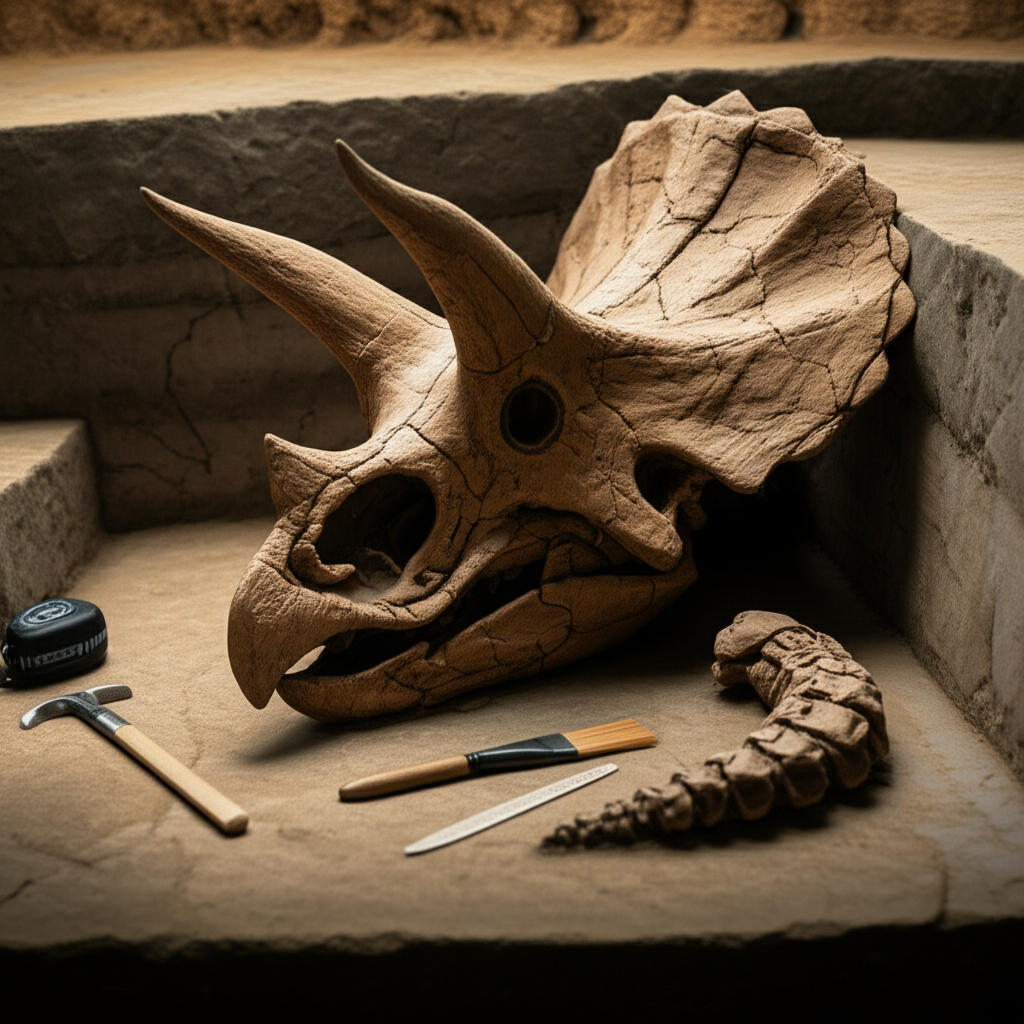
The incredible fossil story is etched into the very rocks beneath our feet, a silent chronicle of life’s arduous journey across billions of years. Far from mere ancient bones, fossils are tangible windows into worlds long gone, offering invaluable insights into Earth’s transformations, the evolution of life, and the dynamics of countless extinct ecosystems. They challenge our perceptions of time and illuminate the intricate pathways that led to the diverse biosphere we inhabit today. Join us as we delve into the profound significance of these preserved remnants and unveil the secrets they hold.
What Are Fossils, and How Are They Formed?
At their core, fossils are the preserved remains or traces of organisms from a remote past. The process of fossilization is a rare and remarkable one, requiring specific conditions to occur. Most commonly, an organism dies and is quickly buried by sediment – such as sand, mud, or volcanic ash – which protects it from scavengers and decomposition. Over vast stretches of geological time, these sediments harden into sedimentary rock, and the organic material of the organism is gradually replaced by minerals from the surrounding water. This process, known as permineralization, often preserves the internal structure of bones, shells, or wood in exquisite detail.
Beyond permineralization, other types of fossilization exist. Molds and casts form when an organism dissolves away, leaving an imprint (mold) that can then be filled by sediment (cast). Trace fossils, such as footprints, burrows, and coprolites (fossilized dung), provide evidence of an organism’s activity rather than its body itself. Amber preserves insects and small organisms perfectly encapsulated in fossilized tree resin, offering a unique glimpse into their delicate forms. Each type of preservation adds another layer to the complex narrative of Earth’s past.
The Geological Clock: Fossils and Time
Fossils are the fundamental units by which paleontologists construct the geological time scale, a monumental framework that divides Earth’s history into eons, eras, periods, epochs, and ages. By studying the specific species found in different rock layers, scientists can determine the relative age of those layers. Trilobites, for example, are characteristic of the Paleozoic Era, while ammonites are iconic index fossils for the Mesozoic Era.
The principle of superposition – that older rock layers lie beneath younger ones – combined with the unique fossil assemblages within them, allows for a precise chronological ordering of events. While relative dating tells us which came first, absolute dating methods, such as radiometric dating, provide numerical ages for these fossil-bearing rocks. This powerful combination allows us to pinpoint major evolutionary milestones, track environmental shifts, and even date significant catastrophic events like asteroid impacts.
Unveiling The Incredible Fossil Story: Evidence of Evolution
Perhaps the most profound contribution of fossils is their unequivocal evidence for the theory of evolution by natural selection. The fossil record provides a tangible history of life, demonstrating how species have changed over millions of years, adapted to new environments, and given rise to new forms.
Key transitional fossils serve as crucial “missing links” (though the term is largely outdated, as it implies a linear chain rather than a branching tree of life). Archaeopteryx, with its reptilian skeleton and bird-like feathers, elegantly illustrates the evolutionary link between dinosaurs and birds. Tiktaalik rosae, a “fishapod” with fins containing wrist-like bones, provides compelling evidence for the transition of vertebrates from water to land. The successive fossil discoveries detailing the evolution of the horse, from the small, multi-toed Hyracotherium to the single-toed Equus, offer a classic example of adaptive radiation and evolutionary change. These relics tell a story of gradual modification, natural experiments, and the relentless march of life across changing landscapes.
Extinction, Recovery, and Ancient Ecosystems
Fossils also paint a stark picture of extinction, revealing a history punctuated by periods of profound loss. Throughout Earth’s history, there have been five major mass extinction events, where a large percentage of species vanished in a relatively short geological timeframe. The most famous example is the Cretaceous-Paleogene (K-Pg) extinction event, approximately 66 million years ago, which sealed the fate of the non-avian dinosaurs and paved the way for the diversification of mammals.
Yet, the fossil record also chronicles resilience and recovery. Following each extinction, new species emerge, occupying the ecological niches left vacant, often leading to rapid bursts of evolution and biodiversity. Beyond individual organisms, fossils allow paleontologists to reconstruct entire ancient ecosystems. By studying plant fossils (paleobotany), pollen, and the arrangement of animal remains, scientists can infer ancient climates, vegetation types, and food webs, painting a vivid picture of worlds radically different from our own.
The Ongoing Quest: Modern Paleontology
Modern paleontology is a dynamic field that continually pushes the boundaries of our understanding. Advanced technologies, such as CT scanning, isotopic analysis, and sophisticated computer modeling, allow scientists to glean unprecedented levels of detail from fossils without damaging them. We can now study brain size, muscle attachments, growth rates, and even the diet of ancient creatures with remarkable precision.
New discoveries are made almost daily, from vast dinosaur graveyards to microscopic organisms preserved in ancient amber. Each new find adds another piece to the colossal puzzle of Earth’s history, deepening our appreciation for the planet’s intricate past and the incredible journey of life. The ongoing quest for fossils is more than just collecting old bones; it is a profound scientific endeavor that connects us directly to the deep time and evolution that shaped everything we know.
In essence, the fossil story is the story of life itself, told through silent witnesses in stone. It is a narrative of immense scale – billions of years, countless species, and endless adaptations. By deciphering these whispers from the deep, we not only unveil Earth’s past but also gain a deeper appreciation for the precious, ephemeral nature of life and our enduring place within its grand evolutionary tapestry.
0 Comments