- What Are Tectonic Plates, Exactly? Defining Earth's Lithosphere
- The Driving Force: How Tectonic Plates Move
- Types of Plate Boundaries and Their Dramatic Effects
- Divergent Boundaries: New Earth is Born
- Convergent Boundaries: Collisions and Creation
- Transform Boundaries: Sideways Scrapes
- Why Understanding Tectonic Plates Matters
Unveiling Earth’s Dynamic Skin: A Deep Dive into Tectonic Plates
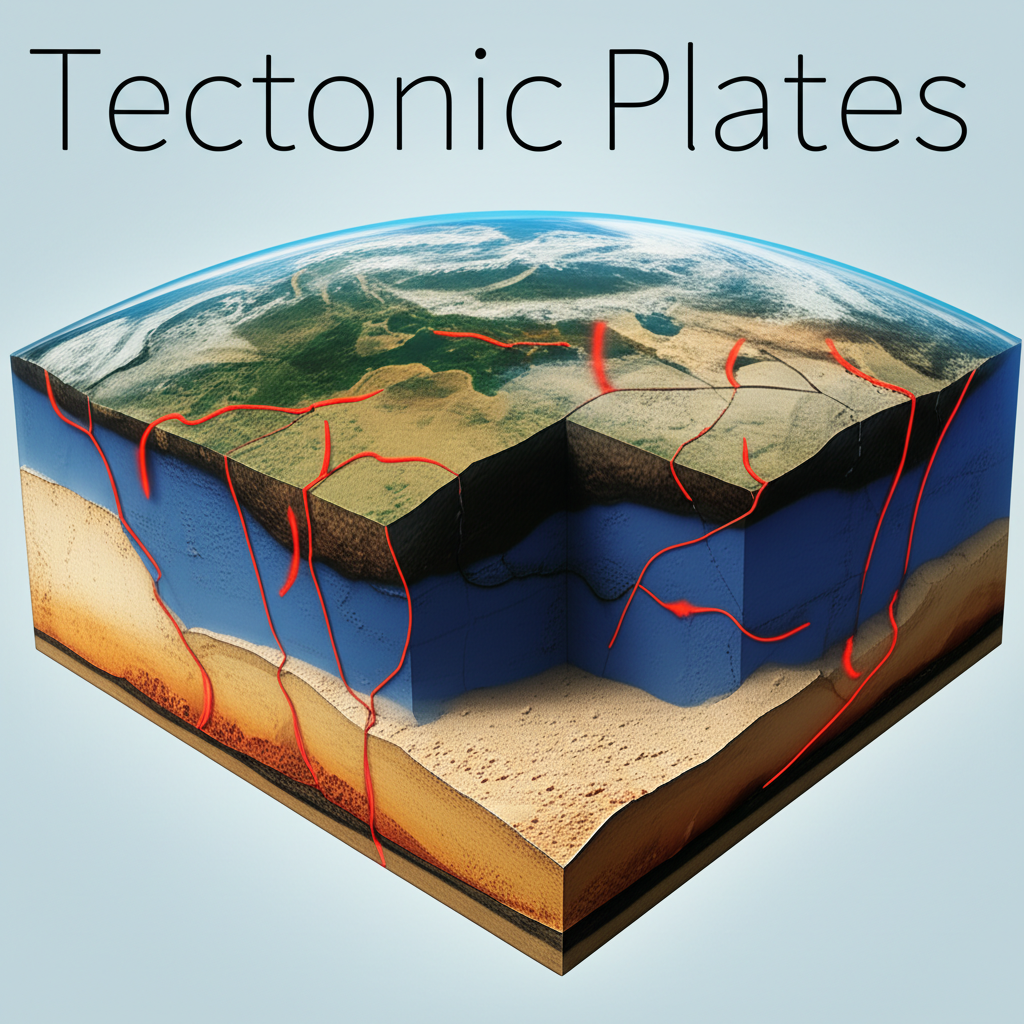
What are tectonic plates? They are colossal, irregularly shaped slabs of solid rock, comprising the Earth’s lithosphere – its outermost shell. Far from being static, these massive segments are in constant, albeit slow, motion, relentlessly reshaping the planet’s surface and dictating many of the dramatic geological phenomena we observe, from towering mountains and deep ocean trenches to devastating earthquakes and fiery volcanic eruptions. Understanding these fundamental components of our planet is key to comprehending the very architecture of Earth and the dynamic forces that continue to sculpt it.
What Are Tectonic Plates, Exactly? Defining Earth’s Lithosphere
To fully grasp the concept of tectonic plates, we must first understand the layers of the Earth. Our planet is structured like an onion, with several distinct layers. The uppermost layer, which includes the crust (both continental and oceanic) and the rigid uppermost segment of the mantle, is called the lithosphere. This lithosphere isn’t a single, continuous shell; instead, it’s fragmented into these colossal pieces we call tectonic plates.
These plates vary significantly in size and shape, much like pieces of a giant, spherical jigsaw puzzle. Some are vast, spanning entire continents and oceans, while others are smaller, more localized segments. There are roughly a dozen major plates, such as the Pacific Plate, African Plate, Eurasian Plate, and North American Plate, alongside numerous minor plates. They range in thickness from approximately 15 kilometers (9 miles) in oceanic regions to about 200 kilometers (125 miles) under continents. Despite their immense size, their movement is incredibly slow, typically only a few centimeters per year – comparable to the growth rate of a fingernail, but over geological timescales, these seemingly imperceptible shifts accumulate into profound changes.
The Driving Force: How Tectonic Plates Move
The question of what causes these colossal plates to move baffled scientists for centuries. Today, we understand that the primary mechanism is mantle convection. Beneath the rigid lithosphere lies the asthenosphere, a layer of the upper mantle characterized by its plasticity – it’s solid rock, but it behaves like a very viscous fluid over long periods and under immense pressure and heat.
Deep within the Earth, heat generated from the planet’s core and mantle radioactivity creates vast convection currents. Hot, less dense material from the deep mantle slowly rises towards the surface, much like a pot of boiling water. As this material reaches the base of the lithosphere, it spreads out, cools, and gradually sinks back down, completing the cycle. This slow, churning motion within the asthenosphere drags the overlying tectonic plates along with it.
Other forces also contribute:
Ridge Push: At mid-ocean ridges, where new crust is formed, the elevation is higher. Gravity causes the oceanic lithosphere to slide down the flanks of the ridge.
Slab Pull: As an oceanic plate cools and becomes denser, it eventually sinks beneath another plate at a subduction zone. The sheer weight of this sinking slab pulls the rest of the plate along behind it.
These combined forces ensure that Earth’s crust is never truly at rest.
Types of Plate Boundaries and Their Dramatic Effects
The interactions between tectonic plates are most dramatic at their boundaries, where the vast majority of Earth’s geological activity occurs. There are three main types of plate boundaries, each responsible for distinct landforms and geological events:
Divergent Boundaries: New Earth is Born
At divergent boundaries, plates move away from each other. As the plates separate, magma from the mantle rises to fill the gap, solidifying to create new oceanic crust. This process is known as seafloor spreading.
Examples: The Mid-Atlantic Ridge is a classic example, where the North American and Eurasian plates (and South American and African plates) are pulling apart. This has created a massive underwater mountain range and a rift valley at its crest.
Effects: Volcanic activity (often effusive, with lava flows), frequent but relatively shallow earthquakes, and the formation of rift valleys (on continents, like the East African Rift Valley) and mid-ocean ridges (in oceans).
Convergent Boundaries: Collisions and Creation
At convergent boundaries, plates move towards each other, resulting in collisions that can be incredibly powerful. The outcome depends on the types of plates involved:
Oceanic-Continental Convergence: A denser oceanic plate subducts (slides beneath) a less dense continental plate.
Effects: Deep ocean trenches (like the Peru-Chile Trench), chains of volcanoes on the continental plate (e.g., the Andes Mountains in South America), and powerful earthquakes.
Oceanic-Oceanic Convergence: One oceanic plate subducts beneath another.
Effects: Deep ocean trenches (e.g., the Mariana Trench) and chains of volcanic islands known as island arcs (e.g., the Japanese archipelago, the Aleutian Islands). Intense earthquakes are common.
Continental-Continental Convergence: Two continental plates collide. Neither plate readily subducts because both are relatively buoyant.
Effects: The immense pressure causes the crust to crumple, fold, and thrust upwards, creating vast mountain ranges (e.g., the Himalayas, formed by the collision of the Indian and Eurasian plates). Earthquakes can be very powerful, but volcanic activity is rare.
Transform Boundaries: Sideways Scrapes
At transform boundaries, plates slide horizontally past each other, neither creating nor destroying crust. The movement is not smooth, as the plates grind past one another, building up enormous stress.
Examples: The most famous example is the San Andreas Fault in California, where the Pacific Plate and the North American Plate slide past each other.
Effects: Frequent and often powerful earthquakes are characteristic of transform boundaries, as the built-up stress is periodically released. There is typically no volcanic activity associated with these boundaries.
Why Understanding Tectonic Plates Matters
The dynamic dance of tectonic plates is far more than an academic curiosity; it profoundly impacts human civilization and the very habitability of our planet. Their continuous motion is responsible for:
Geohazards: The vast majority of earthquakes, volcanic eruptions, and tsunamis occur along plate boundaries, making these regions particularly prone to natural disasters. Understanding plate tectonics aids in hazard mapping, risk assessment, and early warning systems.
Resource Formation: The processes at plate boundaries play a crucial role in the formation of valuable mineral deposits (e.g., copper, gold) and hydrocarbon reservoirs (oil and natural gas). Subduction zones, in particular, are rich environments for mineral genesis.
Climate Regulation: Volcanic activity releases gases into the atmosphere, influencing long-term climate patterns. The movement of continents also affects ocean currents, which are major regulators of global heat distribution.
Evolution and Biogeography: Continental drift has isolated and reconnected landmasses over geological time, leading to unique evolutionary pathways and the distribution patterns of plants and animals we see today.
* Shaping Landscapes: From the deepest ocean trenches to the highest mountain peaks, every major topographical feature on Earth owes its existence to the forces generated by moving tectonic plates.
In conclusion, what started as a revolutionary theory about shifting continents has evolved into a comprehensive understanding of our planet’s fundamental workings. Tectonic plates are not just geological features; they are the restless architects of our world, continuously shaping the land beneath our feet, dictating the occurrence of natural phenomena, and fundamentally influencing the past, present, and future of life on Earth.
0 Comments