- The Unsettling Reality: When One Particle Isn't Just One
- Classical Intuition vs. Quantum Enigma
- The Heart of the Mystery: Quantum Superposition
- How Can We Observe Superposition? The Double-Slit Experiment
- The Role of Measurement and the Collapse of the Wave Function
- Beyond Location: Superposition in Other Properties
- What Can Superposition Do For Us? Applications and Implications
- The Unseen Hand: Where Else Can Superposition Lead Us?
The Unsettling Reality: When One Particle Isn’t Just One
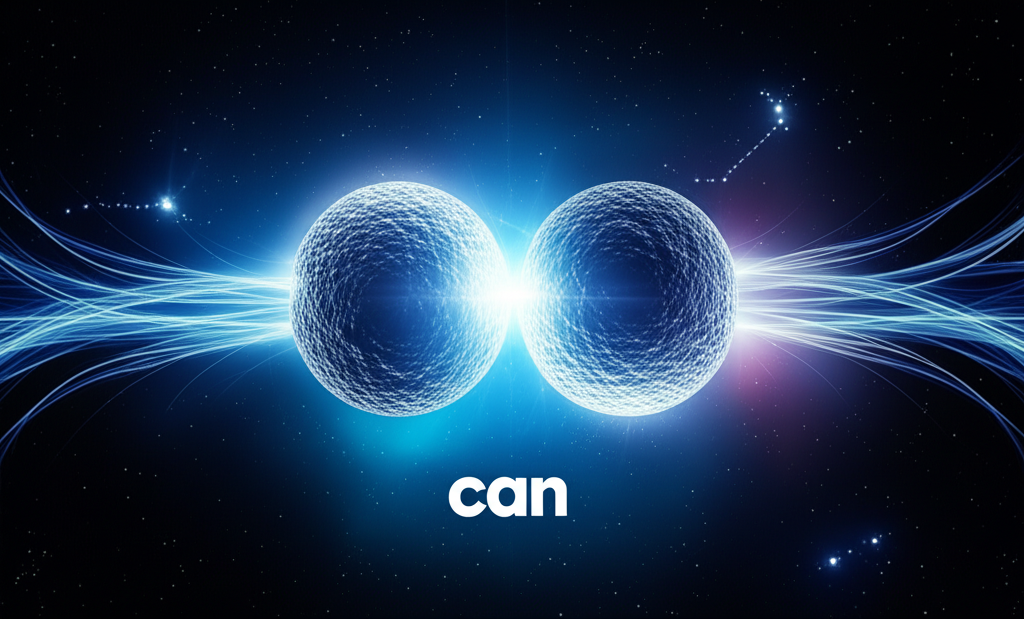
Can particles truly be in two places at once? For anyone accustomed to the predictable, solid world of classical physics, this question sounds like something out of science fiction. Yet, in the baffling realm of quantum mechanics, where the rules of everyday experience break down, the answer is a resounding and genuinely shocking yes. This phenomenon, known as quantum superposition, challenges our most fundamental intuition about reality, revealing a universe far more mysterious and probabilistic than we could ever imagine. It’s a cornerstone of what makes the quantum world so bizarre, so powerful, and so full of potential.
Classical Intuition vs. Quantum Enigma
In our macroscopic world, an object occupies one definite location at any given time. A car is either in the driveway or on the road, not both. A ball is either on the table or on the floor. This is common sense; it’s how we’ve always understood physical reality. However, as we delve into the subatomic scale—the world of electrons, photons, and atoms—this common sense utterly collapses. Here, particles don’t just exist in one state or another; they can exist in all possible states simultaneously until observed.
The Heart of the Mystery: Quantum Superposition
Quantum superposition is the fundamental principle that allows a quantum particle to exist in multiple states at the same time. These states can be different locations, different energy levels, or different spins. Imagine a coin spinning in the air: before it lands, it’s neither heads nor tails, but a blur of both possibilities. This analogy, while imperfect, gives a glimpse into superposition. For a quantum particle, it truly is in all those states at once until a measurement forces it to “choose” one. It’s not just that we don’t know where it is; the particle itself doesn’t have a definite location until measured.
How Can We Observe Superposition? The Double-Slit Experiment
The most famous and compelling evidence for quantum superposition comes from the double-slit experiment. This experiment, performed initially with light and later with electrons, atoms, and even molecules, perfectly illustrates the peculiar nature of quantum particles.
Imagine firing a stream of electrons at a barrier with two tiny slits, behind which is a detector screen. If electrons were classical particles, we’d expect to see two distinct bands on the screen, corresponding to the electrons passing through one slit or the other.
However, what we observe is an interference pattern—multiple bands of varying intensity, just like water waves passing through two slits would create. This pattern is characteristic of waves, where peaks and troughs combine or cancel each other out. This suggests that each individual electron, even when fired one at a time, somehow passes through both slits simultaneously and interferes with itself before hitting the detector.
The truly mind-bending part occurs when scientists try to determine which slit the electron goes through. If a detector is placed at the slits to observe the electron’s path, the interference pattern disappears! Instead, we see the two distinct bands expected of classical particles. The act of measurement seemingly “collapses” the electron’s superposition, forcing it to choose a definite path. It stops behaving like a wave and starts behaving like a particle.
The Role of Measurement and the Collapse of the Wave Function
The “collapse of the wave function” is the term physicists use to describe what happens when a quantum system in superposition interacts with its environment or is observed. Before measurement, the particle is described by a wave function, a mathematical construct that defines the probability of finding the particle in any given state. At the moment of measurement, this wave function instantaneously “collapses” into a single, definite state. The particle transitions from being a superposition of possibilities to being a concrete reality.
The precise mechanism of this collapse and what constitutes an “observation” remains one of the deepest mysteries in quantum mechanics, famously encapsulated by Schrödinger’s cat paradox. Does consciousness play a role? Is it merely any interaction with a macroscopic system? These questions continue to fuel debate among physicists and philosophers alike.
Beyond Location: Superposition in Other Properties
While the idea of a particle being in two places at once is particularly striking, superposition isn’t limited to location. Quantum particles can also be in a superposition of other properties:
Spin: An electron can be “spin-up” and “spin-down” at the same time until measured.
Energy Levels: An atom can be in a superposition of multiple energy states.
Polarization: A photon can be horizontally and vertically polarized simultaneously.
This broader application of superposition highlights its fundamental nature as an inherent property of quantum reality, influencing every aspect of how these tiny constituents of matter behave.
What Can Superposition Do For Us? Applications and Implications
The startling reality of superposition isn’t just a theoretical curiosity; it’s the engine behind revolutionary new technologies:
Quantum Computing: The most prominent application. Unlike classical bits that can only be 0 or 1, quantum bits (qubits) can be 0, 1, or a superposition of both. This allows quantum computers to perform multiple calculations simultaneously, exponentially increasing their processing power for certain types of problems that are intractable for even the most powerful conventional supercomputers.
Quantum Cryptography: Superposition and entanglement (a related quantum phenomenon) are used to create ultra-secure communication channels. Any attempt to eavesdrop immediately alters the quantum state, alerting the parties involved.
Precision Sensing: Quantum phenomena can lead to incredibly sensitive measurement devices, useful in fields from medicine to geology.
The Unseen Hand: Where Else Can Superposition Lead Us?
The full implications of superposition continue to unfold. Scientists are exploring if superposition effects can be scaled up to larger and larger objects. While decoherence—the loss of quantum properties due to interaction with the environment—makes maintaining superposition challenging for macroscopic objects, ongoing research aims to extend the boundaries. The very nature of reality, the boundary between the quantum and classical worlds, and the role of observation are still being rigorously debated and investigated.
The fact that a single particle can literally occupy multiple positions simultaneously is a profound testament to the strangeness and beauty of the universe at its most fundamental level. It challenges our common sense, stretches our imagination, and underpins technologies that promise to reshape our future. The quantum world is not just a smaller version of our own; it operates under its own set of astonishing rules, perpetually inviting us to question everything we thought we knew.
0 Comments