- What is Time Dilation? The Core Concept
- The Velocity Factor: Time Slows Down When You Speed Up
- Gravity's Grasp: How Mass Bends Time Itself
- What This Means for Everyday Life (and Beyond)
- The Mind-Blowing Reality of Time Dilation
What if the very fabric of time wasn’t a constant, unyielding river, but rather a flexible stream that flows at different rates depending on your circumstances? This isn’t a plot point from a science fiction movie, but a profound reality confirmed by modern physics: time dilation. It’s one of the most counter-intuitive yet elegantly proven consequences of Albert Einstein’s theories of relativity, fundamentally altering our understanding of how clocks tick across the universe. Prepare to have your perception of time stretched and warped, as we delve into this mind-bending phenomenon.
What is Time Dilation? The Core Concept
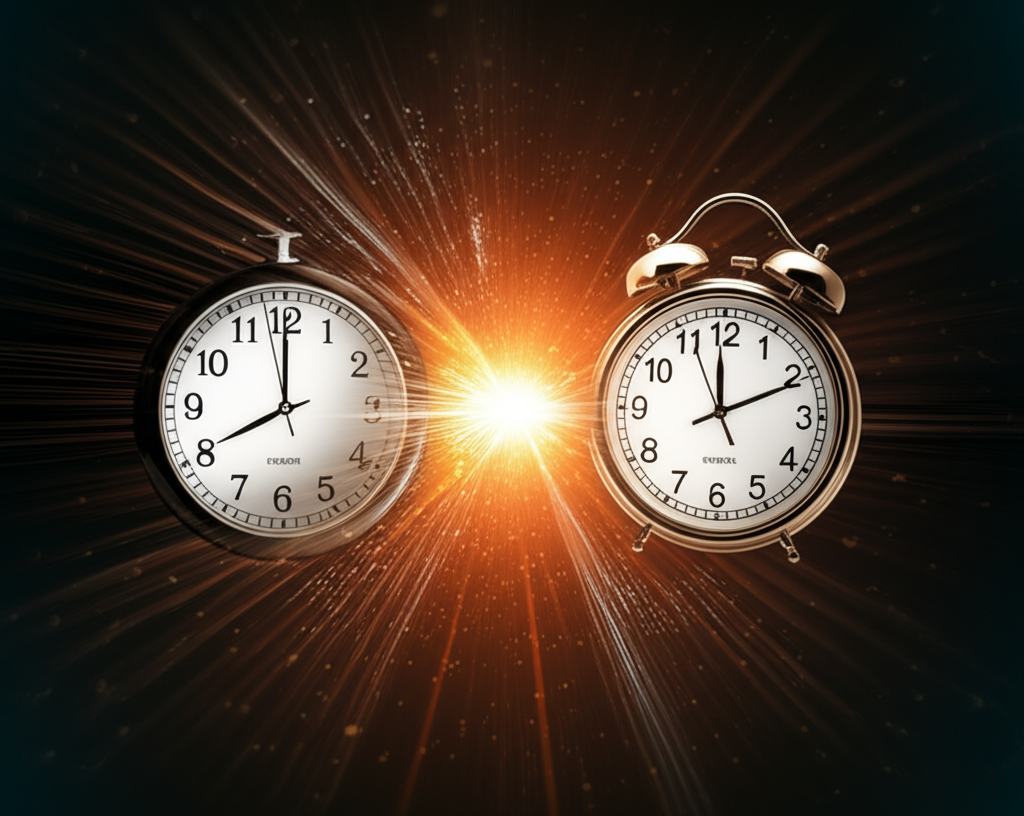
At its heart, time dilation means that two observers, each with their own clock, will measure different durations for the same event if they are moving relative to each other or are in different gravitational fields. Simply put, time passes differently for different observers. This isn’t an illusion or a psychological effect; it’s a measurable, physical difference in the passage of time.
Einstein introduced two primary forms of time dilation, stemming from his Special Theory of Relativity (1905) and General Theory of Relativity (1915):
Special Relativistic Time Dilation: This occurs due to relative velocity between observers. The faster an object moves relative to another, the slower time passes for the moving object from the perspective of the stationary observer.
General Relativistic Time Dilation: This occurs due to differences in gravitational potential. Time passes slower in stronger gravitational fields (closer to massive objects) compared to weaker fields (further away).
The Velocity Factor: Time Slows Down When You Speed Up
Imagine you’re on Earth, watching a spaceship zoom past at an incredibly high speed. According to Einstein’s Special Theory of Relativity, your clock and the clock on board the spaceship will not tick at the same rate. From your perspective, time on the spaceship will appear to be running slower. Conversely, from the perspective of someone on the spaceship, your clock on Earth would appear to run slower.
This phenomenon arises from two fundamental postulates of Special Relativity:
1. The laws of physics are the same for all observers in uniform motion.
2. The speed of light in a vacuum is the same for all observers, regardless of the motion of the light source or the observer.
To reconcile these postulates, something seemingly impossible must happen: time itself must adjust. Consider a thought experiment: a “light clock” that ticks by a photon bouncing between two mirrors. If this clock is moving, the light has to travel a longer diagonal path from the perspective of a stationary observer to complete one “tick.” Since the speed of light is constant for both observers, the only way for the moving light to cover a longer distance in the same amount of time would be if the time itself stretched out for the moving clock.
Real-World Evidence of Velocity Time Dilation:
Muon Decay: Muons are unstable subatomic particles created in Earth’s upper atmosphere by cosmic rays. They have a very short natural lifespan (about 2.2 microseconds). If time dilation didn’t exist, very few muons would survive the journey down to the Earth’s surface. However, due to their extremely high speeds, time dilates for them, extending their perceived lifespan from our frame of reference, allowing a significant number to reach us.
Atomic Clocks in Airplanes: Experiments involving highly precise atomic clocks flown around the world have demonstrated time dilation. Clocks on planes moving at high speeds accrue slightly less time than stationary ground clocks, though the effects are minuscule compared to the muon example.
Gravity’s Grasp: How Mass Bends Time Itself
General Relativistic Time Dilation is even more mind-bending. It tells us that gravity isn’t just a force that pulls things together; it’s a manifestation of massive objects warping the fabric of spacetime itself. And this warping impacts the flow of time. Clocks located in stronger gravitational fields will run slower than clocks in weaker gravitational fields.
Think of it this way: someone living on a mountain top, further away from Earth’s massive core, would experience time passing slightly faster than someone living at sea level. The difference is incredibly small for Earth’s gravity, but it’s there.
Crucial Role in Modern Technology:
The most common and critical application of general relativistic time dilation (along with special relativistic effects) is in the Global Positioning System (GPS). GPS satellites orbit Earth at an altitude where gravity is slightly weaker than on the surface, and they also move at high speeds.
Due to their higher altitude (weaker gravity), their on-board clocks run faster by about 45 microseconds per day compared to ground clocks.
Due to their high speed (velocity time dilation), their clocks run slower by about 7 microseconds per day.
The net effect is that without constant adjustments, GPS satellite clocks would gain about 38 microseconds per day relative to ground clocks. This wouldn’t seem like much, but given that radio waves travel at the speed of light, an error of 38 microseconds would translate to a position error of about 10 kilometers per day. Without accounting for time dilation, GPS systems would be completely useless.
What This Means for Everyday Life (and Beyond)
For our daily routines, time dilation remains imperceptible. The speeds we encounter and the gravitational differences we experience on Earth are too small to produce noticeable effects on human lifespan or perception. However, the theoretical and practical implications are profound.
Interstellar Travel: For hypothetical future space travelers journeying at relativistic speeds, time dilation would mean they age slower than people left on Earth. A round trip that felt like a few years for the astronauts might correspond to decades or even centuries on their home planet. This presents both a fascinating possibility and a poignant challenge for maintaining connections across vast cosmic distances.
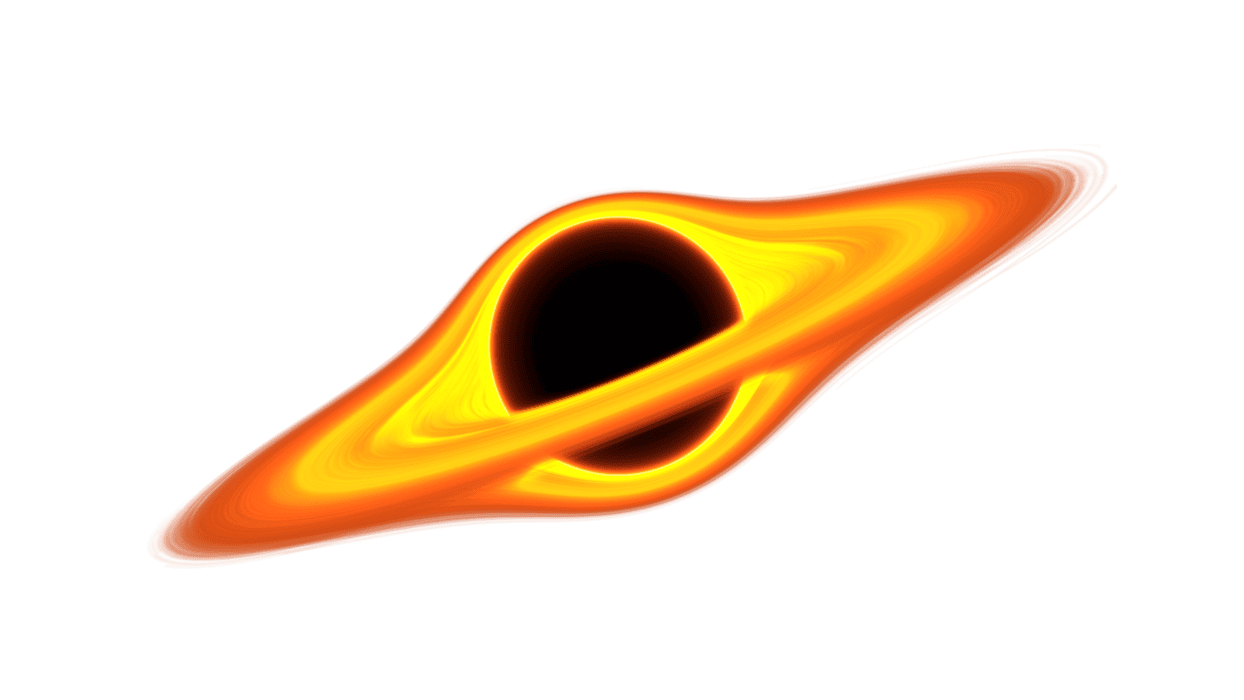
Black Holes: The closer you get to a black hole, the more extreme the gravitational time dilation becomes. At the event horizon – the point of no return – time from an outside observer’s perspective would appear to slow down infinitely for anything falling in. This conceptual boundary offers a glimpse into the most extreme environments in the universe where time itself takes on a truly bizarre character.
The Mind-Blowing Reality of Time Dilation
Time dilation isn’t some abstract mathematical curiosity; it’s a verified aspect of our universe that demonstrates that time is not an absolute, universal constant. Instead, it’s relative, tied to motion and gravity, interwoven with space into a single dynamic fabric called spacetime. This idea forces us to abandon our intuitive, Newtonian understanding of time as a fixed universal drumbeat.
Einstein’s theories don’t just describe how things move; they reveal a deeper truth about the nature of reality itself. The fact that time can literally stretch and compress, making clocks tick at different rates depending on their journey through spacetime, is perhaps one of the most intellectually thrilling discoveries in human history. It reminds us that the universe is far stranger and more beautiful than we could ever imagine, always ready to challenge our preconceived notions and expand our understanding of existence.
In conclusion, time dilation is a testament to the astonishing genius of Einstein and the profound truths hidden within the laws of physics. It’s a reminder that our universe is a place of wonder, where even the most fundamental concepts like time can behave in ways that are truly mind-blowing.
0 Comments