- What Exactly Are Fossils? The Art of Fossilization
- Unraveling The Past: What Fossils Reveal
- The Future Through The Past: Why Fossils Matter
- Preserving The Ancient Narratives
The Earth, a vast repository of time, holds within its layers the silent, stone-encoded narratives of life that thrived millions of years ago. These captivating remnants, known as fossils, are far more than mere rocks; they are the ancient stories of our planet, preserved through unimaginable stretches of geological time. Each fossil excavated from the ground offers a unique window into prehistoric ecosystems, revealing the astounding diversity of life, the dramatic shifts in climate, and the grand evolutionary journey that has shaped the world we inhabit today.
What Exactly Are Fossils? The Art of Fossilization
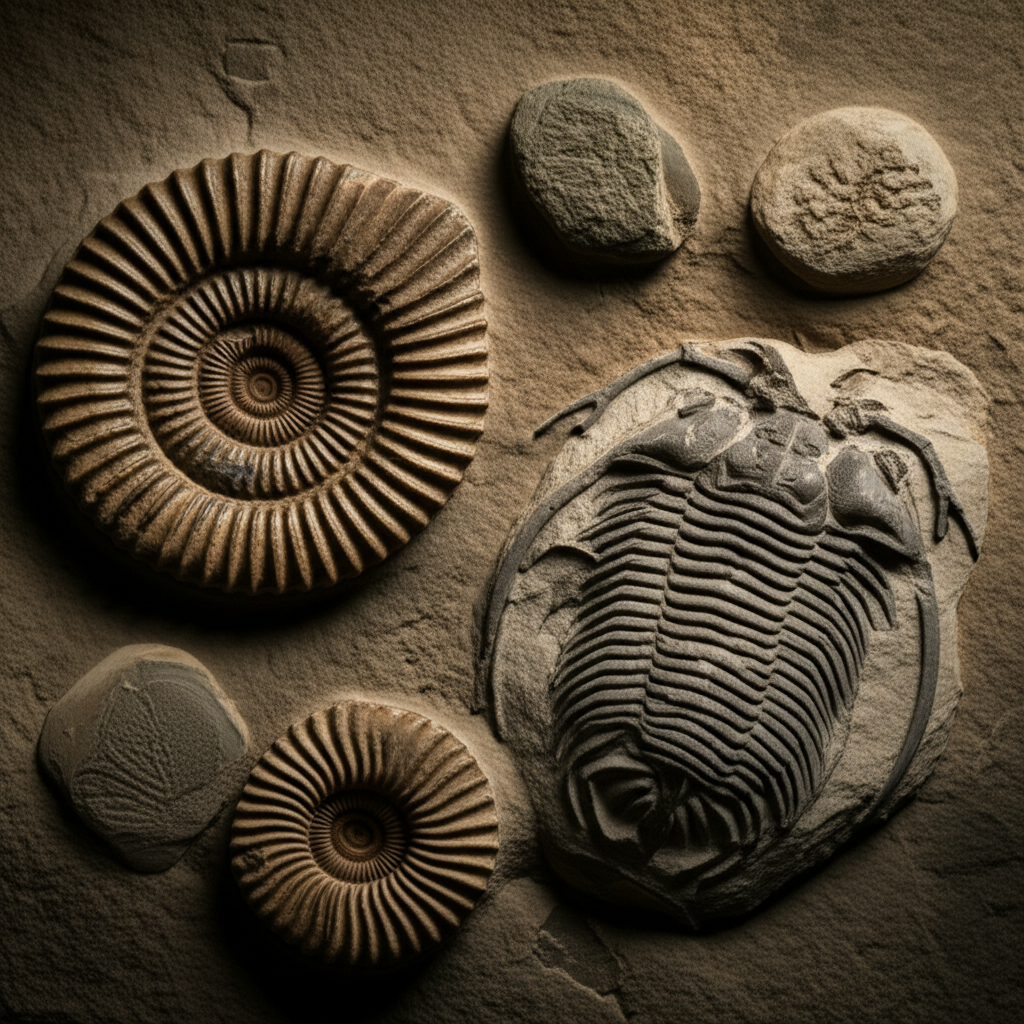
Fossils are the preserved remains, impressions, or traces of organisms from a past geological age. While often associated with dinosaur bones, “the” term encompasses a much broader spectrum of preservation, from microscopic bacteria to colossal trees. The process of fossilization is incredibly rare and requires a precise set of circumstances, making each discovery all the more precious.
Typically, for an organism to become a fossil, its remains must be buried rapidly after death, often by sediment like mud, ash, or sand. This burial shields it from scavengers and decomposition. Over millions of years, as layers of sediment accumulate, pressure mounts, and minerals dissolved in groundwater slowly replace the organic material of the remains, turning them into stone – a process known as permineralization. This often preserves the intricate internal structures of bones, wood, or shells.
However, permineralization isn’t the only way life becomes fossilized. Other forms of preservation include:
Molds and Casts: When an organism decays completely, leaving an empty space (a mold) in the surrounding sediment. This mold can then be filled with minerals, creating a cast of the original organism.
Carbonization: Organisms (often plants or soft-bodied creatures) are compressed, squeezing out liquids and gases, leaving behind a thin film of carbon that preserves their outline.
Amber Preservation: Small insects and occasionally other organic matter can become trapped in tree resin, which hardens into amber, preserving them in exquisite detail.
Trace Fossils: These aren’t the organisms themselves but rather evidence of their activities, such as footprints, burrows, coprolites (fossilized dung), or teeth marks. They provide invaluable insights into ancient behaviors.
Unraveling The Past: What Fossils Reveal
Paleontologists, the scientists who study fossils, are akin to detectives piecing together an ancient crime scene. Every fossil is a clue, contributing to a colossal puzzle that reconstructs Earth’s history. By studying fossils, scientists can determine:
Evolutionary Pathways: Fossils provide direct evidence of how species have changed over millions of years, illustrating the origins of new traits, the divergence of lineages, and the gradual adaptation to changing environments. The fossil record is fundamental to understanding the theory of evolution.
Ancient Environments and Climates: The types of organisms preserved in a certain area can tell us a great deal about the conditions that existed during their lifetime. For example, finding marine fossils in a desert indicates that the area was once underwater. Plant fossils can reveal past temperatures, rainfall, and atmospheric composition.
Biodiversity Through Time: Fossils showcase the immense range of life that has existed on Earth, including countless species that are now extinct. This helps us understand patterns of biodiversity and the driving forces behind mass extinction events.
Behavior and Ecology: Trace fossils are particularly insightful here. Fossilized footprints can tell us about an animal’s gait, speed, and whether it was solitary or lived in herds. Coprolites can reveal an animal’s diet, while burrows shed light on ancient dwelling habits.
Geological Time Calibration: Fossils, particularly those of widespread, rapidly evolving species (index fossils), help paleontologists date rock layers and correlate geological events across different continents.
Imagine discovering the complete skeleton of a woolly mammoth. Not only does it tell us about the animal itself, but analyzing its stomach contents (if preserved) can tell us about the vegetation of its time, surrounding pollen can reveal the climate, and distinct bite marks on its bones might even point to ancient predators or scavengers.
The Future Through The Past: Why Fossils Matter
The study of fossils is not merely an academic exercise; it has profound implications for our understanding of the present and our predictions for the future.
Understanding Climate Change: By examining the fossil record, scientists can reconstruct past climate patterns, including periods of rapid warming or cooling, and their effects on ecosystems. This historical context provides crucial data for modeling future climate scenarios and understanding the long-term impact of current environmental changes.
Resource Exploration: Many essential resources, such as coal, oil, and natural gas, are themselves fossilized organic matter or are found in geological formations dated and characterized using fossils. Knowledge of ancient depositional environments helps in locating these vital energy sources.
Conservation Biology: By understanding past extinction events and their causes, we can better appreciate the fragility of current ecosystems and develop more effective strategies for preserving biodiversity. Fossils remind us that life is resilient, but not invincible.
* Inspiring Curiosity: Perhaps most importantly, fossils ignite curiosity and wonder. They connect us to a deep past, reminding us of the incredible journey life has taken and our own small but significant place in that ongoing story. The sheer magnificence of ancient creatures like dinosaurs or the intricate beauty of an ammonite shell continues to inspire scientists, artists, and the public alike.
Preserving The Ancient Narratives
Given their scientific and cultural value, the preservation of fossils is paramount. This involves careful excavation techniques, appropriate storage in museums and research institutions, and robust legal frameworks to prevent illicit trade and damage to fossil sites. Public education also plays a vital role, fostering respect for these irreplaceable remnants of deep time.
In conclusion, fossils are truly fascinating ancient stories revealed, each fragment a testament to the enduring power of life and the relentless march of geological time. They bridge the immense chasm between the present and the past, offering not just glimpses into bygone eras, but also profound lessons that resonate with our lives today and guide our path into the future. Each discovery deepens our appreciation for the intricate tapestry of life that has graced our spinning blue planet for billions of years.
0 Comments