- The Cosmic Nurseries: How Star Formation Begins in Molecular Clouds
- Gravitational Collapse: The Spark of Stellar Life
- The Protostar Phase: A Star in the Making
- Ignition: How a Star Truly Comes Alive
- Diversity in Stellar Births
- Conclusion
Exactly how does the universe craft its radiant beacons, the stars that illuminate the cosmos and make life possible? This question has captivated humanity for millennia, and while the process remains profoundly mysterious in many aspects, scientific inquiry has unveiled a breathtaking journey from inert gas and dust to fiery, self-luminous celestial bodies. Star formation is not a gentle unfolding but a violent, dynamic ballet of gravity, pressure, and nuclear alchemy, constantly reshaping our galaxies. Understanding this stellar genesis is crucial to comprehending the very origins of planets, elements, and ultimately, ourselves.
The Cosmic Nurseries: How Star Formation Begins in Molecular Clouds
The story of a star’s birth invariably begins in the darkest, coldest, and densest regions of space: giant molecular clouds. These colossal complexes, spanning hundreds of light-years across, are vast reservoirs of molecular hydrogen, helium, and trace amounts of dust. Far from the chaotic brilliance of established stars, these nurseries are frigid, with temperatures barely above absolute zero, keeping the gas remarkably stable. However, within their seemingly placid depths lie the seeds of stellar future.
These molecular clouds are not entirely uniform. Turbulence, supernova shockwaves, or even galactic spiral arms can create pockets of slightly higher density within them. It is in these denser clumps that the relentless force of gravity begins its quiet work. Over immense timescales, these gravitational instabilities draw more and more material together, slowly overcoming the outward pressure of the gas. Think of it as a cosmic snowball effect, where tiny initial differences in density trigger an irreversible inward collapse.
Gravitational Collapse: The Spark of Stellar Life
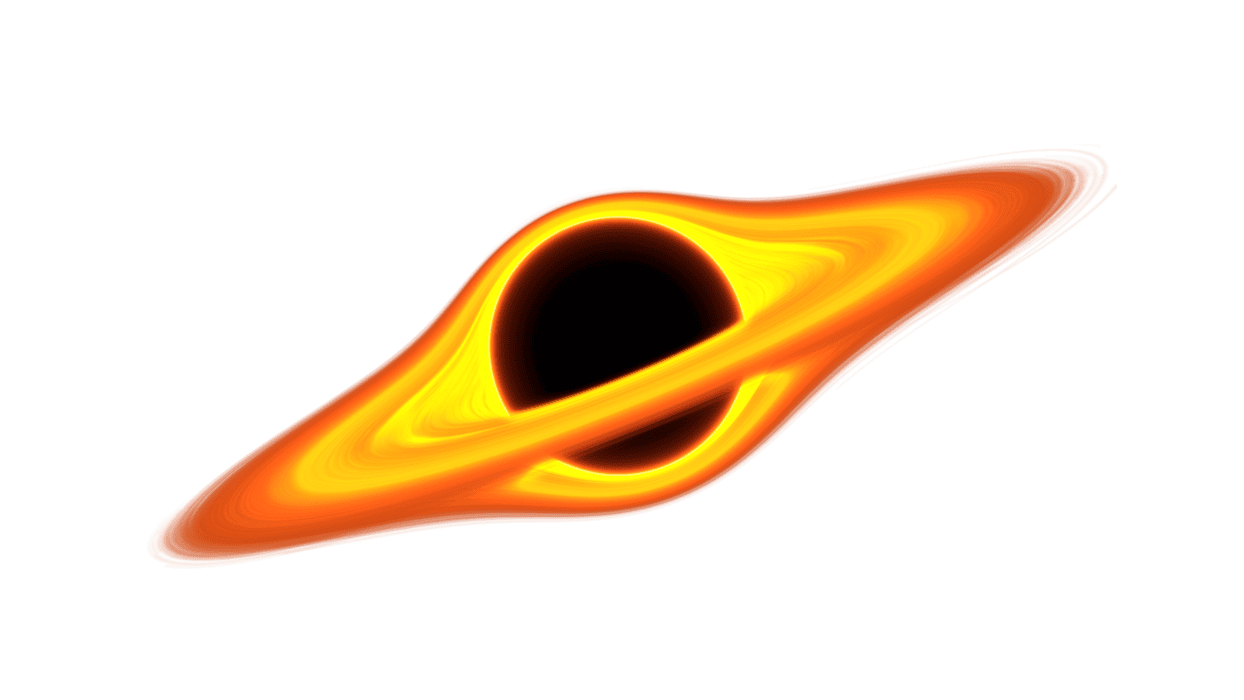
As these denser clumps gather mass, their gravitational pull intensifies, accelerating the collapse. This phase is crucial. The collapsing material conserves angular momentum, causing the gas and dust to flatten into a rotating disk, often referred to as a protoplanetary disk or accretion disk, around a central, ever-densifying core. This disk is where planets will eventually form, but for now, its primary role is to funnel material inward towards the nascent star.
The center of the collapsing cloud becomes progressively hotter and denser. Gravitational potential energy is converted into thermal energy as atoms collide more frequently and violently. This superheated core, though not yet a star, is now designated a protostar. It’s an astronomical teenager, still growing, still shrouded in the remnants of its birth cloud, often hidden from direct optical view by thick veils of dust.
The Protostar Phase: A Star in the Making
A protostar continues to accumulate mass from its surrounding accretion disk, a process that can last for hundreds of thousands, if not millions, of years. During this period, the protostar radiates energy primarily from the heat generated by gravitational contraction. It’s a luminous object, but its energy source is not yet nuclear fusion.
Perhaps one of the most dramatic events during the protostar phase is the emission of powerful stellar jets and outflows. As material spirals inward through the accretion disk, some of it is ejected perpendicularly from the poles of the protostar at incredible speeds. These jets, often bipolar, clear away surrounding gas and dust, eventually allowing the protostar to become visible and signifying a crucial stage of its development. They are also vital in regulating the protostar’s angular momentum, preventing it from spinning too fast.
Ignition: How a Star Truly Comes Alive
The true birth of a star, its moment of ignition, occurs when the core of the protostar finally reaches the critical temperature and pressure required to initiate nuclear fusion. For a star like our Sun, this means the core temperature must exceed approximately 15 million degrees Celsius (27 million degrees Fahrenheit). At this point, the immense gravitational forces pressing inward are finally balanced by the equally immense outward pressure generated by the continuous fusion reactions, where hydrogen atoms fuse to form helium, releasing enormous amounts of energy in the process.
This newfound equilibrium marks the star’s transition onto the main sequence, where it will spend the vast majority of its life. From this point forward, the star is a self-sustaining thermonuclear furnace, shining brightly and steadily, converting mass into energy according to Einstein’s famous equation, E=mc². Our Sun has been on the main sequence for about 4.6 billion years and has another 5 billion years or so to go.
Diversity in Stellar Births
While the fundamental process of gravitational collapse and nuclear ignition is universal, the specific details and timescales of star formation can vary dramatically depending on the star’s ultimate mass. Massive stars, hundreds of times the mass of the Sun, form much faster and burn through their fuel at an accelerated rate, living brilliant but tragically short lives. Smaller, less massive stars, like red dwarfs, take far longer to form and can shine for trillions of years.
Furthermore, not all stars are born alone. A significant fraction of stars, including our nearest neighbor Alpha Centauri, are born in binary or multiple star systems, gravitationally bound to one or more companions. The interplay of gravity in these close-knit stellar families adds another layer of complexity to their formation dynamics.
Conclusion
The birth of a star is a profound and spectacular cosmic event, a testament to the immense power of gravity and nuclear forces. From a diffuse cloud of gas and dust, a star emerges, radiating light and heat for billions of years, enriching the universe with heavier elements through its eventual demise, and providing the conditions necessary for planets and life to form. Each twinkling star in our night sky represents a vivid chapter in this grand cosmic narrative, a stunning mystery unveiled through patient observation and scientific understanding, and a constant reminder of the dynamic, ever-evolving nature of the universe we inhabit.
0 Comments