- The Amazing Story of Fossils Revealed
- What Exactly Are Fossils? Defining the Echoes of Antiquity
- The Silent Witnesses of Time: Unlocking Earth's Past Narratives
- A Journey Through Deep Time: The Pioneers and Their Discoveries
- Decoding the Past: The Science of Paleontology
- Preserving The Legacy: Challenges and Future Insights
The Amazing Story of Fossils Revealed
The Earth, a dynamic planet, holds within its layers a profound and captivating history, meticulously recorded not in words, but in the petrified remains of ancient life: fossils. These remarkable relics offer us an extraordinary window into worlds long past, allowing us to reconstruct ecosystems, track evolutionary journeys, and understand the deep timescales that shaped our present. From microscopic organisms to colossal dinosaurs, fossils are silent witnesses to a staggering parade of life, each one telling a segment of an unfolding story that stretches back billions of years. Unlocking these ancient narratives is the enduring challenge and immense privilege of paleontology, a science that continually redefines our understanding of life’s resilience and diversity.
What Exactly Are Fossils? Defining the Echoes of Antiquity
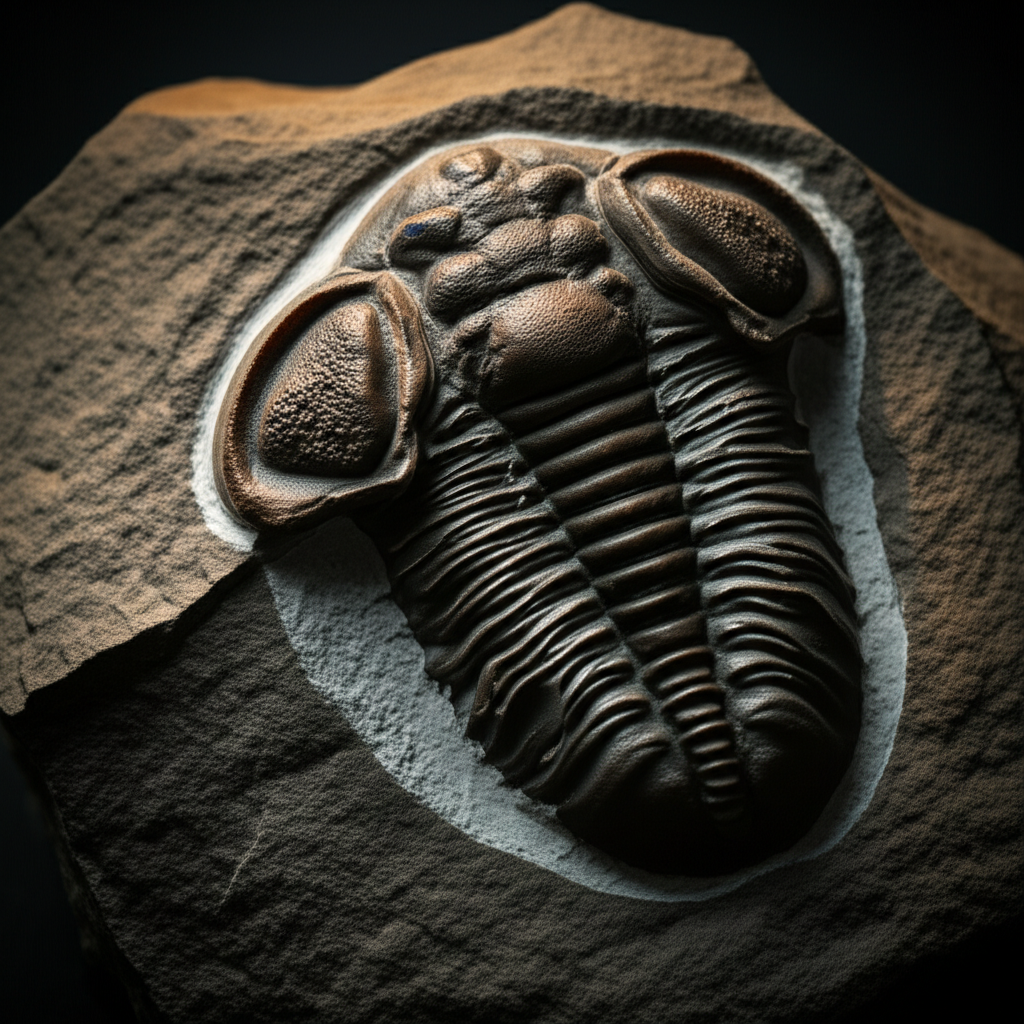
At its core, a fossil is any preserved trace of life from a past geological age. While often associated with bones or shells, fossilization encompasses a much broader spectrum of preservation. The most common method is permineralization, where minerals carried by water seep into porous tissues (like bone or wood), crystallizing and solidifying the original structure as the organic material decays. This process creates a stony replica, preserving intricate details.
Beyond permineralized remains, we find molds and casts, formed when an organism decays, leaving an impression in sediment (a mold), which is then filled by other sediments that harden (a cast). Compression fossils, typical for plants, occur when an organism is flattened by layers of sediment, leaving a carbon film outline. Then there are trace fossils – not the organism itself, but evidence of its activity, such as footprints, burrows, coprolites (fossilized feces), or tooth marks. Even amber, fossilized tree resin, can encapsulate insects and small vertebrates, offering exquisite, three-dimensional preservation. Each type of fossilization presents unique insights into the form, behavior, and environment of ancient life, painting a mosaic of forgotten worlds.
The Silent Witnesses of Time: Unlocking Earth’s Past Narratives
Fossils are far more than mere curiosities; they are foundational evidence for the theory of evolution, eloquently demonstrating how life has changed and diversified over eons. By charting the appearance and disappearance of different species across the geological record, paleontologists can observe patterns of adaptation, speciation, and extinction. For example, the fossil record clearly illustrates the evolution of land vertebrates from fish, evidenced by transitional forms like Tiktaalik, which possessed features of both aquatic and terrestrial animals.
Beyond evolution, fossils are crucial for paleoenvironmental reconstructions. The types of organisms preserved in a particular rock layer can indicate whether an area was once a shallow sea, a dense forest, a desert, or a swamp. Marine fossils in mountain ranges, for instance, tell us about ancient oceans and tectonic plate movements. Plant fossils provide clues about ancient climates and atmospheric compositions, while pollen can reveal past vegetation zones. By piecing together these biological and environmental puzzle pieces, scientists can visualize entire ecosystems that existed millions of years before humans walked the Earth.
A Journey Through Deep Time: The Pioneers and Their Discoveries
The systematic study of fossils is a relatively modern science, but the fascination with these “earth bones” is ancient. Modern paleontology truly began to flourish in the 18th and 19th centuries, spearheaded by intrepid individuals who dared to look beyond biblical interpretations of Earth’s history. Mary Anning, an unschooled but brilliant fossil collector from Lyme Regis, England, made groundbreaking discoveries of ichthyosaurs, plesiosaurs, and pterosaurs, defying the scientific establishment of her time with her keen observations and meticulous collection methods. Her work helped to establish the reality of extinction and provided crucial evidence for deep geological time.
Georges Cuvier, a French naturalist, further cemented the concept of extinction through his comparative anatomy studies, demonstrating that many fossil species had no living counterparts. Later, Charles Darwin’s On the Origin of Species provided a theoretical framework that explained the patterns observed in the fossil record, though the record itself was still patchy when he wrote his seminal work. Since then, countless discoveries, from the extraordinary Cambrian explosion fossils of the Burgess Shale to the iconic dinosaurs of the American West, have continually enriched the narrative of life on Earth, revealing an ever-more complex and awe-inspiring past.
Decoding the Past: The Science of Paleontology
Paleontology is an interdisciplinary field, drawing on geology, biology, chemistry, and physics to interpret its finds. Once a fossil is unearthed, often through painstaking excavation, it undergoes meticulous preparation in a laboratory. This involves carefully cleaning the specimen, removing surrounding rock, and often stabilizing fragile remains. Dating methods are then employed to determine the fossil’s age. Relative dating places fossils in a chronological sequence based on their position in rock layers, while absolute dating techniques, like radiometric dating (measuring the decay of radioactive isotopes), provide precise numerical ages.
Beyond age and identity, paleontologists analyze the morphology (form and structure) of fossils to infer diet, locomotion, and sensory capabilities. Biomechanical studies help understand how ancient organisms moved and interacted with their environment. The context of a fossil – the rock type, associated plant and animal remains, and even sediment structures – provides vital clues to reconstruct the ancient ecosystem. Digital tools, such as CT scanning and 3D modeling, now allow scientists to virtually dissect and reconstruct fossils without damaging them, unlocking even more secrets from these invaluable windows into the past.
Preserving The Legacy: Challenges and Future Insights
The amazing story of fossils is far from complete. While vast amounts of knowledge have been gleaned, a substantial portion of Earth’s history remains locked away, either undiscovered or poorly understood. Finding fossils is still largely a matter of luck, combined with geological knowledge and persistent fieldwork in remote and often harsh environments. Furthermore, the ethical considerations surrounding fossil discovery and ownership are increasingly important, balancing scientific access with the needs of local communities and sovereign nations.
Looking ahead, new technologies promise to revolutionize the field. Advanced imaging techniques can reveal microscopic structures, helping to understand cellular biology of extinct organisms. Geochemical analysis of fossilized tissues can provide insights into diet, metabolism, and even color. The burgeoning field of paleogenomics, though challenging due to DNA degradation, offers the tantalizing prospect of extracting genetic material from exceptionally preserved fossils. As technology advances and our understanding of Earth’s complex systems deepens, the amazing story of fossils will continue to unfold, offering ever more detailed and profound insights into the origins, evolution, and future of life on our planet.
0 Comments