
- Unpacking the Helix: The Architecture of Life
- The Blueprint of Life: How DNA Directs Function
- The Complexity and Efficiency of DNA Storage
- Beyond the Genetic Code: Non-coding DNA and The Epigenetic Landscape
- The Role of DNA in Individuality and Evolution
- The Future of DNA: Medicine and Beyond
- Conclusion
The human body is an astonishing testament to biological engineering, and at the very core of its existence lies a molecule of unparalleled elegance and complexity: DNA. Deoxyribonucleic acid, or DNA, is far more than just a chemical compound; it is the ultimate blueprint, the instruction manual that dictates the development, functioning, and reproduction of every known living organism on Earth. Its intricate structure and vast information storage capacity are indeed among the most stunning wonders of our biological world.
Unpacking the Helix: The Architecture of Life
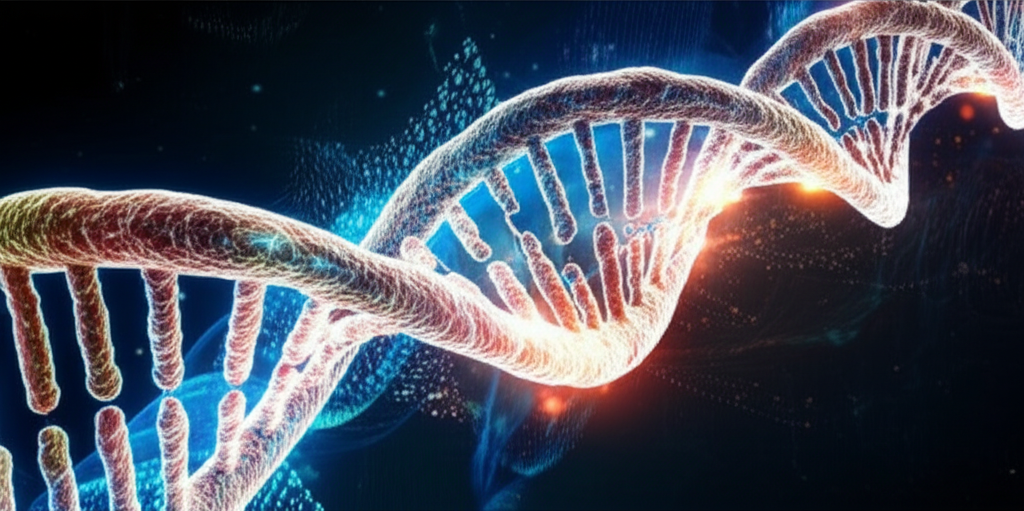
The story of human DNA begins with its remarkable structure, famously discovered by James Watson and Francis Crick in 1953, with crucial contributions from Rosalind Franklin and Maurice Wilkins. DNA is organized into a double helix, resembling a twisted ladder. Each “side” of this ladder is a backbone made of alternating sugar and phosphate molecules. The “rungs” connecting these backbones are formed by pairs of four nitrogenous bases: adenine (A), thymine (T), guanine (G), and cytosine (C).
The beauty of this structure lies in its specificity: adenine always pairs with thymine (A-T), and guanine always pairs with cytosine (G-C). This complementary pairing is fundamental to how DNA stores and transmits genetic information. If you know the sequence of bases on one strand, you automatically know the sequence on the other. This self-replicating nature ensures that when cells divide, an exact copy of the genetic material is passed on, maintaining the integrity of the organism’s unique instruction set.
The Blueprint of Life: How DNA Directs Function
Within this elegant double helix lies the entirety of our genetic heritage, encoded in the specific sequence of those A, T, C, and G bases. Segments of DNA known as genes contain the instructions for building proteins. Proteins are the workhorses of the cell, performing a vast array of functions from forming structural components (like collagen) to catalyzing chemical reactions (enzymes) and transmitting signals (hormones).
The process by which DNA’s information is translated into proteins involves two main steps:
1. Transcription: A gene’s DNA sequence is copied into a messenger RNA (mRNA) molecule.
2. Translation: The mRNA molecule travels to a ribosome, which reads the sequence and, with the help of transfer RNA (tRNA), assembles the corresponding amino acids into a specific protein.
The human genome, comprising all the DNA in a human cell, contains approximately 3 billion base pairs distributed across 23 pairs of chromosomes. This vast library of information encompasses roughly 20,000 to 25,000 protein-coding genes, alongside a significant amount of non-coding DNA, which we are still only beginning to fully understand.
The Complexity and Efficiency of DNA Storage
One of the most mind-boggling aspects of human DNA is the sheer amount of information it contains and how it’s meticulously packaged. If you were to unravel all the DNA from a single human cell and stretch it out, it would extend for about 2 meters (6.5 feet). Yet, this immense length is condensed and precisely folded to fit within the microscopic nucleus of a cell, which is only about 6 micrometers in diameter.
This incredible feat of compression is achieved through several levels of coiling and folding. The DNA helix is wrapped around structural proteins called histones, forming bead-like structures called nucleosomes. These nucleosomes are then further coiled and compacted into chromatin fibers, which are themselves folded into the dense structures we recognize as chromosomes. This hierarchical organization not only allows for efficient storage but also plays a critical role in regulating gene expression, ensuring that the right genes are switched “on” or “off” at the right time and in the right cells.
Beyond the Genetic Code: Non-coding DNA and The Epigenetic Landscape
For many years, large portions of our DNA were dismissed as “junk DNA” because they didn’t code for proteins. However, modern research has unveiled the extraordinary importance of this non-coding DNA. It includes regulatory sequences that control when and where genes are expressed, sequences that produce various types of RNA molecules (like transfer RNA and ribosomal RNA), and regions involved in chromosome structure and integrity, such as telomeres at the ends of chromosomes that protect genetic information during replication.
Even more fascinating is the field of epigenetics, which explores how environmental factors can influence gene expression without altering the underlying DNA sequence itself. Epigenetic modifications, such as DNA methylation and histone modification, can act like dimmer switches on genes, turning their activity up or down. This means that diet, stress, exposure to toxins, and even social interactions can leave molecular marks on our DNA, influencing our health and traits, and sometimes even being passed down to future generations. This adds another astonishing layer of complexity and plasticity to the human genome.
The Role of DNA in Individuality and Evolution
Our DNA is what makes each of us unique. While humans share approximately 99.9% of their DNA sequence, the minute variations in the remaining 0.1% account for the vast diversity in human traits – from eye color and height to disease susceptibility. These variations, known as polymorphisms, are the basis of genetic individuality and are crucial in fields like forensic science and ancestry tracing.
Furthermore, DNA is the engine of evolution. Mutations, which are random changes in the DNA sequence, introduce new variations into a population. While many mutations are neutral or harmful, some can be beneficial, providing an adaptive advantage that is then passed on through natural selection, gradually shaping species over countless generations. Our DNA tells the story not just of who we are, but of where we came from and our journey through billions of years of life on Earth.
The Future of DNA: Medicine and Beyond
Our understanding of DNA is continually expanding, opening up unprecedented possibilities in medicine and biotechnology. Personalized medicine, for instance, aims to tailor medical treatments based on an individual’s unique genetic makeup, predicting disease risk and optimizing drug responses. Gene editing technologies like CRISPR have revolutionized our ability to precisely modify DNA sequences, offering hope for correcting genetic defects responsible for debilitating diseases such as cystic fibrosis, Huntington’s disease, and sickle cell anemia.
However, these advancements also come with profound ethical considerations regarding genetic privacy, informed consent, and the potential for “designer babies.” As we continue to unlock the secrets held within the double helix, humanity faces the exciting challenge of harnessing this knowledge responsibly and ethically.
Conclusion
From its elegant double-helix structure to its role as the ultimate biological information storage device, human DNA represents a masterpiece of natural design. It is the silent orchestrator of life, dictating our characteristics, safeguarding our heritage, and driving the evolutionary process. The stunning wonders of this molecule continue to inspire awe and fuel scientific discovery, promising a future where our deepest biological mysteries may finally be illuminated, offering new avenues for health, understanding, and perhaps, even defining what it truly means to be human.
0 Comments