- The Everyday Pull: Newton's Unifying Vision
- Einstein's Leap: Gravity as Curved Spacetime
- How Gravity Shapes the Cosmos: Beyond the Apple
- The Unfinished Symphony: What We Still Don't Know
- A Force of Wonder
How does gravity work? It’s a question that has puzzled humanity for millennia, from ancient philosophers observing falling objects to modern scientists probing the farthest reaches of the cosmos. While its effects are undeniable and deeply ingrained in our daily lives—keeping our feet on the ground, making apples fall from trees, and dictating the majestic dance of planets—the underlying mechanism of this fundamental force only truly began to unravel with groundbreaking insights from two of history’s greatest minds: Isaac Newton and Albert Einstein. Let’s embark on a journey to demystify this stunning, often misunderstood, cosmic architect.
The Everyday Pull: Newton’s Unifying Vision
For most of recorded history, gravity was simply a given. Objects fell. That was it. It wasn’t until the 17th century that Sir Isaac Newton provided the first comprehensive scientific framework to describe this universal phenomenon. Observing an apple fall from a tree, Newton famously surmised that the same force drawing the apple to the Earth also held the Moon in its orbit around our planet, and indeed, kept all celestial bodies moving in their majestic pathways.
Newton’s Law of Universal Gravitation, published in 1687, posits that every particle of matter in the universe attracts every other particle with a force that is directly proportional to the product of their masses and inversely proportional to the square of the distance between their centers. In simpler terms:
Mass Matters: The more massive an object is, the stronger its gravitational pull. A bowling ball tugs harder than a pebble.
Distance Decreases the Pull: The further away two objects are from each other, the weaker the gravitational force between them. This is why you don’t feel the gravitational pull of a distant star, even though it’s incredibly massive.
Newton’s theory was revolutionary. It allowed scientists to predict the motions of planets, explain the tides, and understand the structure of the solar system with unprecedented accuracy. For centuries, it was the definitive explanation for how gravity operated. However, even Newton himself admitted he couldn’t explain how this “action at a distance” actually occurred. He merely described what it did.
Einstein’s Leap: Gravity as Curved Spacetime
The true “how” of gravity emerged with Albert Einstein in the early 20th century. Dissatisfied with Newton’s mysterious “action at a distance,” Einstein sought a more profound explanation. His groundbreaking theory of General Relativity, published in 1915, completely reshaped our understanding of gravity, moving beyond a simple force to describe it as a manifestation of the geometry of the universe itself.
Einstein introduced the concept of spacetime – a four-dimensional fabric that seamlessly weaves together the three dimensions of space with the dimension of time. Think of spacetime not as an empty stage upon which events unfold, but as an active participant in those events.
The most intuitive way to grasp Einstein’s idea is through an analogy: imagine placing a bowling ball on a stretched rubber sheet. The bowling ball, representing a massive object like a star or planet, creates a dip or a curve in the sheet. Now, if you roll a smaller marble (representing a less massive object, like our Earth) across the sheet near the bowling ball, the marble doesn’t get “pulled” towards it. Instead, it follows the curvature created by the bowling ball, spiraling inwards as if attracted.
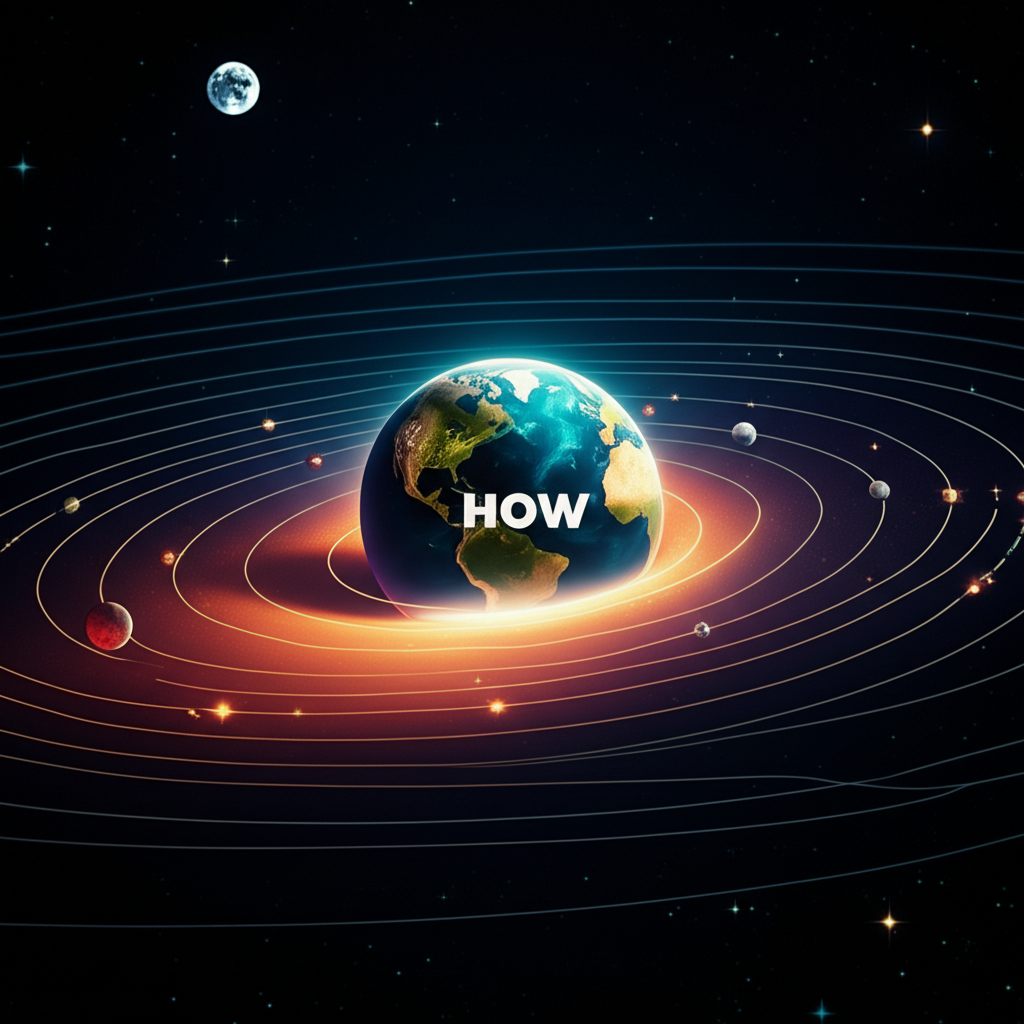
In the same way, massive objects in the universe—stars, planets, galaxies, black holes—don’t exert a direct “pull” on other objects. Instead, they warp and distort the fabric of spacetime around them. Other objects, from tiny dust grains to entire planets, simply follow the shortest possible path through this curved spacetime. What we perceive as “gravity” is merely these objects moving along the curves and dips in spacetime created by other masses.
How Gravity Shapes the Cosmos: Beyond the Apple
This revolutionary perspective dramatically changed our understanding of the universe.
Planetary Orbits: Earth orbits the Sun not because the Sun’s “gravity” pulls it, but because the Sun’s immense mass warps spacetime, and Earth is simply following the resulting curve.
Light Bending: Even light, which has no mass, is affected by gravity. As light passes near a massive object, it traverses the curved spacetime around it, causing its path to bend. This phenomenon, known as gravitational lensing, has been observed countless times and provides strong evidence for General Relativity.
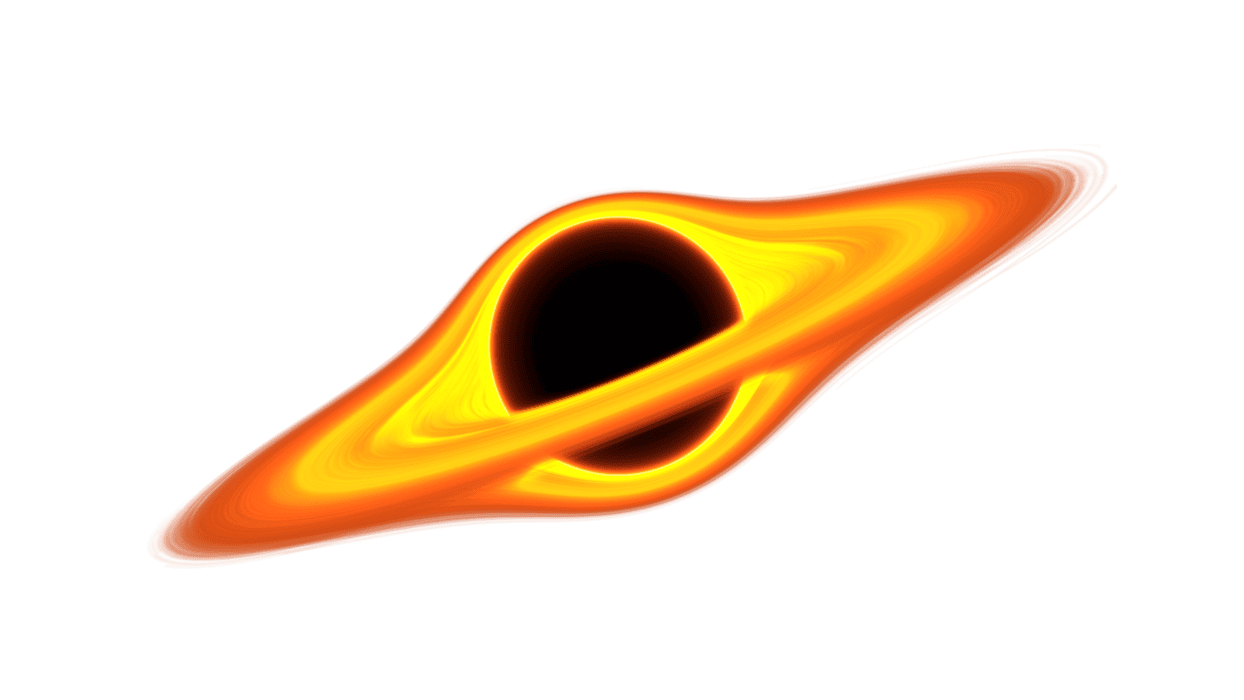
Black Holes: These cosmic behemoths represent the most extreme manifestation of spacetime curvature. Their mass is so concentrated that they create such a deep “well” in spacetime that nothing, not even light, can escape once it crosses a certain boundary (the event horizon).
Tides: The Moon’s gravitational influence curves spacetime slightly differently across the Earth’s surface, leading to the bulges of water that create ocean tides.
The Unfinished Symphony: What We Still Don’t Know
While General Relativity has been incredibly successful, accurately predicting phenomena from the precession of Mercury’s orbit to the existence of gravitational waves (ripples in spacetime), the story of gravity isn’t fully written. One of the biggest challenges in modern physics is reconciling Einstein’s elegant theory of gravity (which works beautifully on large, cosmic scales) with quantum mechanics (which describes the universe at its smallest, subatomic scales). We lack a unified theory of “quantum gravity.”
Scientists hypothesize the existence of hypothetical particles called “gravitons,” which would mediate the gravitational force, much like photons mediate electromagnetism. However, gravitons have yet to be detected, and the quest to understand gravity at the quantum level remains one of the grandest challenges in fundamental physics.
A Force of Wonder
From a simple apple falling to the majestic dance of galaxies, gravity is a ubiquitous and profoundly influential force. While Newton gifted us with a powerful description of its effects, it was Einstein who unveiled its true nature: a magnificent, dynamic interaction with the very fabric of space and time. Our understanding has evolved from a mysterious pull to the elegant curvature of spacetime, yet the universe continues to hold secrets about gravity that beckon further exploration. It reminds us that even the most commonplace phenomena can harbor the most extraordinary scientific revelations.
0 Comments